Connect with us


President Muhammadu Buhari has said the late Libyan leader, Muammar Gadaffi, trained and armed the herdsmen who have been carrying out bloody attacks on several communities in Nigeria.

The Nigerian leader also said herdsmen-farmers clashes in the country started long before his administration.

He was responding to questions by the Archbishop of Canterbury, Most Reverend Justin Welby, on the clashes between herdsmen and farmers in different parts of Nigeria.
The Archbishop visited Buhari at the Abuja House in London on Wednesday.

According to Buhari, the gunmen escaped into Nigeria and other West African countries after Gadaffi’s demise in 2011.
“These gunmen were trained and armed by Muammar Gadaffi of Libya. When he was killed, the gunmen escaped with their arms. We encountered some of them fighting with Boko Haram,” he said.

“Herdsmen that we used to know carried only sticks and maybe a cutlass to clear the way, but these ones now carry sophisticated weapons. The problem is not religious, but sociological and economic. But we are working on solutions.”

According to a statement by his media aide, Buhari also blamed “irresponsible politics” for the crisis.

He said politics had been brought into the crisis, but assured that lasting solutions would be found.

NEWS

Nigerians Are Not Having It: PayPal’s Quiet Comeback Bid Meets Fierce Resistance

Published

on

PayPal is trying to slip back into Africa, and Nigerians are not here for it. Not one bit. The company recently hinted at a 2026 return through partnerships with local fintech players, framing it as some grand expansion into the continent. But across social media, especially on X, the reaction has been swift and brutal: calls for a full boycott, threads digging up old wounds, and a flat-out refusal to welcome the payment giant back. Many see this move as opportunistic, almost insulting, after years of being shut out while the rest of the world used PayPal freely.

The bad blood goes way back. Since the mid-2000s, PayPal has placed heavy restrictions on Nigeria and a handful of other African countries.

Officially, it was about high fraud risks, chargebacks, and stolen cards. In practice, it meant Nigerians could open accounts and send money out, but receiving payments or withdrawing to local banks? Forget it.

For almost two decades, freelancers, remote workers, small business owners, and everyday hustlers were locked out of a huge chunk of the global digital economy. The stories are painful and personal. A graphic designer lost major international clients because the only payment option was PayPal.

A software developer watched job offers vanish the moment “Nigeria” appeared on his profile. Countless young people trying to earn dollars through surveys, micro-tasks, or gigs on platforms like Upwork and Fiverr hit the same wall. Many resorted to desperate workarounds: using VPNs to fake locations, borrowing relatives’ accounts abroad, or paying hefty fees to middlemen. It wasn’t just inconvenient; it felt discriminatory. “Why us?” became the constant question. And that’s the part that still stings.

Fraud happens everywhere. Scams aren’t exclusive to Nigeria. Yet PayPal seemed to single out Africa’s biggest country, slapping on restrictions that didn’t fully apply to nations with similar or worse records. While PayPal rolled out services in over 190 markets, including tiny countries few people think about, Nigeria stayed on the outside looking in. That lingering sense of unfair treatment has never gone away.

But here’s the thing: Nigerians didn’t just sit and complain. They built alternatives. When PayPal turned its back, local and regional fintechs stepped up. Flutterwave, Paystack (before the Stripe acquisition), Payoneer, Grey, Cleva, Raenest, and others created solutions tailored to the reality on the ground. Virtual dollar accounts, easy cross-border transfers, seamless integrations for freelancers.

Today, Nigeria’s fintech scene is one of the most vibrant in the world, moving billions annually. People found ways to get paid, save in dollars, and run businesses globally without ever needing PayPal. Now the company wants back in, quietly, through backdoor partnerships rather than a direct apology or full restoration of services.

The plan, teased as “PayPal World,” would link local wallets to its network without requiring traditional PayPal accounts. It sounds convenient on paper, but to many Nigerians, it feels like too little, way too late. “We survived without you,” is the common refrain. “We built our own thing. Why should we let you profit now?”

On X, the sentiment is raw. One designer wrote in all caps: “PLEASE BOYCOTT PAYPAL IF YOU HAVE THE CHANCE.” Another threatened to sue any local fintech that integrates with them, demanding compensation for years of frozen funds and lost income. The anger isn’t manufactured; it’s built on real scars from a time when opportunities slipped away simply because of a postcode.

Some analysts point out the irony in PayPal’s timing. The company has struggled lately, with its stock taking heavy hits while competitors eat its lunch. Africa’s young, tech-savvy population looks like the next big growth market.

To many Nigerians, this doesn’t feel like goodwill. It feels like fear of missing out. A few voices argue it could bring more options and competition, which isn’t a bad thing. But right now, those voices are drowned out by the overwhelming chorus of “no thanks.”

Nigerians endured the exclusion, adapted, and thrived in spite of it. They built bridges PayPal refused to cross. So when the company finally shows up at the door, years later, acting like nothing happened? The response is clear: the door stays closed.

Ojelabi, a journalist and publisher of Freelanews.com, writes from Lagos

Continue Reading

BIG STORY

Alaafin To Install Seyi Tinubu As ‘Okanlomo of Yorubaland’ Saturday

Published

on

The Alaafin of Oyo, Oba Abimbola Owoade, is set to install Seyi, the son of President Bola Tinubu, as the “Okanlomo of Yorubaland” on Saturday.

The monarch on the same occasion will also install Senator Abdul’Aziz Yari representing Zamfara West as the “Obaloyin of Yorubaland”.

The chieftaincy installation of the duo was contained in a flyer that was obtained on social media platforms on Wednesday.

In the flyer, the monarch and his wife, Ayaba Abiwumi Owoade, invited the general public to the event and implored them to save the date, as it was scheduled to take place on Saturday, December 21, 2025.

“Okanlomo of Yorubaland” is a prestigious Yoruba title meaning “the one dear to the hearts of all Yoruba people” or “beloved child,” signifying deep affection and importance to the race.

Confirming the chieftaincy installation to our correspondent in a telephone conversation on Wednesday, the Alaafin’s media aide, Bode Durojaiye, said it is true and that the event will hold as planned.

He affirmed that the press statement for the said event would be made available to journalists any time soon.

“Yes, it is true. The Alaafin of Oyo wants to install Seyi Tinubu as the Okanlomo of Yorubaland and Senator Abdul’Aziz Yari as the Obaloyin of Yorubaland.

“The press statement on the said event would be made available today or anytime soon,” he said.

This was coming a few months after Alaafin’s counterpart, the Ooni of Ife, Oba Enitan Ogunwusi, bestowed the title of “Okanlomo of Oodua” on an Ibadan-born philanthropist and the Bada Olubadan designate, Dotun Sanusi.

This title sparked supremacy controversy between the two respected monarchs of Yorubaland, but was quelled by the region’s stakeholders.

Recently, the Ooni also conferred the First Lady, Remi Tinubu, with the prestigious chieftaincy title of Yeye Asiwaju Gbogbo Ile Oodua.

Arriving at the Ooni’s palace around 1 pm amid fanfare and heightened security, Mrs Tinubu was received by the monarch and his chiefs.

The installation ceremony, held at the Palace Square, coincided with celebrations marking Oba Ogunwusi’s 10th coronation anniversary.

The event drew a gathering of traditional rulers and dignitaries from across Yorubaland, including the Olu of Warri, Ogiame Atuwatse III; the Sultan of Sokoto; and the Soun of Ogbomoso, alongside cultural leaders and other notable personalities.

The title Yeye Asiwaju Gbogbo Ile Oodua carries historical significance, having been previously held by the late Hannah Idowu Dideolu Awolowo, wife of the revered statesman Chief Obafemi Awolowo.

The title Yeye Asiwaju Gbogbo Ile Oodua carries historical significance, having been previously held by the late Hannah Idowu Dideolu Awolowo, wife of the revered statesman Chief Obafemi Awolowo.

It is a recognition of leadership, influence, and contributions to society, particularly within the Yoruba cultural sphere.
Continue Reading

BIG STORY

US Adds Nigeria To List of Countries Facing Partial Travel Restrictions

Published

on

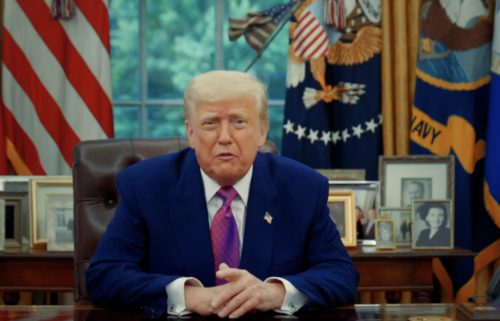
President Donald Trump on Tuesday signed a Proclamation further restricting entry to the United States for nationals from countries deemed high-risk due to “demonstrated, persistent, and severe deficiencies in screening, vetting, and information-sharing” that threaten U.S. national security and public safety.

Among the 15 additional countries newly subject to partial restrictions is Nigeria.

The announcement comes directly from the White House website, in a fact sheet titled “President Donald J. Trump Further Restricts and Limits the Entry of Foreign Nationals to Protect the Security of the United States”, issued December 16, 2025.

Trump had earlier, on October 31, declared Nigeria a ‘country of particular concern’ in response to allegations of a Christian genocide in the country.

The African Union chief said there was no genocide in Nigeria’s volatile north. And so did ECOWAS, addressing the recent surge in terrorist attacks across the region, including Nigeria, while firmly rejecting claims that these acts constitute genocide. Over and over, Tinubu, days ago, again dismissed claims that there is a Christian genocide in the country, insisting that neither Christians nor Muslims are being targeted for killing.

This had prompted a series of back-and-forth meetings among the US Congress and individuals and the Nigerian delegation, who have met both in Nigeria and the US since. On December 13, a US congressman, Riley Moore, said the US and Nigeria were close to reaching a strategic security agreement aimed at addressing terrorism and sectarian violence in Nigeria.

Days earlier, he stated that the US had concluded its fact-finding mission to Nigeria over alleged genocide and is expected to brief Trump before the end of the month.

However, the latest in the series of ban on Tuesday had the White House describe the action as “strengthening national security through common sense restrictions based on data.”

The Proclamation continues full restrictions and entry limitations on nationals from the original 12 high-risk countries under Proclamation 10949: Afghanistan, Burma, Chad, the Republic of the Congo, Equatorial Guinea, Eritrea, Haiti, Iran, Libya, Somalia, Sudan, and Yemen.

It also adds full restrictions and entry limitations on five additional countries: Burkina Faso, Mali, Niger, South Sudan, and Syria, along with individuals holding Palestinian Authority-issued travel documents. Laos and Sierra Leone, previously subject to partial restrictions, now face full restrictions.

Nationals from Burundi, Cuba, Togo, and Venezuela remain under partial restrictions.

The Proclamation adds partial restrictions and entry limitations on 15 additional countries, including Angola, Antigua and Barbuda, Benin, Cote d’Ivoire, Dominica, Gabon, The Gambia, Malawi, Mauritania, Nigeria, Senegal, Tanzania, Tonga, Zambia, and Zimbabwe.

The fact sheet notes that “exceptions for lawful permanent residents, existing visa holders, certain visa categories like athletes and diplomats, and individuals whose entry serves U.S. national interests” are included.

It also states that family-based immigrant visa carve-outs that carry “demonstrated fraud risks” have been narrowed, while case-by-case waivers remain possible.

In explaining the rationale, the White House fact sheet emphasizes that the Proclamation is necessary “to prevent the entry of foreign nationals about whom the United States lacks sufficient information to assess the risks they pose, garner cooperation from foreign governments, enforce our immigration laws, and advance other important foreign policy, national security, and counterterrorism objectives.”

The fact sheet quotes Trump directly: “It is the President’s duty to take action to ensure that those seeking to enter our country will not harm the American people.”

It adds that, after consultations with cabinet officials and assessments based on Executive Order 14161, Proclamation 10949, and country-specific information, “President Trump has determined that the entry of nationals from additional countries must be restricted or limited to protect U.S. national security and public safety interests.”

The restrictions are country-specific “in order to encourage cooperation with the subject countries in recognition of each country’s unique circumstances,” the fact sheet says, highlighting challenges such as “widespread corruption, fraudulent or unreliable civil documents and criminal records, and nonexistent birth-registration systems—systemically preventing accurate vetting.”

Some countries, it notes, “refuse to share passport exemplars or law-enforcement data,” while others allow Citizenship-by-Investment schemes that conceal identity and bypass vetting requirements.

The fact sheet also cites “high visa-overstay rates and refusal to repatriate removable nationals” and the presence of “terrorist, criminal, and extremist activity” in several restricted countries.

The White House fact sheet frames the move as part of President Trump’s ongoing national security agenda: “President Trump is keeping his promise to restore travel restrictions on dangerous countries and to secure our borders.”

It references the Supreme Court’s prior ruling on similar restrictions, noting that the Court found the policy “is squarely within the scope of Presidential authority” and that it is “expressly premised on legitimate purposes”—specifically “preventing entry of nationals who cannot be adequately vetted and inducing other nations to improve their practices.”

Finally, the fact sheet notes that Turkmenistan, which previously faced restrictions, has made progress in cooperation with the U.S., prompting the new Proclamation to lift the ban on its nonimmigrant visas while maintaining the suspension of entry for Turkmen nationals as immigrants.

Two US National Guard soldiers were shot in November near the White House, officials said, and police said a suspect was detained in an extraordinary security drama likely to fuel controversy over President Donald Trump’s crime crackdown.

Reacting, Trump said that he would suspend migration from what the US leader called “third-world countries”, a day after an Afghan national allegedly shot two National Guard soldiers in Washington, killing one.

His angry post, which also threatened to reverse “millions” of admissions granted under his predecessor, Joe Biden, marked a new escalation in the anti-migration stance of a second term that has been dominated by Trump’s mass deportation campaign.

Meanwhile, the Trump administration announced in the first week of December that it would review the immigration status of all permanent residents, or “Green Card” holders, from Afghanistan and 18 other countries following the attack.

U.S. officials identified the suspect in the shooting as a 29-year-old Afghan national who previously worked alongside American forces in Afghanistan.

The individual was granted asylum earlier this year, not permanent residency, according to AfghanEvac, an organisation that assists Afghans resettled in the United States after the Taliban takeover in 2021.

The review follows a June executive order from President Trump classifying 19 countries as “of Identified Concern.”

The order banned entry for nearly all nationals from 12 countries, including Afghanistan. The full list of these countries includes: Afghanistan, Myanmar, Chad, Congo-Brazzaville, Equatorial Guinea, Eritrea, Haiti, Iran, Libya, Somalia, Sudan, and Yemen.

Barely two weeks after in June, Trump commenced plans to place a general visa ban on Nigerians.

According to a report by the Washington Post, an internal memo signed by Secretary of State Marco Rubio outlined a proposal that could impose visa restrictions or entry bans on up to 36 additional nations.

These countries were expected to comply with newly established requirements from the U.S. State Department within a 60-day timeframe or face potential travel restrictions.

However, reports indicate that the timeframe elapsed in August 2025, and it was not until four months later that the new proclamation was issued.

What “Full” and “Partial” Restrictions Mean

Full bans/suspensions generally bar citizens of specified countries from entering the U.S. and block the issuance of most new immigrant and non-immigrant visas. Exceptions may still exist for lawful permanent residents, diplomats, or specific exempt categories.

Partial restrictions limit or suspend certain classes of visas (e.g., tourist, student, exchange), impose stricter vetting and shorter visa validity, and often require more rigorous screening before entry is permitted

Continue Reading

Most Popular


Warning: Undefined array key "slug" in /home/porsch10/public_html/wp-includes/class-wp-theme-json.php on line 2117

Warning: Undefined array key "slug" in /home/porsch10/public_html/wp-includes/class-wp-theme-json.php on line 2117

Warning: Undefined array key "slug" in /home/porsch10/public_html/wp-includes/class-wp-theme-json.php on line 2117