Connect with us


The Olubadan of Ibadanland, Oba Saliu Adetunji and former Governor of Oyo State, Senator Rashidi Ladoja, who is a member of Olubadan-in-Council yesterday boycotted the coronation ceremony of 21 new kings installed by Governor Abiola Ajimobi.

The absence of the duo, however, did not take the shine off the epoch making ceremony as thousands of residents of the sprawling city trooped out to witness the memorable event.

Oyo State Governor, Senator Abiola Ajimobi, presented certificates and staff of office to the 21 chiefs, who were among the 33 recently elevated to the status of Obas in Ibadan, following the adoption of the recommendations of a judicial commission of inquiry earlier inaugurated by the governor.

The colourful ceremony, held at the arcade of the historic Mapo Hall, Ibadan, yesterday, was attended by prominent Ibadan elders, socio-cultural groups, opinion leaders and a large number of Ibadan citizens.

The event marked a turning point in the history of the ancient city, which used to have the Olubadan of Ibadanland as the only beaded-crown-wearing Oba, in its 11 Local Government Areas with a population of about four million.

The 11 members of the Olubadan-in-council were elevated to the status of Oba, with the prefix of ‘his royal majesty,’ but only eight were available for the event, following the death of two high chiefs and the refusal of Osi Olubadan, Senator Rashidi Ladoja, to be part of the process.

13 ancient baales from different towns in Ibadanland were also promoted to the position of Obas, with the prefix of ‘his royal highness.’

All the newly promoted Obas will be under the authority of the Olubadan of Ibadanland, Oba Saliu Adetunji, who will be the only ‘imperial majesty,’ while none of them will add the suffix ‘land’ to his title.

Due to the vacancies in the stool of nine chieftaincies, who have also been elevated to the status of obaship, the nine towns were not represented at the occasion.

Speaking at the event, the governor said that the state government followed due process in conducting the exercise, stressing that all extant laws had been complied with, while he said that the exercise was not encumbered by any legal impediment.
Ajimobi debunked the insinuations being peddled by those he called political opponents to the effect that the promotion was targeted at whittling down the influence and authority of the Olubadan as the supreme monarch in Ibadanland.

The governor said that the initiative was borne out of a strong sense of patriotism and a resolve to elevate, uplift, transform and reposition the chieftaincy institution of Ibadanland.

He quoted a famous author, Henry James, who once said that ‘a tradition is kept alive only by something being added to it,’ to buttress his point.

Ajimobi said, “This epoch making event in the annals of the history of Ibadanland is a practical demonstration of our administration’s commitment to the enhancement of dignity and honour of the chieftaincy institution in Ibadanland and Oyo State in general.

“I wish to state categorically that we are not changing history; we are not changing tradition; we are not changing the culture of Ibadanland.


“Rather, we are elevating and consolidating our traditional institution and the exalted position of the Olubadan as the imperial majesty in Ibadanland.

“We are also elevating the Olubadan-in-Council and the chieftaincy institution without altering or tinkering with the traditional succession and ascendancy system of the Olubadan Chieftaincy structure.”

The governor explained that the review of the 1959 Olubadan chieftaincy declaration was not a novel idea, having been carried out by successive administrations in the state in 1974, 1981, 1993 and 2000.

According to him, Ladoja, who was opposed to the current exercise, also set up the Adio Commission to review the Olubadan Chieftaincy declaration, before jettisoning the commission’s recommendations.

The governor said, “Our administration is not reinventing the wheel. We have simply, like others before us, embarked on a review of the Olubadan Chieftaincy Declaration in response to the yearnings of well meaning stakeholders.

“These include the Ibadan Elders Council, Central Council of Ibadan Indigenes (CCII) and eminent sons and daughters of Ibadanland, such as Chief Theophilus Akinyele; the late Otun Olubadan, Chief Omowale Kuye; and all, but one member of the Olubadan– in-Council.

“They all desired to elevate the traditional chieftaincy institution in Ibadanland and position it comparably and competitively amongst other ancient Yoruba cities who have embraced new and modern systems. They have been truly inspired by the words of Lidia Bastianich when she said ‘Today’s innovations are tomorrow’s tradition.’”
The governor explained that the event was also borne out of his administration’s burning desire to redress the lopsidedness in the number of beaded crown obas in Ibadanland vis-à-vis other zones in the state.

While Oke Ogun, Ogbomoso, Oyo and Ibarapa zones have several beaded crown obas, he declared that Ibadanland, touted as the political and traditional headquarters of Yorubaland, had only one beaded crown oba.

With the installation of 33 new obas, the governor said that the clamour for the creation of Ibadan State had become justifiable, adding that the individual domains of the new obas were poised to witness tremendous growth and development.

He charged the new obas to use their elevated royal positions to promote peace in their localities, as well as the unity and well-being of the citizenry.

BIG STORY

Alaafin, Soun Absent As Makinde Kicks Off Oyo 50th Anniversary

Published

on

Two prominent traditional rulers in Oyo State—the Soun of Ogbomoso, Oba Olaoye Ghandi, and the Alaafin of Oyo, Oba Akeem Owoade—were conspicuously absent as Governor Seyi Makinde inaugurated the 50th anniversary of the state on Monday.

Family members of former governors, traditional and religious leaders, top government functionaries, and political stakeholders gathered at the International Conference Centre, Ibadan, to celebrate the state, which was created on February 3, 1976, from the former Western Region of Nigeria, with Ibadan as its administrative capital.

The state government had unveiled a week-long programme for the anniversary on January 21, 2026. The events include religious services, cultural exhibitions, an awards and dinner night, and a public lecture titled, “Consolidating The Legacy, Navigating The Present And Reimagining The Future.”

Governor Makinde had appointed Saheed Fijabi, a former member of the House of Representatives, as chairman of the 11-member planning committee for the anniversary.

While the Olubadan of Ibadan and Chairman of Oyo Council of Obas, Oba Rashidi Ladoja, attended the ceremony along with other traditional rulers, the absence of the Alaafin and the Soun drew attention, especially following Makinde’s recent decision to make the chairmanship of the Oyo Council of Obas rotational among the Alaafin, Soun, and Olubadan. Previously, the position had been permanently reserved for the Alaafin.

At Oba Ladoja’s recent inauguration, Makinde stated that the new arrangement had the buy-in of all three monarchs.

However, the Alaafin quickly issued a rebuttal, claiming he was never part of any meeting where such an agreement was reached.

Monday’s event was the first state function since the governor’s decision and the Alaafin’s rebuttal.

Efforts by our correspondent to get the reactions of spokesmen for the Alaafin and Soun, Bode Durojaye and Peter Olaleye, respectively, were not successful as their telephone numbers could not be reached.

Meanwhile, during the event, Governor Makinde cut the anniversary cake and highlighted his administration’s commitment to building a stronger, competitive economy that creates jobs, attracts investments, and expands opportunities for residents.

‘He emphasised that the next 50 years should deliver greater prosperity, fairness, dignity, and hope for all citizens.

Makinde also reflected on the legacy of former Governor Bola Ige, particularly his provision of free textbooks, furniture, and learning materials, which he said helped shape Oyo State’s governance ethos and belief in equal opportunity.

The governor further highlighted the digital tribute platform established for the anniversary, which has collected hundreds of citizen stories illustrating resilience, enterprise, and a sense of belonging.

“Today, one resident runs a business employing eight young people. Another tribute reflects the quiet pride of citizens whose lives have been nurtured and educated in Oyo State. These stories are not just tributes; they are evidence of opportunity, enterprise, hope, and belonging,” he said.

He commended service commanders and security agencies in the state for maintaining peace and security, assuring them of continued government support. Makinde urged residents to actively participate in anniversary activities, with the grand finale scheduled for Tuesday, January 27, 2026.

Earlier, Fijabi, chairman of the planning committee, outlined the historical significance, leadership, and development milestones of the state, emphasizing that the celebration represents both a reflection on the past and a declaration of intent for sustained progress.

Olubadan Oba Rashidi Ladoja, in his remarks, called for recognition of past political leaders and unsung heroes whose contributions laid the foundation for Oyo State’s growth. He reflected on political leadership in the Third Republic, including Chief Kolapo Adewuyi Ishola and his deputy, Ahmed Gbadamosi, as well as subsequent administrations of former Governors Rashidi Ladoja and Otunba Christopher Adebayo Alao-Akala, highlighting their impact on the state’s development trajectory.

Among the citizen stories highlighted was that of Toluwaloju Foluso, a National Youth Service Corps member in 2021, who invested his allowance in learning fashion design during his service year. The story exemplifies the opportunities and enterprise nurtured by the state, reflecting Makinde’s message of resilience, progress, and citizen empowerment.

The absence of the Alaafin and Soun, coupled with their earlier objections to the rotational chairmanship of the Oyo Council of Obas, suggests underlying tensions within the state’s traditional institutions, even as the government pushes forward with anniversary celebrations and governance initiatives.

Governor Makinde, however, stressed that the administration remains committed to inclusive governance, economic growth, and public engagement, asserting that Oyo State’s next 50 years must be defined by prosperity, innovation, and opportunity for all residents.

 

Continue Reading

NEWS

Lagos Assembly Steps Down LASPA GM Nominee, Confirms Others

Published

on

The Lagos State House of Assembly has stepped down the nomination of Mrs. Adebisi Adelabu as the general manager of the Lagos State Parking Authority (LASPA), citing serious procedural breaches linked to her earlier tenure.

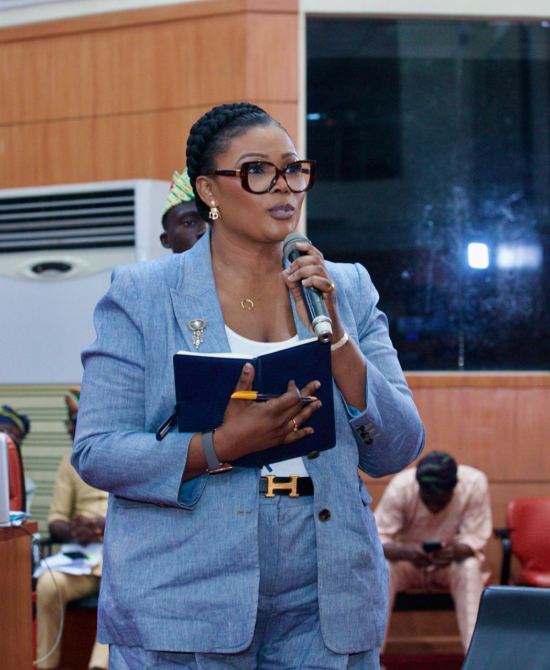
During Thursday’s plenary session presided over by the Speaker, Rt. Hon. (Dr.) Mudashiru Ajayi Obasa, members questioned Mrs. Adelabu for having occupied the office of General Manager of LASPA since 2021 without ever submitting herself to the constitutionally required screening process.

Lawmakers described her prolonged, unapproved stay in office as a clear violation of legislative authority. This infraction led the House to nullify her appointment on November 18, 2025.

Despite being nominated again, persistent irregularities and failure to convince the House during the screening exercise led to a unanimous decision to again step down her confirmation for deeper review.

Conversely, other nominees forwarded by the Governor faced no such controversies and were screened and confirmed. These include Mr. Kehinde Durosinmi‑Etti as Chairman of the Lagos State Security Trust Fund; Engr. Olopade Adekunle, Barr. Mrs. Temitope George, Mr. Alexander Akinwunmi, Mr. Falola Olakunle, and Mr. Bello Wasiu Oladimeji were appointed to various leadership and membership roles within the Lagos State Electricity Regulatory Commission.

The House thereafter adjourned sine die.

Continue Reading

NEWS

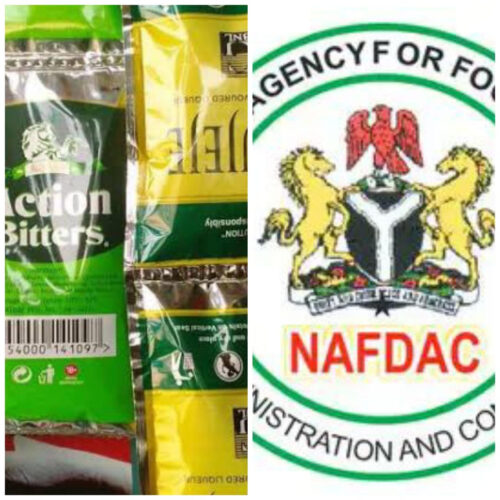
NAFDAC Begins Clampdown On Sachet Alcohol, Cites Risks To Children And Youth

Published

on

The National Agency for Food and Drug Administration and Control (NAFDAC) has commenced full enforcement of the ban on the production and sale of alcohol packaged in sachets and polyethylene terephthalate (PET) bottles below 200 millilitres, following a resolution of the Nigerian Senate.

The Director-General of NAFDAC, Prof. Mojisola Adeyeye, disclosed this on Wednesday in Lagos during a media briefing organised by the agency.

According to the News Agency of Nigeria (NAN), NAFDAC had on November 11, 2025, announced plans to begin enforcement of a total ban on the affected products by December 2025, in compliance with a directive issued by the Senate.

Adeyeye explained that the agency has now received a fresh formal authorisation from the upper legislative chamber to proceed, adding that enforcement actions have already commenced nationwide.

The Senate resolution of November 2025 followed a motion sponsored by Senator Ned Nwoko (Delta North), which was debated during plenary earlier this year. In moving the motion, Senator Nwoko raised concerns over the widespread availability of high-alcohol-content drinks packaged in sachets and small bottles, warning that their low cost and ease of concealment posed serious public health and social risks, particularly to minors and young adults.

The motion, which enjoyed broad bipartisan support, was debated by lawmakers who expressed alarm at rising cases of alcohol abuse among school-age children and youths. The Senate subsequently adopted the motion and resolved to direct NAFDAC to enforce existing regulations prohibiting the sale of alcoholic beverages in sachets and small-volume containers.

Speaking at the briefing, Adeyeye said the enforcement drive is aimed at safeguarding public health and protecting vulnerable groups, especially children, adolescents, and young adults, from the harmful effects of alcohol consumption.

“The proliferation of high-alcohol-content beverages in sachets and small containers has made such products easily accessible, affordable, and concealable,” she said.

She added: “We have already started the enforcement to ban alcohol production in sachets and bottles below 200ml after receiving the order from the Senate. NAFDAC is not against alcohol, but we are against its proliferation in high concentrations in sachets and small bottles, which makes it easy for children to access.”

Adeyeye noted that before her tenure, some sachet alcohol products contained between 50 and 90 per cent alcohol, describing the levels as dangerously high and detrimental to public health.

She said NAFDAC had previously directed manufacturers to reduce alcohol content to 30 per cent, but many resisted the directive, citing concerns over job losses and potential investment setbacks.

According to her, the matter was escalated to the Federal Ministry of Health, which subsequently granted manufacturers a five-year transition period from December 2018 to January 31, 2024, to restructure their operations and comply with regulatory standards.

Adeyeye reaffirmed the agency’s commitment to protecting public health, stressing that NAFDAC would continue to prioritise the safety of vulnerable populations through sustained regulatory enforcement.

Continue Reading

Most Popular


Warning: Undefined array key "slug" in /home/porsch10/public_html/wp-includes/class-wp-theme-json.php on line 2117

Warning: Undefined array key "slug" in /home/porsch10/public_html/wp-includes/class-wp-theme-json.php on line 2117

Warning: Undefined array key "slug" in /home/porsch10/public_html/wp-includes/class-wp-theme-json.php on line 2117