



BIG STORY
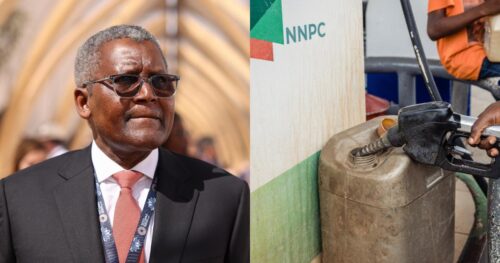
Court Showdown! NNPC, Marketers Oppose Dangote’s Move to Stop Fuel Importation

- /home/porsch10/public_html/wp-content/plugins/mvp-social-buttons/mvp-social-buttons.php on line 27
https://porscheclassy.com/wp-content/uploads/2026/05/NNPC-vs-Dangote-1000x600.jpeg&description=Court Showdown! NNPC, Marketers Oppose Dangote’s Move to Stop Fuel Importation', 'pinterestShare', 'width=750,height=350'); return false;" title="Pin This Post">
- Share
- Tweet /home/porsch10/public_html/wp-content/plugins/mvp-social-buttons/mvp-social-buttons.php on line 69
https://porscheclassy.com/wp-content/uploads/2026/05/NNPC-vs-Dangote-1000x600.jpeg&description=Court Showdown! NNPC, Marketers Oppose Dangote’s Move to Stop Fuel Importation', 'pinterestShare', 'width=750,height=350'); return false;" title="Pin This Post">
The Nigerian National Petroleum Company Limited has told the Federal High Court sitting in Lagos that petroleum products from the Dangote Petroleum Refinery and Petrochemicals FZE are sold at “significantly high and fluctuating market prices”, warning that granting the refinery’s requests could hand it monopoly control of Nigeria’s downstream petroleum sector.
The national oil company stated this in a counter-affidavit in opposition to Dangote refinery’s originating summons in Suit No: FHC/L/CS/857/2026 before the Federal High Court, Lagos Judicial Division.
Similarly, marketers under the aegis of the Petroleum Products Retail Outlet Owners Association of Nigeria supported the NNPC, saying competition must be allowed in the petroleum sector to prevent what it called price exploitation, saying multiple sources privy would bring about a reduction in fuel prices.
In the counter-affidavit, a copy of which was obtained by our correspondent, the NNPC asked the court to dismiss or strike out the suit on grounds that it was incompetent, premature, disclosed no cause of action, and constituted an abuse of court process.
Recall that the Dangote refinery had challenged the issuance of petrol import licences to marketers and the Nigerian National Petroleum Company Limited by the Nigerian Midstream and Downstream Petroleum Regulatory Authority.
There were reports that the NMDPRA recently approved licences for the importation of over 700,000 metric tonnes of petrol despite claims that the Dangote refinery now supplies more than 90 per cent of the nation’s daily PMS consumption.
The Dangote refinery had dragged the Attorney-General and the NNPC before the court, asking it to void import permits granted by the NMDPRA to fuel importers, arguing that the licences violated existing regulations and an earlier court order to maintain the status quo.
Dangote had accused the NNPC and others of sabotaging the $20bn investment, especially by denying it crude supplies and resorting to fuel importation when it has the capacity to produce what the country needs in terms of petrol, diesel, and others.
Responding, the NNPC said it would raise a preliminary objection challenging the competence of the suit and the refinery’s locus standi. “The plaintiff’s suit is premature; the plaintiff lacks locus standi,” the affidavit said.
The state oil company declared that Dangote refinery’s petroleum products were already expensive and subject to price swings dictated by commercial interests. “The plaintiff’s petroleum products are already sold at significantly high and fluctuating market prices, dictated by its commercial interests,” the company said.
NNPC accused the refinery of forum shopping, saying, ”The institution of multiple actions by the plaintiff in respect of substantially the same subject matter and reliefs constitutes an abuse of court process and amounts to forum shopping.”
The company argued that the Dangote refinery had earlier filed a similar action before the Abuja Judicial Division of the Federal High Court in Suit No. FHC/ABJ/CS/1324/2024 against the NMDPRA and six others over import licences and levies before later withdrawing the case and instituting another action in Lagos.
NNPC maintained that there was no evidence showing the refinery could independently satisfy Nigeria’s petroleum product demand. “There is no credible, independent, or verifiable evidence before this honourable court establishing that the plaintiff presently satisfies the petroleum product demands of Nigeria,” NNPC argued.
The national oil company added that the refinery failed to provide independently verified evidence establishing the country’s actual daily consumption needs or proof of its ability to guarantee an uninterrupted nationwide supply.
“The plaintiff has failed to place before this Honourable Court any comprehensive or independently verified evidence establishing the actual daily national consumption rate of petroleum products in Nigeria or the plaintiff’s ability to guarantee uninterrupted nationwide petroleum supply independently,” it was said.
NNPC also argued that the refinery’s production claims were insufficient to justify restricting imports, stressing, “The plaintiff’s alleged production figures are selective, incomplete, and incapable of establishing nationwide product sufficiency.”
The company stressed that fuel supply obligations go beyond refining capacity alone, as they necessarily involve logistics, strategic storage, product evacuation, distribution, haulage, transportation, and strategic reserve management.
NNPC warned that depending on a single operator for national fuel supply would endanger Nigeria’s energy security. “Reliance on a single supplier within the petroleum industry poses grave risks to national energy security,” it was stated.
The company added that restricting imports in the manner sought by the refinery could trigger severe supply crises nationwide. “Restricting importation channels in the manner sought by the plaintiff would expose Nigeria to severe risks of petroleum shortages, supply disruptions, price instability, distribution failures, and national energy crises,” the affidavit read.
NNPC further told the court that any operational interruption, shutdown, or disruption affecting the Dangote refinery operations in Nigeria would result in severe petroleum shortages if alternative importation and supply channels are eliminated.
The company accused the refinery of attempting to edge out other participants in the downstream supply chain. It warned that granting the refinery’s requests could create monopoly control in the petroleum sector.
“The reliefs sought by the plaintiff are aimed at substantially restricting or eliminating other participants within the petroleum importation and supply chain. The grant of the plaintiff’s reliefs would effectively expose Nigeria’s petroleum sector to monopoly control and undermine competitive participation within the industry,” the affidavit stated.
NNPC warned the court that a monopoly in the sector would hurt consumers and destabilise the economy by distorting market competition, undermining pricing stability, reducing supply flexibility, and exposing the Nigerian economy to “substantial risks”.
The company defended the continued issuance of import licences by regulators, insisting they were lawful and necessary for energy security and market stability, saying this does not contravene Section 317(9) of the Petroleum Industry Act, 2021.
The oil company told the court that Section 317(8) of the PIA merely gave regulators discretionary powers regarding backward integration policy and did not impose a mandatory ban on imports.
“Section 317(9) of the Petroleum Industry Act expressly contemplates the issuance of import licences to companies with active local refining licences or proven track records in international crude oil and petroleum products trading.
“Section 317(8) of the Petroleum Industry Act merely provides that the Authority may apply a Backwards Integration Policy in the downstream petroleum sector, thereby conferring discretionary powers on the regulatory authorities rather than imposing a mandatory prohibition on petroleum importation,” it added.
NNPC specifically defended the roles of the Nigerian Upstream Petroleum Regulatory Commission and the NMDPRA in the dispute, saying, “The 2nd Defendant, NMDPRA, NUPRC and other relevant agencies of government have not frustrated the plaintiff in the execution of its business objectives or refinery operations in any manner whatsoever.”
NNPC also denied allegations of sabotage and deliberate denial of crude oil supply to the refinery. “The government and the 2nd Defendant have not deliberately denied the plaintiff a crude oil supply,” the company stated.
It added, “Contrary to the plaintiff’s allegations, the 2nd Defendant has not sabotaged the plaintiff’s refinery operations.”
According to the affidavit, crude oil supply arrangements are influenced by “operational realities, commercial arrangements, security considerations, production levels, logistical constraints, and contractual obligations.”
The company insisted that all actions relating to importation, licensing, supply, and distribution were undertaken strictly in line with the Petroleum Industry Act, market realities, and national interest considerations.
NNPC further argued that the refinery was only one of several operators in the industry and could not override the rights of other participants, saying it is the supplier of last resort.
The latest court battle is the second significant legal confrontation yet between Dangote refinery and major government oil agencies since the commencement of operations at the multibillion-dollar Lekki-based refinery owned by billionaire businessman Aliko Dangote.
The Dangote refinery withdrew the 2024 suit following the Federal Government’s intervention. The dispute is rooted in disagreements over petroleum importation, crude oil supply arrangements, market competition, and the implementation of the Petroleum Industry Act following the deregulation of Nigeria’s downstream oil sector.
Since the removal of the petrol subsidy in 2023, fuel prices have been largely determined by market forces, forcing marketers, importers, refiners, and regulators into intense competition over supply control and pricing.
The Dangote refinery had once been attacked by some marketers over incessant petrol price reductions, which they said impacted their sales negatively. The refinery, which commenced petrol production in 2024 after years of delay and huge capital investment, has repeatedly pushed for stronger government support for local refining and restrictions on fuel imports, arguing that continued importation undermines domestic refining capacity.
The refinery had earlier accused regulatory authorities of issuing import licences despite local refining output being able to meet domestic demand.
However, NNPC, oil marketers, and regulators have consistently maintained that Nigeria still requires multiple supply channels because of distribution challenges, emergency supply considerations, strategic reserve obligations, and uncertainties surrounding nationwide consumption levels.
Marketers back NNPC
It was gathered that the NMDPRA and some marketers are planning to join the suit.
Speaking, the National President of the Petroleum Products Retail Outlet Owners Association of Nigeria, Billy Gillis-Harry, stated that while every corporate organisation has the constitutional right to seek legal redress, the downstream petroleum sector must continue to encourage healthy competition, market stability, and energy security in the overall interest of Nigerians.
According to him, competition remains a critical pillar “for ensuring product availability, price moderation, efficiency, and sustainability within the petroleum distribution value chain”.
He emphasised that Nigeria’s energy market must not be allowed to tilt towards monopoly, regardless of the scale of investment or refining capacity of any single operator.
The PETROAN boss reiterated that Nigeria’s downstream petroleum sector must remain open, competitive, and balanced to “prevent supply shocks and protect consumers from artificial scarcity or price exploitation”.
Gillis-Harry acknowledged the significant investment made by the Dangote refinery and commended its contribution to local refining capacity, job creation, and reduction in fuel import dependence.
However, he stressed that a liberalised downstream market remains essential, where multiple operators can function fairly under the regulatory supervision of the Federal Government. He said one of the benefits of healthy competition in the downstream petroleum sector is the “reduction in fuel prices through competitive pricing”.
He outlined the disadvantages of monopoly in the sector, including arbitrary and exploitative pricing, limited choices for consumers, and reduced efficiency due to a lack of competition.
Gillis-Harry, therefore, reaffirms that the issuance of import licences is not only lawful but also a regulatory necessity provided by law to prevent scarcity and ensure continuous fuel availability across Nigeria.





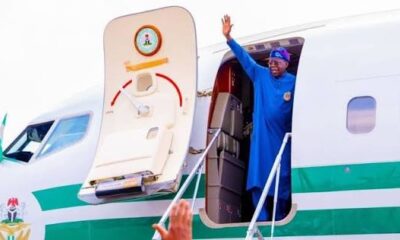


President Bola Tinubu has arrived in Lagos after ending his working vacation in France.
The President arrived at the presidential wing of the Murtala Muhammed International Airport, Ikeja, on Tuesday, where Lagos State Governor Babajide Sanwo-Olu and other dignitaries were on hand to receive him.
The President’s arrival was confirmed by the Special Assistant to the President on Social Media, Olusegun Dada, who posted on X, “Landing. Welcome home, Mr President!”
Tinubu had departed Abuja on August 30 for the working vacation, spending one week in London before travelling to Paris.
According to a statement issued on Tuesday by the President’s Special Adviser on Information and Strategy, Bayo Onanuga, Tinubu departed Paris for Lagos, where he is expected to hold strategic meetings with political leaders and associates.
“While in Lagos, President Tinubu will also hold strategic meetings with political leaders and associates over several days in preparation for the 2027 elections,” the statement read.
The Presidency said Tinubu chose to travel to Lagos first to honour the memory of the late Chief MKO Abiola, winner of the June 1993 presidential election and a prominent figure in Nigeria’s democratic struggle.
On October 1, Independence Day, the President is expected to attend the premiere of a movie honouring Abiola at the Wole Soyinka National Theatre, Iganmu, Lagos.
Tinubu’s working vacation also included a private dinner with French President Emmanuel Macron in Paris.
Details later…

The United States has commended Nigeria’s response to recent attacks in the Middle Belt.
The US Department of State’s Bureau of African Affairs, in an X post on Tuesday, also urged the federal government to sustain efforts to protect communities in Barkin Ladi LGA of Plateau State.
“The United States commends Nigeria’s strong response to the latest attacks from Fulani militant groups,” the bureau said.
“We will continue to work with the Nigerian government to protect Christians in the Middle Belt.
“We urge Nigeria to continue the momentum and defend the Barkin Ladi communities in particular.”
Nigeria’s Middle Belt, particularly the north-central region comprising Benue, Kogi, Kwara, Niger, Plateau, among others, has witnessed varying levels of armed attacks, kidnapping, communal violence and farmer-herder conflicts in recent months.
The US comment comes amid renewed insecurity in parts of the country, particularly among communities in Barkin Ladi, where a series of attacks and reprisals have been reported in recent months.
On September 27, six people were killed and two others injured after gunmen attacked a mining site in Lajam Marit village, Ropp district, Barkin Ladi.
The victims were reportedly shot dead at the site, while the two injured persons were taken to the hospital for treatment.
Five days earlier, the Plateau government imposed a dusk-to-dawn curfew on Barkin Ladi, Bokkos and Mangu LGAs following a series of attacks, attempted attacks and reprisals. Residents were ordered to remain indoors between 6 pm and 6 am until further notice.
The curfew followed an incident in which a resident, Andy Samuel, a priest, was reportedly shot dead at Marit Junction, while another person sustained injuries.
Troops later came under attack after leaving the hospital, with the assailants suspected of carrying out retaliatory strikes following earlier violence in parts of Barkin Ladi.
On September 20, at least five Fulani men were reportedly killed after suspected Berom militias attacked their vehicle in Barkin Ladi.
The victims were travelling to a market in Jos South when their vehicle came under attack near a security checkpoint. The assailants reportedly opened fire, killing all five occupants.
On September 10, two people were killed after suspected armed militia attacked Fulani herders along the Jong-Nyeriwei road and in Dorowa Babuje community, also in Barkin Ladi.
One of the victims was identified as 19-year-old Ishaku Yakubu, while another man, identified as Andata, was reportedly shot dead around Marit Junction in Dorowa Babuje. Several cattle were also reportedly rustled during the attacks.
The attacks have heightened security concerns in Barkin Ladi and other parts of Plateau, with authorities deploying troops and imposing restrictions in some affected areas to prevent further violence and reprisals.

The Edo State Special Criminal Court has sentenced four persons to death for their involvement in the kidnapping of a woman in the popular Vegetable Market, off Airport Road in Benin City.
Justice Aigbona Momodu gave the judgment bordering on 11 counts of kidnapping, conspiracy, armed robbery, cultism and unlawful possession of firearms, Channels TV reports on Tuesday.
The court, established under the directive of Edo State Governor Monday Okpebholo, is mandated to handle kidnapping and cultism-related cases, according to the report.
The four sentenced persons – three males and one female — are Marvelous Isaac, 32; Wisdom Michael, 36; Rufus Michael, 30; and Gift Raphael, 27.
According to the court’s verdict, the exhibits recovered from the four sentenced persons — a pump-action rifle, two unexpended cartridges and two expended cartridges– were ordered to be handed over to the State Criminal Investigation Department of the Edo State Police Command.
According to The PUNCH, the woman (name undisclosed) was at the market with her children and husband when gunmen reportedly came to the scene and whisked her away.
In a video online, a woman who claimed to have witnessed the incident described it as kidnapping, stressing, “Today, for the first time, I witnessed someone being kidnapped.”
She continued, “Who said kidnapping is not in Benin? A kidnapping happened in my presence right at Airport Road by the Vegetable Market. Just because it has not happened to you does not mean it doesn’t exist.
“I saved the woman’s children today. This is me. It happened in front of me. We were both buying something in the same place, at the vegetable market. This is me; I have bruises. These are my legs.”
The incident was subsequently confirmed by the State Police Public Relations Officer, Eno Ikoedem.
See the full court verdict below
”Sentence: In count one, you, Marvellous Isaac, is hereby sentenced to seven years’ imprisonment. In count two, three, four, five, six, seven, eight, nine, you, Marvellous Isaac, is hereby sentenced to death by hanging or through the administration of a lethal injection. You shall be hanged by the neck till you are dead. May the Lord have mercy on you.
”In count ten, you, Marvellous Isaac, is hereby sentenced to ten years’ imprisonment. In count eleven, you, Marvellous Isaac, is hereby sentenced to life imprisonment.
“Second defendant, in count one, you, Wisdom Michael, is hereby sentenced to seven years’ imprisonment. In counts two, three, four, five, six, seven, eight, and nine, you, Wisdom Michael, is hereby sentenced to death by hanging or through the administration of a lethal injection. You shall be hanged by the neck until you are dead. May the Lord have mercy on you.
”Third defendant, in count one, you, Rufus Emete Michael, is hereby sentenced to seven years’ imprisonment. In count two, three, four, six, and seven, you, Rufus Emete Michael, is hereby sentenced to death by hanging or through the administration of a lethal injection. You shall be hanged by the neck until you are dead. May the Lord have mercy on you.
”Fourth defendant, in count one, you, Gift Raphael, is hereby sentenced to seven years’ imprisonment. In counts two, four, six, and eight, you, Gift Raphael, is hereby sentenced to death by hanging or through the administration of a lethal injection. You shall be hanged by the neck until you are dead. May the Lord have mercy on you.
”Now, Exhibit M, the JoJef pump action, and two unexpended cartridges, and the two expended cartridges, Exhibit E and E1, are hereby confiscated to the Federal Government of Nigeria. Both exhibits shall be handed over to the Edo State Armourer of the Nigerian Police, State CID, Edo State Headquarters, by the Deputy Director of the Criminal Division for destruction 30 days hence. This shall be the judgment of the courts.”



-

 NEWS2 days ago
ZITDA Deploys Internet Connectivity at Gusau International Airport Ahead of October 1 Commercial Operations
-
 BIG STORY4 days ago
Tinubu to Nigerians: I’m Correcting Mistakes of Past Administrations, Allow Me to Finish The Work
-

 POLITICS4 days ago
Oyo 2027: Inside the Alli-Adedeji Ticket and the ‘2 for 1’ Strategy —- By Seun Oloketuyi
-
 BIG STORY4 days ago
Anyone Pushing for Return of Petrol Subsidy Doesn’t Mean Well for Nigeria —- Alex Otti
-

 BIG STORY1 day ago
Three Nigerians Killed in South Africa Within Four Days — Consulate
-

 BIG STORY2 days ago
Tinubu Hale and Hearty, He Will Return to Nigeria This Week —- Onanuga
-

 BIG STORY2 days ago
Newlywed Businessman Excretes 72 Wraps of Cocaine At Enugu Airport
-

 BIG STORY1 day ago
Court Sentences Four to Death Over Kidnapping in Edo