Connect with us


BIG STORY

Workers To Embark On Indefinite Strike In States Yet To Implement New Minimum Wage December 1st

Published

on

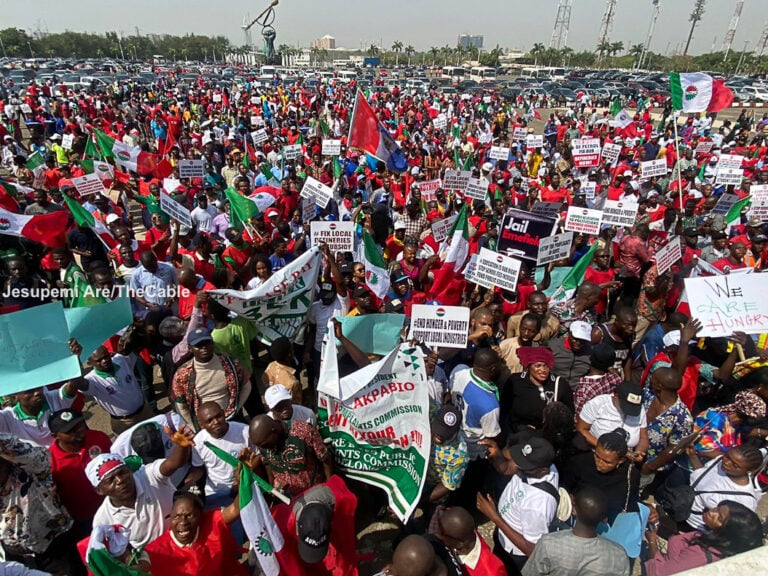
The Nigeria Labour Congress (NLC) has instructed workers to commence an indefinite strike in states where the new minimum wage has yet to be implemented.

On July 29, 2024, President Bola Tinubu signed the minimum wage bill into law, raising the country’s minimum wage from N30,000 to N70,000.

In a communique following a meeting of the union’s national executive council (NEC), the NLC expressed “deep frustration” over the refusal by some state governments to implement the minimum wage.

The NLC stated that the non-implementation of the wage is a blatant disregard for the law and the lives of millions of Nigerian workers.

“This betrayal by certain governors and government officials across the country flies in the face of both legality and morality, as workers continue to be denied their rightful wages amidst rising economic hardship,” the communique reads.

“The NEC therefore resolves to set up a National Minimum Wage Implementation Committee that will among others commence a nationwide assessment, mobilization and sensitization campaign, educating workers and citizens on the need to resist this assault on their dignity and rights.”

The NLC further announced plans to initiate a series of industrial actions in all non-compliant states until the minimum wage is fully implemented across Nigeria.

“To this end, all state Councils where the National Minimum Wage has not been fully implemented by the last day of November 2024 have been directed to proceed on strike beginning from the 1st day of December 2024,” the statement reads.

“Nigerian workers demand justice, and justice they shall have.”

The NLC also condemned the “accelerating economic hardship inflicted upon Nigerian citizens,” noting that citizens are being driven into destitution, forced to choose daily between feeding their families and seeking healthcare.

“Access to energy has become a mirage while workers become increasingly poorer even as they work longer hours to meet their other basic needs. As a result, nutritional diseases like Kwashiorkor and Marasmus have resurfaced in Nigeria,” it said.

“The NLC demands immediate, concrete interventions from the Federal Government, not token measures, to relieve this suffering.”

“We call for the implementation of comprehensive social protection policies that shield Nigerians from poverty, provide affordable healthcare, and ensure a wage that reflects the true cost of living.”

“To this end, we call for a wage review across the nation including a review of all the policies that have rather emasculated Nigerian people.”

BIG STORY

Kidnapping Children Lesser Evil Than Killing Soldiers, Govt Must Negotiate With Bandits — Sheikh Gumi

Published

on

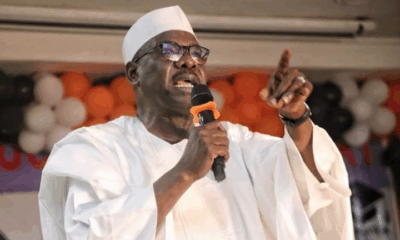
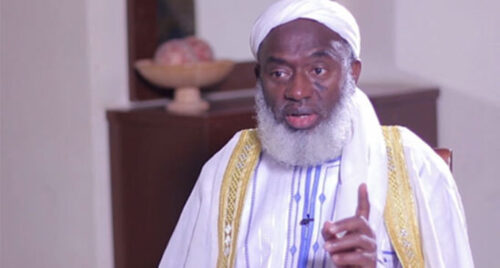
Islamic cleric Sheikh Gumi has described the kidnapping of schoolchildren as a “lesser evil” compared to killing soldiers, insisting that Nigeria must negotiate with bandits to prevent greater bloodshed.

Speaking in an interview with the BBC shared on Tuesday, Gumi said that while the abduction of minors is “evil,” it remains less grievous than murder — particularly in situations where kidnapped children are eventually released unharmed.

“Saying that kidnapping children is a lesser evil than killing your soldiers, definitely is lesser. Killing is worse than, but they are all evil. It’s just a lesser evil. Not all evils are of the same power.

He cited previous incidents, including the mass abduction in Kebbi State, arguing that the victims were freed without fatalities.

“So it’s a lesser evil than, like, what happened in Kebbi. They abducted children, and they were released. They didn’t kill them.”

The remarks come as more than 315 people — including 303 students and 12 teachers — were abducted in Niger State.

On 7 December, the Federal Government announced the release of 100 students, while an earlier report confirmed the escape of 50 others just days after the kidnapping.

“It’s an evil, and we pray that they escape”, Gumi responded briefly when asked what he would say to their parents.

Gumi also defended his long-held stance that negotiating with bandits is unavoidable, describing engagement with bandits and other non-state actors as a practical strategy to secure peace and save lives, and noting that “everybody negotiates with bandits.”

“That word [‘we don’t negotiate’], I don’t know where they got it from. It’s not in the Bible. It’s not in the Quran.

“In fact, it’s not even in practice. Everybody’s negotiating with outlaws, non-state actors, everybody. So who got it, and where did they get that knowledge from? We negotiate for peace and our strategic interests. If negotiation will bring stoppage to bloodshed, we will do it.”

The cleric stressed that his past engagements with bandits were not carried out secretly or independently.

“I go there with the authorities. I don’t go there alone. And I go there with the press,” he said.

Gumi revealed that his last direct meetings with bandit groups were in 2021, saying he made marathon efforts to bring various factions together, but the federal government at the time “was not keen” on the initiative.

He said once the groups were officially designated as terrorists, he completely withdrew from any contact.

Turning to the wider security situation, the former army captain argued that Nigeria’s military cannot shoulder the burden alone.

“We need a robust army… but even the military is saying our role in this civil unrest, in this criminality, is 95% kinetic. The rest is the government, the politics, and the locals. The military cannot do everything.”

Gumi also maintained that most bandits are Fulani herdsmen, not urban Fulani, urging a clear distinction between the two. He described their struggle as rooted in survival and cattle rearing:

“They are fighting an existential war… Their life revolves around cattle. In fact, they inherit them. They’ll tell you, ‘This cow I inherited from my grandfather.’ They are mostly Fulani herdsmen, not the Fulani town, because you have to differentiate between the two.”

Gumi’s remarks underscore the delicate balance between dialogue and enforcement in addressing Nigeria’s persistent insecurity, particularly in the northwest, where kidnappings, bandit raids, and violence continue to disrupt communities.

Continue Reading

BIG STORY

EFCC Probes ‘46 Bank Accounts’ Linked To Former AGF Abubakar Malami

Published

on

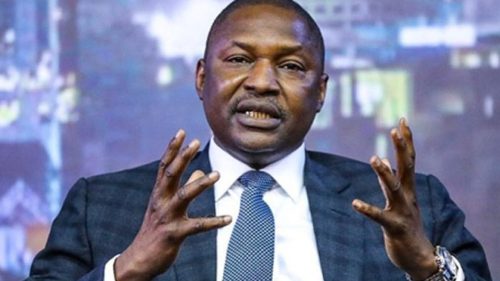
Abubakar Malami, former attorney-general of the federation (AGF) and minister of justice, spent Monday night at the headquarters of the Economic and Financial Crimes Commission (EFCC) as interrogations over an ongoing investigation intensified, TheCable has learnt.

An associate of the former minister told TheCable that Malami was invited for questioning on Monday but arrived late in the evening, which resulted in him staying overnight to continue responding to investigators’ queries.

The associate also disclosed that 46 bank accounts allegedly linked to Malami are currently under investigation, forming a major part of the EFCC’s line of inquiry.

The former AGF would be reporting to the EFCC daily as the probe continues.

Following his earlier interrogation on November 29, the former AGF had said in a post on X that the session “was successful” and that he had been scheduled for “further engagement” with investigators.

“The engagement was successful, and I am eventually released while on an appointment for further engagement as the truth relating to the fabricated allegations against me continues to unfold,” he said.

FIVE SUSPICIOUS MEGA DEALS

In 2023, It was widely reported that Malami would be questioned over at least five suspicious transactions during his time in office.

Malami’s name featured in a number of questionable deals under the Muhammadu Buhari administration.

The transactions bordered on the mysterious payment of $496 million to Global Steel Holdings Ltd (GSHL) as settlement for the termination of the Ajaokuta Steel concession nine years after the Indian company had waived all claims for compensation.

Another contentious matter is Malami’s handling of the sale of assets worth billions of naira forfeited to the EFCC by politically exposed persons.

The former minister’s role in the $419 million judgment debt awarded to consultants who claimed to have facilitated the Paris Club refunds to states is also up for scrutiny.

Others are the curious agreement to pay Sunrise Power $200 million compensation in its dispute with the federal government over the Mambilla power project, and the duplicated legal fees in the transfer of $321 million Abacha loot from Switzerland to Nigeria.

Meanwhile, on November 17, Malami declared his intention to contest the 2027 governorship election in Kebbi state.

The former AGF resigned from the APC in July and joined the African Democratic Congress (ADC).

He said the decision followed “wide consultations and deep personal reflection”, adding that he left the ruling party out of “love for our nation and concern for the hardship our people are facing”.

Continue Reading

BIG STORY

BREAKING: Gov Fubara Dumps PDP, Defects To APC

Published

on

Governor Siminalayi Fubara of Rivers State has defected to the All Progressives Congress (APC) from the Peoples Democratic Party (PDP).

According to Channels TV, the governor announced his defection at a stakeholders meeting at the government house in Port Harcourt.

More to follow…

Continue Reading


Join Us On Facebook

Most Popular


Warning: Undefined array key "slug" in /home/porsch10/public_html/wp-includes/class-wp-theme-json.php on line 2117

Warning: Undefined array key "slug" in /home/porsch10/public_html/wp-includes/class-wp-theme-json.php on line 2117

Warning: Undefined array key "slug" in /home/porsch10/public_html/wp-includes/class-wp-theme-json.php on line 2117