Connect with us


BIG STORY

Tinubu Gushes About Wife On Her 64th Birthday, Says “Your Love Sustains Me”

Published

on

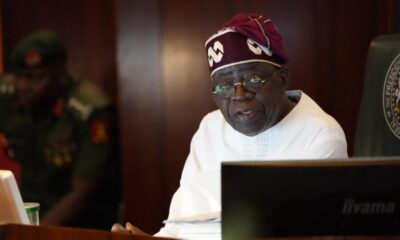
Nigeria’s President, Asiwaju Bola Ahmed Tinubu, has paid a glowing tribute to Oluremi, his wife, on her 64th birthday.

In a heartfelt message via Instagram on Saturday, the president described Oluremi as his “rock, confidant, and greatest support” and the “heart” of their home.

Tinubu expressed gratitude for his wife’s “unwavering strength, grace, and love” to him, their family, and the entire nation.

The president also prayed for “boundless joy, peace and happiness” in Oluremi’s life.

“My Dearest Oluremi, on this beautiful day, as we celebrate your 64th birthday, my heart is full of gratitude and love for the incredible woman you are.

Since we began this journey together, you have been my rock, confidante, greatest supporter, and the love of my life,” he wrote.

“Every step of the way, you have shown unwavering strength, grace, and love to me, our family, and our beloved nation, Nigeria.

You are the heart of our home, the light guiding me through the most challenging days, and the embodiment of kindness and wisdom.

Your compassion, generosity, and dedication inspire millions of Nigerians and me, especially our young women, who look up to you as their First Lady.

On your special day, I want to take a moment to tell you how truly blessed I feel to walk this path beside you.

Your love sustains me, wisdom guides me, and strength lifts me.

“I could not ask for a better partner to share the triumphs and trials of life.

As you turn 64, I wish you nothing but boundless joy, peace, and happiness.

May this year unfold with blessings, laughter, and cherished moments you so richly deserve.

I look forward to all the moments we will create together in the years to come.

With all my love and appreciation, now and always.

Your Bola.”

“Bola and Remi tied the knot in 1987. Their union is blessed with three children.”

BIG STORY

NLC Directs Unions To Continue FCTA Strike Despite Court Order

Published

on

The Nigeria Labour Congress (NLC) has directed its affiliate unions in the Federal Capital Territory (FCT) to continue the ongoing strike by workers of the FCT Administration, despite a court order directing that the industrial action be suspended.

The directive was contained in a circular dated January 27, 2026, and signed by Benson Upah, the acting general secretary of the NLC.

In the circular addressed to presidents and general secretaries of all Abuja-based unions, the NLC said it was “reaffirming and reinforcing” its earlier instructions for workers to sustain the strike action until their demands are fully met.

“We hereby reaffirm and reinforce the directive to all affiliate unions in the FCT to not only proceed with the ongoing action but to intensify and sustain it until all workers’ demands are fully addressed,” the circular reads.

The NLC noted that issues such as unpaid wage awards and promotion arrears, non-remittance of pension and National Housing Fund deductions, as well as alleged intimidation of workers, are yet to be resolved.

“These violations are grave, unacceptable, and incompatible with the principles of fairness, justice, and decent work,” the NLC said.

“Affiliate unions are therefore directed to fully maintain participation in the industrial action; reinforce mobilisation of members for all congress-approved activities; and mobilise members to continuously participate in daily prayer and solidarity sessions from 8:00 am to 5:00 pm at designated venues across the FCT.”

The NLC warned against any withdrawal from the strike at this stage, saying such action would embolden further violations against workers.

“This struggle demands unity, discipline, and unwavering commitment. All affiliates are expected to comply strictly with this directive in the collective interest of the Nigerian working class. An injury to one is an injury to all,” the circular reads.

On Tuesday, a national industrial court in Abuja ordered workers on the payroll of the FCTA to suspend the strike.

Delivering a ruling, Emmanuel Subilim, presiding judge, held that although the matter before the court amounted to a trade dispute, the defendants’ right to embark on industrial action was not absolute.

He held that once a dispute has been referred to the national industrial court, any ongoing strike must cease pending the determination of the case.


Continue Reading

BIG STORY

Return To Work Immediately Or Face Legal Action, Wike Tells FCTA Workers As Court Orders Strike Suspension

Published

on

The Minister of the Federal Capital Territory, Nyesom Wike, on Tuesday warned striking staff of the Federal Capital Territory Administration to return to work immediately or face legal action, following a National Industrial Court ruling ordering an end to the strike that has disrupted public services in Abuja for over a week.

Briefing journalists shortly after the court’s decision, Wike insisted that the rule of law must prevail and accused political actors of exploiting the industrial action for motives unrelated to workers’ welfare.

“The administration was already in the process of mediation when some politicians hijacked the strike,” he said, adding that several of the workers’ demands were “frivolous” and either unreasonable or already addressed.

Wike said the FCTA approached the court after determining that the strike had been “hijacked by politicians,” despite ongoing dialogue and attention to a substantial number of workers’ concerns.

He highlighted the administration’s efforts to support staff welfare, including salary payments and reforms within the civil service.

The minister disclosed that more than N12bn had just been approved for the payment of January salaries to FCTA workers, describing the move as evidence of the government’s commitment to its workforce.

Pointing to improved revenue performance under his leadership, Wike noted that the FCT had generated over N30bn in internally generated revenue, a significant increase compared with previous years.

He urged workers to recognise reforms implemented by the administration, including the establishment of the Civil Service Commission and infrastructure investments across the territory.

“Workers are largely responsible for the lack of development in states, including the FCT,” he said.

Wike dismissed circulating reports suggesting he had been forced out of his office during protests linked to the strike.

“I was never chased out of the office,” he said, explaining that he had merely stepped out to see President Bola Tinubu off at the airport.

Adopting a firm stance, the minister warned against further disruptions of government operations.

“Anyone who dares to lock the gates again will be made a scapegoat, because the law must be obeyed.”

He alleged that some senior civil service officials had played a role in sustaining the strike, claiming that certain directors were instigating the action, but said this would not prevent the administration from pursuing the right course.

Wike emphasised that engagement between workers and the government did not require direct access to him personally.

“Seeing me in person is not a right,” he said, noting that workers’ representatives had been in discussions with management throughout the dispute.

He concluded by warning that staff who failed to comply with the court order and resume duties immediately would face legal action, signalling a tougher enforcement phase as the FCTA seeks to restore full public services.

Workers of the FCTA, operating under the Joint Union Action Committee, had embarked on an indefinite strike on January 19 over unresolved welfare concerns.

The National Industrial Court issued an interlocutory injunction stopping the strike after an application by Wike.

Justice E.D. Subilim granted the order on January 21 and adjourned the suit to March 23, 2026, for hearing of the substantive case.

Delivering his ruling on Tuesday, Justice Subilim said the defendants’ right to strike was not absolute.

“The defendant’s right to an industrial action is not absolute, but as circumscribed by law,” he said. He prohibited workers from participating in the strike once a dispute had been referred to the court and ordered that any ongoing strike must cease pending determination.

“An order of interlocutory injunction is hereby granted, restraining the defendants and respondents, their agents, representatives… together with all other members of the Joint Unions Action Committee … from further embarking on any industrial action, strike, picketing, lockout, or any other form of obstruction against the claimant, parastatals, and political appointees,” the judge added.

Counsel for the claimants, James Onoja (SAN), hailed the court’s decision, urging the unions to obey the order and return to work while allowing room for mediation.

“We commend the court for making an order for the stopping of the strike… I think this is commendable because it will allow the parties to discuss. Our plea to the Union is to allow industrial harmony. They should go back to work and allow for mediation,” Onoja said.

Counsel for the respondents, Maxwell Opara, described the workers as law-abiding citizens and said he would advise the unions to respect the court order.

“The workers are law-abiding citizens. We are going to advise them to respect the court. The one good thing is that the court has also mandated that we commence mediation, not as a matter of advice, in line with the law… we must comply with it,” Opara said.

JUAC President, Rifkatu Iortyer, confirmed that workers would comply, call off the strike and immediately return to work while continuing to “push for other things.”

“We are law-abiding citizens, and because they have said we should return to work, we are returning to work, pending our next appearance,” she said.

Continue Reading

BIG STORY

Judicial Reforms: Tinubu Proposes Virtual Hearings, Increases Appeal Court Justices To 110

Published

on

President Bola Tinubu has transmitted an executive bill to the Senate seeking to amend the Court of Appeal Act to increase the number of justices from 70 to 110.

The proposed amendment also aims to modernize appellate court proceedings through the introduction of virtual hearings and the establishment of an Alternative Dispute Resolution Centre (ADRC) within the Court of Appeal.

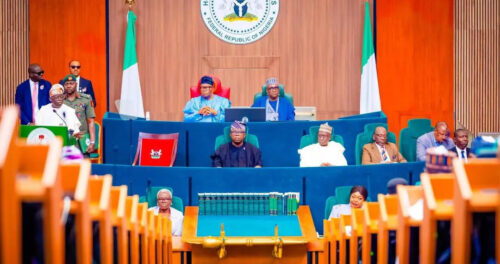
Notice of the bill was contained in a letter read by the Senate President, Godswill Akpabio, during the plenary on Tuesday.

In the letter, Mr Tinubu said the amendment is intended to strengthen the institutional capacity, efficiency, and effectiveness of the Court of Appeal in line with constitutional provisions and evolving realities in the justice sector.

“The bill seeks to increase the number of justices of the Court of Appeal from 70 to 110 and provide clarification of judicial structure and seniority,” the president said.

He added that the bill introduces a restructuring of the ranking system within the court, including provisions on the ranking of the president of the Court of Appeal and the determination of seniority among justices.

On the proposed ADR Centre, Mr Tinubu explained that the initiative would allow certain appellate matters to be resolved outside the conventional court process.

“The bill provides for the conduct of proceedings of the Court of Appeal through electronic and audio means, and the establishment of an Alternative Dispute Resolution Centre (ADRC).

“The bill seeks to establish an Alternative Dispute Resolution Centre within the Court of Appeal, where appellate matters may be referred for settlement,” the president added.

Reasons For Reforms

The president said the reforms are designed to improve professional efficiency and legal certainty in appellate practice in line with modern institutional standards.

He noted that the amendment will also update terminology and definitions in the principal Act, including the formal recognition of virtual hearings and modern correctional nomenclature.

“The bill also seeks to update terminology and definitions within the principal Act, including the recognition of virtual hearings and modern correctional nomenclature,” he said.

“It seeks to consolidate interpretative provisions to ensure clarity, consistency, and alignment with the current legal and institutional framework.”

Mr Tinubu noted that the amendment has become necessary due to the increasing workload at the appellate court and is expected to reduce delays in the administration of justice, strengthen access to justice, and promote public confidence in the judiciary.

Federal High Court Amendment Bill

In a separate letter, the president also transmitted a bill seeking to amend the Federal High Court Act to increase the number of judges from 70 to 90.

He further requested the Senate to screen and confirm the nomination of Oyewole Kayode as a Justice of the Supreme Court.

After the letters were read, Mr Akpabio referred the amendment bills and the nomination to the Senate Committee on Rules and Business for further legislative action.

The committee, whose responsibility lies solely in designing the Senate’s legislative agenda, is expected to list the bills on the Order Paper for Wednesday’s plenary for first reading.

If the Senate so decides, the bills may be scheduled immediately for second reading, during which the Senate Leader, Opeyemi Bamidele, will lead debate on their general principles and clauses, after which they will be referred to the Committee on Judiciary and Human Rights for public hearing.


Continue Reading


Join Us On Facebook

Most Popular


Warning: Undefined array key "slug" in /home/porsch10/public_html/wp-includes/class-wp-theme-json.php on line 2117

Warning: Undefined array key "slug" in /home/porsch10/public_html/wp-includes/class-wp-theme-json.php on line 2117

Warning: Undefined array key "slug" in /home/porsch10/public_html/wp-includes/class-wp-theme-json.php on line 2117