Connect with us


BIG STORY

SIN-NIN Linkage: Inadequate Database Threatens Registration, NIMC Admits Deficit

Published

on

Telecommunication consumers are lamenting the decision of the Federal Government to implement the National Identification Number-Subscriber Identity Module policy after the Nigeria Identity Management Commission disclosed that its infrastructure can accommodate only 100 million Nigerians.

The consumers under the aegis of the National Association of Telecoms Subscribers were reacting to comments by the Director-General of the National Identity Management Commission, Aliyu Aziz.

According to the DG, the commission’s database is at 80 percent of its capacity with over 80 million unique NINs issued.

He said this during an interview on the Frontiers Show on the Nigerian Television Authority over the weekend.

He added that the commission presently has the capacity to issue about three million NINs monthly but hopes to increase its capacity soon.

Aziz said, “We built it (the database) to cater for a 100 million. Right now, we are at eighty million. Also, we have the government’s approval to upgrade it. So, before we reach there, we must have upgraded to about 250 million.

“So, we don’t have issues with that. Most of the time, our major challenges are either power or the bandwidth of the connectivity that we have but not the infrastructure.”

According to him, the goal of the commission is to enroll every Nigerian, but it is lacking funding to implement upgrades.

He said that the NIMC got approval to upgrade its capacity in July 2021 but has yet to receive funding to the effect.

He added, “We are trying to upgrade the system. We have gotten the government’s approval since July last year. We are following up to get the funding. Funding is a challenge, but I don’t want to call it a challenge because it is a challenge for everyone.”

Aziz hinted that Nigerians might be compelled to pay for the enrolment process in the future.

According to President, NATCOMS, Adeolu Ogunbanjo, the decision of the Federal Government to implement the SIM-NIN policy despite NIMC’s lack of capacity is unjustifiable.

On April 4, 2022, the Federal Government asked telecom companies to bar over 72.77 million active telecom subscribers from the ability to make calls as a result of its SIM-NIN policy.

The government ordered that lines that had not linked their SIMS to their NINs must be barred from making calls. Ogunbanjo said, “We have always doubted NIMC’s capacity. This is a problem and that is what we have been saying that the capacity of the NIMC is obviously doubtful. They do not have the capacity to get all the details, or data of everyone.

“This brings us to the fact that implementation of the policy should be extended. The NIMC’s capacity is inadequate. Fortunately, the NIMC has now come to say look, their capacity is inadequate so by extension we are saying, the supervising minister should hear this. There is no need to punish people when the capacity is only 100 million.

“This means even if every eligible Nigerian attempt to register, NIMC cannot accommodate them. NIMC cannot host that. The SIM-NIN policy implementation was done in a hurry.”

According to him, NIMC’s admission is an indictment on the government, not subscribers.

He added, “The Commission doesn’t even have the capacity for all the data of eligible Nigerians. The supervising minister has to know that they need to extend the deadline. The capacity is doubtful and inadequate.

“We will continue to push for a deadline extension and pressure the relevant authorities to ensure that NIMC’s capacity is upgraded. This is why we have been lamenting for a while. So NIMC has a capacity for only 100 million Nigerians? Why then is the minister in a hurry to implement the SIM-NIN policy? They have to issue a new directive. If NIMC doesn’t have the capacity for 200 million, then there is no need to implement the directive. They have been punishing Nigerians for nothing.”

Recently, the Minister of Communications and Digital Economy, Isa Pantami, said NIMC had challenges with infrastructure, salaries, welfare, and others.

Report has it that at least a total of N414.06m has been approved for the enrolment and verification process in the 2022 approved budget.

BIG STORY

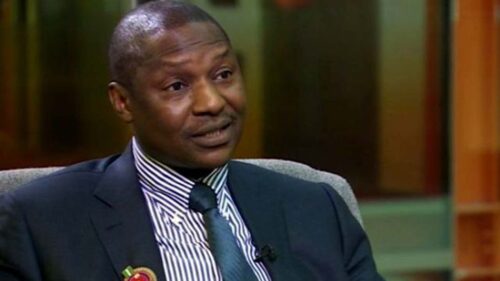
Court Okays Ex-AGF Abubakar Malami’s Further Detention By EFCC

Published

on

A Federal Capital Territory High Court in Abuja has upheld the continued detention of a former Attorney-General of the Federation and Minister of Justice, Abubakar Malami (SAN), by the Economic and Financial Crimes Commission.

Justice Babangida Hassan, on Thursday, dismissed a bail summons filed by Malami challenging his detention by the anti-graft agency.

A statement issued by the EFCC spokesperson, Dele Oyewale, said the ruling was delivered on Thursday, December 18, 2025.

According to the statement, Malami, through his counsel, Suliaman Hassan (SAN), had approached the court seeking bail from EFCC custody, contending that his detention in the course of an ongoing investigation was illegal.

However, counsel to the EFCC, J. S. Okutepa (SAN), argued that the former minister was being held pursuant to a valid remand order issued by the FCT High Court and granted by Justice S. C. Oriji.

Oyewale said Justice Hassan, while quoting Section 35 of the 1999 Constitution (as amended), held that the Administration of Criminal Justice Act provides for lawful detention under a court-issued remand order, adding that Malami’s detention was therefore legal.

“Asking this court to grant this application is tantamount to inviting the court to sit as an appellate court over an application made by a court of coordinate jurisdiction, which this court has no power to do,” the judge was quoted as saying.

Malami has been in detention since December 8 after failing to meet the bail conditions set by the EFCC.

It was earlier reported that the former minister is being investigated for 18 alleged offences, including abuse of office and terrorism financing.

The EFCC confirmed searching his houses and offices in Abuja and Kebbi State. However, Malami has accused the anti-graft agency of bias in the handling of his case.

Continue Reading

BIG STORY

Tinubu To Govs: Obey Verdict On Local Government Autonomy, Brace Up For The Implementation Of State Police

Published

on

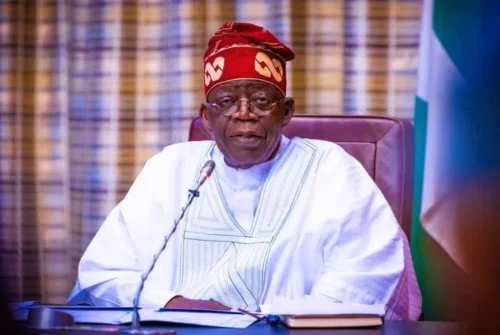
It is time to fully comply with the Supreme Court judgment on financial autonomy for local governments, President Bola Ahmed Tinubu admonished governors last night.

He urged them to brace for the implementation of state police as a panacea to insecurity.

The President spoke during a National Caucus meeting of the All Progressives Congress (APC).

The governors of the APC, along with party leaders, attended the meeting at the Presidential Villa.

The caucus is usually a prelude to the National Executive Committee (NEC) meeting, which will be held today.

The Supreme Court in July last year held that funds for the councils should be paid directly into their coffers rather than into the joint state/local government account, as is currently done.

That verdict has not been obeyed, prompting the President’s call.

He said there can be no genuine autonomy for the councils without direct access to funds.

Emphasizing the importance of the apex court judgment, he said: “Let us look at the recent Supreme Court judgment, what we can do with it and how well we can position our country and our party.”

President Tinubu said the judgment on autonomy must be implemented in both letter and spirit, adding that councils cannot function effectively without financial independence.

He stressed, “To me, the local government autonomy, as it is, must be effective. There is no autonomy without a funded mandate.

“We’ll give them their money directly. That’s the truth. That’ll comply with the Supreme Court order.”

President Tinubu urged the governors to take leadership seriously by ensuring that governance and party coordination extend down to the grassroots.

He said, “You are in a leadership position and must yield and continue to promote, tolerate, and be flexible. Get involved in whatever is happening in your various states, up to the local government level.”

The President also enjoined the governors to support the proposed establishment of state police, describing it as a critical pillar of his administration’s security reform agenda.

He explained that he had assured international partners of Nigeria’s resolve to make state policing work.

He expressed confidence in the ruling party’s capacity to deliver the reform.

President Tinubu said: “I had a very long discussion with the U.S. and Europeans. I was bragging to them that, definitely, we will use the state police to improve security.”

He said when his interlocutors questioned his confidence, he pointed to the APC’s dominance across the country.

The President added: “They asked me if I’m confident, and I said yes. I have a party to depend on. I have a party that will make it happen, and God forbid, we will not fail.”

The President emphasized that reconciliation, accommodation, and cooperation within the party were essential to translating numerical strength into effective governance.

Akpabio commended President Tinubu for what he described as his decisive leadership on national security, particularly the recent rescue of over 100 abducted children, pledging the Senate’s full backing for tougher measures against kidnapping and banditry.

He praised the security agencies for their efforts and expressed sympathy with the families of victims and fallen security personnel.

Akpabio, who offered prayers for the release of the remaining captives, assured affected families of continued support, stressing that their sacrifices would not be forgotten.

The Senate President applauded President Tinubu’s diplomatic intervention in the Benin Republic to safeguard democracy.

He said the Senate had already commended the President’s regional engagement during plenary, noting that Nigeria’s security cannot be guaranteed if its neighbours remain unstable.

Akpabio explained that the Senate had passed a bill classifying kidnapping as terrorism, a move that would attract the death penalty upon presidential assent.

He urged governors to enforce capital punishment where applicable, warning that failure to do so could embolden criminals to endanger society further.

Akpabio welcomed governors who defected to the APC and urged party unity and accommodation across states.

He said the ruling party would deliver bloc votes for President Tinubu in the 2027 elections, expressing confidence that cohesion within the APC would translate into electoral victory nationwide.

APC Chairman Prof Nentawe Yilwatda said the party had recorded a surge in political strength following the high-profile defections and dominance in the National Assembly, declaring that APC now enjoys a “commanding majority” nationwide.

He said the influx of new members from opposition parties reflects the APC’s expanding national appeal.

He cited the defection of Governors Douye Diri (Bayelsa State), Peter Mbah (Enugu), Agbu Kefas (Taraba) and Siminalayi Fubara (Rivers) as evidence of the party’s widening influence across geo-political lines.

The chairman also noted that the party has consolidated its grip on the National Assembly, attributing the dominance to aggressive internal mobilization led by the leadership of both chambers.

Yilwatda said the APC now holds clear majorities in the Senate and the House of Representatives, adding that they have strengthened the party’s legislative leverage and national profile.

On party organization, he unfolded major reforms, including the rollout of an electronic membership registration system to improve transparency and internal democracy.

He said training had been conducted at zonal, state and local government levels, while new members have been assured full rights and privileges ahead of congresses and the national convention.

Yilwatda also highlighted other milestones such as the acquisition of land for a new APC national secretariat in Abuja, strong performances in recent by-elections, progress on constitutional amendments, and preparations for the 2026 FCT local government elections.

He reaffirmed the party’s full backing for President Tinubu’s reforms, expressing confidence that APC remains united and well-positioned for sustained electoral success nationwide.

President Tinubu, who arrived at the State House Conference Centre, venue of the meeting at about 7:38 pm, was accompanied by Vice President Kashim Shettima, Akpabio, House of Representatives Speaker Tajudeen Abbas, Deputy Speaker Benjamin Kalu, Chairman of the Progressive Governors Forum (PGF) and Governor of Imo State, Hope Uzodinma, and Prof. Yilwatda.

The meeting was attended by former Vice President Yemi Osinbajo, members of the National Working Committee (NWC), governors, and principal officers of the National Assembly.

Governors at the meeting included Monday Okpebholo (Edo), Inuwa Yahaya (Gombe), Lucky Aiyedatiwa (Ondo), Usman Ododo (Kogi), Biodun Oyebanji (Ekiti), Francis Nwifuru (Ebonyi), Ahmed Aliyu (Sokoto), Mai Mala Buni (Yobe), Rev. Fr. Hyacinth Alia (Benue), Bassey Otu (Cross River), Umar Namadi (Jigawa), Chairman of the Nigeria Governors’ Forum, AbdulRahman AbdulRazaq (Kwara), Abdullahi Sule (Nasarawa), Dapo Abiodun (Ogun), Uba Sani (Kaduna), and Dikko Radda (Katsina).

Party elders at the parley were former interim national chairman Chief Bisi Akande, former Ogun State Governor Chief Segun Osoba, former Osun State Governor and Minister, Adegboyega Oyetola; former Cross River State Governor Ben Ayade; former Taraba State Governor Jolly Nyame; and former Delta State Governor, Dr Ifeanyi Okowa.

Also in attendance were former Senate Presidents Ken Nnamani, Ahmed Lawan, and Anyim Pius Anyim; former Deputy Senate President, Ovie Omo-Agege; Chairman of the National Drug Law Enforcement Agency (NDLEA), Brig-Gen. Buba Marwa; former governors Isa Yuguda (Bauchi), Yahaya Bello (Kogi), Adams Oshiomhole (Edo), Abubakar Bello (Niger), Ibikunle Amosun (Ogun), Niyi Adebayo (Ekiti), Abdulaziz Yari (Zamfara) and Ahmed Sani Yerima (Zamfara).

National Assembly leaders included Deputy Senate President Jibrin Barau, Senate Leader Opeyemi Bamidele, Senators Gbenga Daniel, Aliyu Wammako, Adamu Aliero, and Simon Lalong, as well as House of Representatives leaders, Prof. Julius Ihonvbere and Idris Wase.

 

Continue Reading

BIG STORY

JUST IN: Tinubu Asks Senate To Confirm New NUPRC, NMDPRA Chief Executives

Published

on

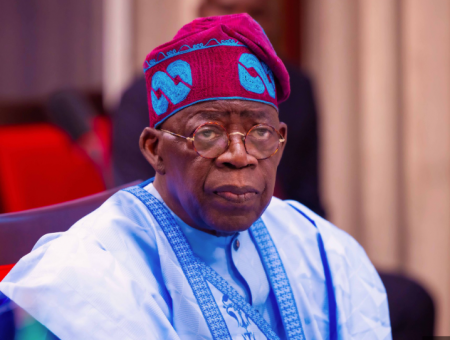
President Bola Tinubu has asked the Senate to confirm the nominations of new chief executives for the Nigerian Upstream Petroleum Regulatory Commission (NUPRC) and the Nigerian Midstream and Downstream Petroleum Regulatory Authority (NMDPRA).

The request followed the resignation of Farouk Ahmed as the chief executive of the NMDPRA and Gbenga Komolafe, chief executive of the NUPRC.

Ahmed and Komolafe were appointed in 2021 by the late former Muhammadu Buhari to head the two regulatory agencies created under the Petroleum Industry Act (PIA).

In separate letters to the Senate, Tinubu nominated Oritsemeyiwa Amanorisewo Eyesan as chief executive of the NUPRC and Saidu Aliyu Mohammed as chief executive of the NMDPRA.

President Tinubu has written to the Senate, requesting expedited confirmation of Oritsemeyiwa Amanorisewo Eyesan as CEO of NUPRC and Engineer Saidu Aliyu Mohammed as CEO of NMDPRA.

The two nominees are seasoned professionals in the oil and gas industry.

Eyesan, a graduate of Economics from the University of Benin, spent nearly 33 years with the NNPC and its subsidiaries. She retired as Executive Vice President, Upstream (2023–2024), and previously served as Group General Manager, Corporate Planning and Strategy at NNPC from 2019 to 2023.

Engineer Saidu Aliyu Mohammed, born in 1957 in Gombe, graduated from Ahmadu Bello University in 1981 with a Bachelor’s in Chemical Engineering. He was announced today as an independent non-executive director at Seplat Energy.

His prior roles include Managing Director of Kaduna Refining and Petrochemical Company and Nigerian Gas Company, as well as Chair of the boards of West African Gas Pipeline Company, Nigeria LNG subsidiaries, and NNPC Retail.

He also served as Group Executive Director/Chief Operating Officer, Gas & Power Directorate, where he provided strategic leadership for major gas projects and policy frameworks, including the Gas Masterplan, Gas Network Code, and contributions to the Petroleum Industry Act (PIA).

Engineer Mohammed played a pivotal role in delivering key projects such as the Escravos–Lagos Pipeline Expansion, the Ajaokuta–Kaduna–Kano (AKK) Gas Pipeline, and Nigeria LNG Train.

Continue Reading


Join Us On Facebook

Most Popular


Warning: Undefined array key "slug" in /home/porsch10/public_html/wp-includes/class-wp-theme-json.php on line 2117

Warning: Undefined array key "slug" in /home/porsch10/public_html/wp-includes/class-wp-theme-json.php on line 2117

Warning: Undefined array key "slug" in /home/porsch10/public_html/wp-includes/class-wp-theme-json.php on line 2117