Connect with us


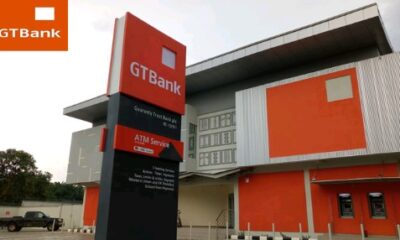
Segun Agbaje, the managing director/CEO of Guaranty Trust Bank (GTBank), is not a popular man. To many, he is aloof, too strait-laced, not your typical run-of-the-mill Nigerian. As one of Nigeria’s foremost bankers, he has a reputation for running a tight and efficient ship, is unflinching in his pursuit and recovery of loans from the country’s systemically chronic debtors who have a sense of entitlement believing that they can borrow depositors’ funds without paying back, and does not give a hoot about those critical of his take-no-prisoners approach to banking.

In the media space, he does not seek publicity, he lets his work speak for itself, could not care less if his story or photograph makes the front page of the newspapers, limits his bank’s advertising spend to what he believes is necessary to market and promote GTBank to a wider audience, and through NdaniTV and Ndani Blog understands the power of the social media in reaching out to youths that make a larger percentage of Nigeria’s and regional demographic where the bank operates.

To me, Agbaje is the ideal banker. He is not my friend and we only interact sparingly and strictly professionally as the need arises. Yet, I cannot help but wish that we had more bankers like him in this country. If we did, fewer Nigerian lenders would have to make provisions for unpardonable impairment charges on bad loans given to delinquent debtors, fewer banks would engage in reckless insider lending that threaten their capital adequacy and liquidity ratios, more banks would recognise that they have a fiduciary responsibility to manage their customers’ deposits with care, and more banks would know how to sweat their assets in the most cost-efficient manner to make the most attractive returns to their shareholders.

In all the key parameters used in defining the size of banks, GTBank, among the five Tier 1 banks in the country, is not by any stretch of imagination the biggest. In terms of total assets, loans and advances, customer deposits, number of branches, and presence on the African continent and beyond, FirstBank, Zenith Bank and United Bank for Africa (UBA) stand head and shoulders above GTBank. By Nigerian standards, the “big three” could be called banking behemoths and are very difficult to supplant. Still, GTBank, with its cost optimisation strategy, asset quality and stability ratios, among others, has over time proved to be the most profitable bank in the country. Its stock has remained the bellwether in the banking segment of the Nigerian bourse for years, signposting the confidence institutional and individual investors have in the bank.

But this article is not about GTBank’s financial performance. Its annual and quarterly reports, including those of its peers, are public documents that can be readily accessed for in-depth comparative assessment. What I have found more interesting about the bank is its focus on corporate social responsibility (CSR) and interventions in key economic sectors targeted at strengthening small businesses through not-for-profit fairs and capacity building initiatives. For two years in a row, GTBank has solely funded and hosted its Food and Drink Fair and Fashion Weekends, making them social and tourist events that feature prominently on Nigeria’s social calendar.

That is not to say that the bank has not focused on other areas of CSR. Its 2016 annual report showed that GTBank spent about 58 per cent of the N449.62 million of its CSR funds on education alone while community development accounted for another 30.8 per cent.

But it is GTBank’s focus on food, drink and fashion that have been the most impactful publicly, bringing together scores of promising, talented and recognised local and international chefs and food vendors, drinks makers and merchants, fashion houses, milliners, fashion accessory designers and leather goods makers in a dizzying, well-put together and well-thought out extravaganza that leaves the public yearning for more.

Both events, which are open to the public, have been attended by several thousands of people, including children, for two years running that have left attendees breathless and wondering how the bank manages to package the two fairs in areas where it has no competencies.

The trick, says Agbaje, whom I had to hound to open up on the success behind both fairs, is getting and attracting the best participants and controlling costs by getting the bank to work directly with the contractors who have to build the stalls, decorate the venue, create play areas and cooking classes exclusively for children, and provide the music, etc., during both fairs; no middlemen or consultants are used by the bank. For him, the fairs present an opportunity for GTBank to deepen its footprint in the retail banking space and increase its SME lending from 2 per cent of the bank’s loan book to 10 per cent over the next five years.

With time, he would also rather extend more loans to small and medium-sized businesses that are more impactful on the economy and achieve a loan recovery rate of 70-80 per cent, than pursue Nigeria’s so-called “big men” with woeful credit track records. Although he was demur about what it costs his bank to host both events, he was emphatic that making money at this juncture is not the overdriving objective, at least not in the short-term, but recognises the long-term benefits not just for GTBank but other Nigerian lenders.

Beyond this objective and given the magnitude of both fairs and their potential to grow into annual events that could attract millions from across the global, Agbaje’s vision is not one to be trifled with. Already, the GTBank Food and Drink Fair and the GTBank Fashion Weekend create thousands of direct and indirect jobs and referrals for hundreds of young Nigerians who have to build the stalls, decorate the venue, and provide the music, entertainment, security and other support services to make them a resounding success. And they have the potential to create even more.

Aside the suppliers, vendors and designers that make brisk business and achieve record sales during the fairs, the Master Classes included in both events are helping to build capacity and drive innovation in the creative industry that has proved to be a major magnate for Nigerian and African youths. By bringing them under one roof, GTBank has also provided a platform for shared services and given them the exposure that help these small businesses to grow and create more employment opportunities.

Without doubt, both fairs are worthy initiatives. But they could be better. In the last two years, GTBank has handled both fairs singlehandedly without support from other institutions and/or the Lagos State government, a direct beneficiary of the events and their spin-offs. In 2016, the food and drink fair alone attracted 25,000 people; this year, it attracted 75,000 people. I do not have the numbers for the bank’s fashion weekends, but I can imagine that the number of visitors will not be far off from those who attended the food and drink fairs.

Given the swelling numbers, both fairs have already started to cause traffic gridlocks on the days they are held. They are also attracting touts and hoodlums who mill around the roads leading to the venue and try to pounce on unsuspecting visitors as they alight from their cars or walk to the venue. On a positive note, big and boutique hotels, restaurants and food caterers on the Lagos Island experience an upsurge in occupancy rates and patronage by participants and the international media who have flown in to take part or cover the events. All these translate to more tourist dollars, taxes and revenue generation for the federal and Lagos State governments.

The import of this should not be lost on the federal and Lagos State governments.

They have to do more than just show a passing interest in what GTBank has started.

Given the potential for both fairs to become global destinations for tourists and visitors on the African continent, Lagos State in particular needs to improve on its infrastructure in and around the venue where both fairs are held. It must improve on traffic management and security to ensure that visitors can move about with ease and feel secure. According to Agbaje, in terms of support, the state government has not yet stepped up to the plate, nor has his bank sought for any. But he does acknowledge that with time, GTBank will have to reach out to Lagos State because of the interest both fairs are generating in terms of attendance and participation.

Right now, Agbaje appears to be satisfied with what his bank has accomplished in terms of bringing both fairs to the public’s consciousness. But do the federal and state governments understand the roles that they have to play in institutionalising them and ensuring that they outlast his stewardship in GTBank? Cities like Rio de Janeiro, London, Paris, New York and Melbourne that host major sporting, fashion, carnivals, music and film festivals every year, attracting thousands of visitors do not owe their success just to corporate sponsors but to the municipalities, state and federal governments that understand their roles and lend the required support to the private sector. As such, Lagos State needs to buy into the GTBank fairs as a public-private partnership that can and should work.

BIG STORY

JUST IN: Conoil And Total Energies Sign Massive Production Contract In Paris

Published

on

The Nigeria’s Oil And Gas Output is about to experience a big boost as Conoil and Total Energies sign massive production contract in Paris.

The contract was signed by Chairman of Conoil Producing, Dr. Mike Adenuga Jr., Commander of the French Légion d’Honneur (CdrLR) Mr. Patrick Pouyanné, Chairman and Chief Executive Officer of TotalEnergies, at the company’s headquarters at LA DEFENSE, in Paris.


More to come…

Continue Reading

BIG STORY

UBA Sponsors Lagos Fair For Seventh Consecutive Year, Launches Special Draw For Customers

Published

on

  • commits to growing SMEs for global Impact


Africa’s Global Bank, United Bank for Africa (UBA) Plc, has reiterated its commitment towards supporting the growth of Small and Medium Scale businesses for global impact, as it headlines the sponsorship of the Lagos International Trade Fair (LITF) for the seventh consecutive year.

Organised by the Lagos Chamber of Commerce and Industry (LCCI), this year’s trade fair, which was flagged off on Friday November 7, at the Tafawa Balewa Square, Onikan, Lagos will be open to all till November 17, 2025, and is expected to attract thousands of exhibitors, investors, and visitors from across Nigeria and the globe.

In line with its customer-first philosophy, UBA will host a rewarding experience for its customers with a dedicated, full-service branch within the trade-fairground.

Account holders who perform any transaction, such as deposits, withdrawals, or transfers, etc, at this branch will be instantly eligible to participate in a special “Lucky Dip” draw, which will offer them the chance to win a variety of premium prizes.

Speaking during the opening ceremony of the fair, UBA’s Head, SME Banking, Babatunde Ajayi, underscored the strategic importance of the longstanding partnership with LCCI while reaffirming that this collaboration is a critical component of the bank’s core mission to mobilise capital as well as empower enterprises of all scales, with a focus on growing SMEs for global impact.

“Our consistent support for the LITF and our strategic, bank-wide initiatives around the AfCFTA are interconnected,” Ajayi stated. “They are two sides of the same coin, and it reflects a deep-seated commitment to building the robust financial architecture that is required to empower African businesses and enable them trade seamlessly across borders.”

UBA’s Group Head, Marketing and Corporate Communications, Alero Ladipo, positioned the bank’s participation within the context of its vision for Africa’s economic transformation, as detailed in its recently published white paper on achieving a $4 trillion continental economy.

“The LITF represents one of several strategic platforms through which UBA is actively translating the ambitious goals of our whitepaper into tangible action,” Ladipo said. “Our comprehensive roadmap to a $4 trillion African economy is being built through practical, on-ground engagements such as this, which is focused on growing SMEs for global impact. These are platforms that directly connect businesses, facilitate commerce, and unequivocally demonstrate our resolve to turn a bold vision into a tangible reality for millions.”

Ladipo noted that deep partnerships, which are complemented by continuous digital innovations and cross-border trade solutions, will lay the groundwork for sustainable, inclusive economic growth that will benefit corporations, SMEs, and individual entrepreneurs across Africa.

United Bank for Africa is one of the largest employers in the financial sector on the African continent, with 25,000 employees’ group-wide and serving over 45 million customers globally. Operating in twenty African countries and the United Kingdom, the United States of America, France and the United Arab Emirates, UBA provides retail, commercial and institutional banking services, leading financial inclusion and implementing cutting-edge technology.”

“Our consistent support for the LITF and our strategic, bank-wide initiatives around the AfCFTA are interconnected,” Ajayi stated. “They are two sides of the same coin, and it reflects a deep-seated commitment to building the robust financial architecture that is required to empower African businesses and enable them trade seamlessly across borders.”

UBA’s Group Head, Marketing and Corporate Communications, Alero Ladipo, positioned the bank’s participation within the context of its vision for Africa’s economic transformation, as detailed in its recently published white paper on achieving a $4 trillion continental economy.

“The LITF represents one of several strategic platforms through which UBA is actively translating the ambitious goals of our whitepaper into tangible action,” Ladipo said. “Our comprehensive roadmap to a $4 trillion African economy is being built through practical, on-ground engagements such as this, which is focused on growing SMEs for global impact. These are platforms that directly connect businesses, facilitate commerce, and unequivocally demonstrate our resolve to turn a bold vision into a tangible reality for millions.”

Ladipo noted that deep partnerships, which are complemented by continuous digital innovations and cross-border trade solutions, will lay the groundwork for sustainable, inclusive economic growth that will benefit corporations, SMEs, and individual entrepreneurs across Africa.

United Bank for Africa is one of the largest employers in the financial sector on the African continent, with 25,000 employees’ group-wide and serving over 45 million customers globally. Operating in twenty African countries and the United Kingdom, the United States of America, France and the United Arab Emirates, UBA provides retail, commercial and institutional banking services, leading financial inclusion and implementing cutting-edge technology.”

Continue Reading

BIG STORY

At UBA Business Serie, Digital Entrepreneurs Highlight Authenticity, Consistency, Passion As Real Game-Changer

Published

on

Africa’s Global Bank, United Bank for Africa (UBA) Plc, hosted another enlightening edition of the UBA Business Series, bringing together some of Africa’s most dynamic digital entrepreneurs and influencers to discuss the secrets behind building impactful online communities.

This edition of the Business Series, which had the theme, “Content that Converts: Building Influence and Driving Growth Through Strategic Marketing,” was held at the Tony Elumelu Amphitheatre in UBA Head Office, Marina, Lagos on Thursday.

The very engaging session, shed light on how authenticity, consistency, and passion remain true cornerstones of success in the ever-evolving digital landscape, while the content creators shared first-hand experiences from their journeys across diverse industries and markets.

UBA’s Group Head, Digital Banking, Kayode Olubiyi, who welcomed participants and the panellists to the session, reaffirmed the bank’s commitment to empowering entrepreneurs across Africa through knowledge-sharing and capacity-building initiatives such as the Business Series.

He emphasised that the quarterly event continues to serve as vital avenues for supporting innovation and entrepreneurship, equipping individuals with practical insights to grow their brands and businesses in a competitive digital economy.

In his keynote address, the Managing Director/CEO at Nitro 121, Dr. Lampe Omoyele, who said that “You can create something out of what appears to be nothing,” gave insight on key trends to develop content that creates Impact.

He noted that content creation should go beyond aesthetics or trends to focus on value, purpose, and agility as he pointed out that creators who aim to make a difference must develop a clear personal brand identity and remain consistent in delivering messages that resonate with their audience.

The panel session featured an impressive line-up of digital entrepreneurs and content creators, including Digital Creator and Actor, Elozonam Ogbolu; Digital Health Educator, Chinonso Egemba (Aproko Doctor); Kenyan Actress and Media Entrepreneur, Catherine Kamau; Content Creator, Nasiru Lawal (Nasboi) and Digital Influencer, Enioluwa Adeoluwa, who was also the moderator of the event.

Growth is very important, says Nasiru Lawal. “For the younger creators here, my best advice is this: please prioritise your growth. As a creator, the moment you become famous, you no longer move at your own pace; you move at the people’s pace. It is therefore important to ensure you grow consistently and then overtime, the recognition and the money begins to roll in.”

Elozonam Ogbolu who agreed with Lawal, had this to say: “Content creators have to engage their audience with proper storytelling, because brands are always out to carefully choose their creators. For the brands, you must pick your influencer or ambassador very deliberately and work together over time to grow. That is when you will see a proper return on investment.

In his submission, Chinonso Egemba, said, “If you’re building a business or doing content creation, treat content creation as a business. When you treat it as a business, it needs proper structure. Otherwise, it won’t last. If you don’t put structure in place, you’ll end up responsible for everything, and that leads to burnout. You have to build structure, because if you want longevity, structure is very essential.

For Catherine Kamau, it is important for content creators to find a balance and stay close to their community. “What I realized is I have a community that keeps me grounded, and that’s family. When you get famous, you tend to forget where you come from, you know, social media is an illusion and you start assuming that it is your real family until bad things happen to you. So please remember the real people in your life, because fame can get to your head, but those are not the people who are going to have your back when things go south.”

The creators while sharing their diverse experiences, they collectively emphasized that building a personal brand should take precedence over chasing financial gain. They also underscored the importance of originality, urging young creators to find their unique niche rather than replicating what others have done.

UBA’s Group Head of Marketing and Corporate Communications, Alero Ladipo, who commended panellists for taking time to share their useful insights at the event, took time to celebrate the UBA Management for organising conversations like this which according to her, ‘remain impactful and will impact not just the individual customers, but also the economies at large.”

United Bank for Africa is one of the largest employers in the financial sector on the African continent, with 25,000 employees group wide and serving over 45 million customers globally. Operating in twenty African countries and the United Kingdom, the United States of America, France and the United Arab Emirates, UBA provides retail, commercial and institutional banking services, leading financial inclusion and implementing cutting edge technology.

Continue Reading

Most Popular


Warning: Undefined array key "slug" in /home/porsch10/public_html/wp-includes/class-wp-theme-json.php on line 2117

Warning: Undefined array key "slug" in /home/porsch10/public_html/wp-includes/class-wp-theme-json.php on line 2117

Warning: Undefined array key "slug" in /home/porsch10/public_html/wp-includes/class-wp-theme-json.php on line 2117