Connect with us


NEWS

Sad!!! Another Woman, Bolanle Ogundipe Dies Mysteriously; Husband Figured As Prime Suspect [PHOTO]

Published

on

Bolanle-Ogundipe-2

Weeks after the case of Mrs Ronke Shonde went viral and we haven’t seen the last of the case as investigations by the Nigerian Police still continues to unravel the mysteries behind her untimely death.

Another life wasted but the family members of Late Mrs Shonde still can take consolation in the fact that they have physical admissible evidence to contest the case legally.

However, how do you get justice when the case involved is based on supernatural influence or power otherwise known as (Jazz or Juju)?

According to a report by Goldmyne TV, a concerned associate of the deceased recounts issues that led to the death of one Mrs Bolanle Ogundipe Nee Ogunyanwo on Thursday, 19th of May, 2016. Late Bolanle was married to Mr Oluwadamilola Ogundipe and their union was 17 years strong. Until her death, she was 39 years and had 4 beautiful children. Her first child is a teenage boy and three other girls followed.

Bolanle Ogundipe and Kids

Bolanle Ogundipe and Kids

According to our source who decided to stay anonymous due to the situation surrounding the mysterious death, it was said that trouble began when the son of the deceased, Tolu found a weird looking fetish item in his father’s car and a paper with inscriptions inside. The item discovered looked like a bottle with feathers covering it. Inside the fetish item was a piece of paper, which had the name of the deceased, her mother and the deceased husband’s name and other items.

73SHARES     COMMENTS THE YEAR 2016 HAS RECORDED MORE CASES OF WIFE BATTERY, DOMESTIC VIOLENCE AND PREMEDITATED MURDER. NOW, THIS DOESN’T MEAN WOMEN HAVEN’T CONSTANTLY BEEN VICTIMS OF DOMESTIC VIOLENCE IN THE PAST, BUT THAT MANY PEOPLE HAVE BECOME MORE AWARE AND THE SOCIAL MEDIA HAS BECOME A VITAL TOOL TO SENSITIZE THE PUBLIC ABOUT SUCH CASES. Recently, the case of Mrs Ronke Shonde went viral and we haven’t seen the last of the case as investigations by the Nigerian Police still continues to unravel the mysteries behind her untimely death. Another life wasted but the family members of Late Mrs Shonde still can take consolation in the fact that they have physical admissible evidence to contest the case legally. However, how do you get justice when the case involved is based on supernatural influence or power otherwise known as (Jazz or Juju)?   GoldmyneTv exclusively obtained this information from a concerned associate of a deceased who recounts issues that led to the death of one Mrs Bolanle Ogundipe Nee Ogunyanwo on Thursday, 19th of May, 2016. Late Bolanle was married to Mr Oluwadamilola Ogundipe and their union was 17 years strong. Until her death, she was 39 years and had 4 beautiful children. Her first child is a teenage boy and three other girls followed.   According to our source who decided to stay anonymous due to the situation surrounding the mysterious death, it was said that trouble began when the son of the deceased, Tolu found a weird looking fetish item in his father’s car and a paper with inscriptions inside. The item discovered looked like a bottle with feathers covering it. Inside the fetish item was a piece of paper, which had the name of the deceased, her mother and the deceased husband’s name and other items. Read also:  ACTRESS, ADEDIWURA BLARKGOLD TAKES "GIVING IS FUN" PROJECT TO DESTITUTES IN EBUTE METTA See fetish item and paper with inscription inside.   PICTURE OF FETISH ITEM

PICTURE OF FETISH ITEM

The scared boy informed his mother of what he saw and the deceased alerted her mother who hurriedly came to their house in Opic Estate, Agbara. Bolanle’s mother questioned her son in law but he denied all and stormed out of the house. Being a Christian, the Deceased mother prayed over the situation and brushed all aside.

PICTURE OF PAPER WITH INSCRIPTION

PICTURE OF PAPER WITH INSCRIPTION

Mr Damilola later returned home that night and immediately picked some items and left the house. The deceased made several efforts to reach out to her husband to plead for his return but he refused.

MRS BOLANLE OGUNDIPE’S HUSBAND, MR DAMILOLA OGUNDIPE

MRS BOLANLE OGUNDIPE’S HUSBAND, MR DAMILOLA OGUNDIPE

It was also said that she made frantic efforts to involve the family to settle the dispute but he still refused. He was later said to have informed the family that he couldn’t return home until about 3 months since his wife couldn’t keep her mouth shut on what she saw.

During the 3 months, the husband avoided home and sighting his wife. The family then went on with their lives trying to put the past behind them until tragedy stuck on Wednesday, 18th of May, 2016.
Bolanle Ogundipe complained that she was feverish and contacted her mother. Her mother arrived at her home and arranged for her to be taken to a hospital. Her husband was contacted but he refused to come to the hospital. The doctors attended to her but her condition got worse until she gave up on Thursday, 19th of May, 2016, exactly 3 months after the husband left their home.

Her body was later deposited at Badagry Hospital Mortuary on the same day. After receiving the information that the woman was dead, the husband proceeded to the mortuary with his father to claim the body. However, he met strong resistance from the deceased family members who refused to hand over the body to him considering the mysterious situation in which their daughter died. It was said that the husband even tried to negotiate with the mortuary attendants to get certain parts off the deceased body saying he wanted to do some spiritual things to bring her killers to justice. In Yoruba, (won ro oku)

In a quick response, the deceased family arranged for their daughter to be buried at her home in Opic Estate, Agbara on Friday, 20th of May, 2016. After the burial, neighbours said some men came at night saying they needed to exhume the body but members of the deceased family were contacted and the men disappeared.

The question that lingers on the hearts of concerned and involved members of the public is how would the members of the family get justice in this situation as the mystery surrounding the death of Bolanle stems from the use of charms (Juju), which cannot be tendered in court.

The deceased was said to have contributed a huge part of her earnings to supporting her family before her death and endured thorough hardship and domestic violence at the home front before her death.

The deceased is survived by her husband, Damilola Jado Ogundipe, her mother, a son and three daughters.

NEWS

Adron Homes Unveils “Love for Love” Valentine Promo with Exciting Discounts, Luxury Gifts, and Travel Rewards

Published

on

In celebration of the season of love, Adron Homes and Properties has announced the launch of its special Valentine campaign, “Love for Love” Promo, a customer-centric initiative designed to reward Nigerians who choose to express love through smart, lasting real estate investments.

The Love for Love Promo offers clients attractive discounts, flexible payment options, and an array of exclusive gift items, reinforcing Adron Homes’ commitment to making property ownership both rewarding and accessible. The campaign runs throughout the Valentine season and applies to the company’s wide portfolio of estates and housing projects strategically located across Nigeria.

Speaking on the promo, the company’s Managing Director, Mrs Adenike Ajobo, stated that the initiative is aimed at encouraging individuals and families to move beyond conventional Valentine gifts by investing in assets that secure their future. According to the company, love is best demonstrated through stability, legacy, and long-term value—principles that real estate ownership represents.

Under the promo structure, clients who make a payment of ₦100,000 receive cake, chocolates, and a bottle of wine, while those who pay ₦200,000 are rewarded with a Love Hamper. Payments of ₦500,000 attract a Love Hamper plus cake, and clients who pay ₦1,000,000 enjoy a choice of a Samsung phone or a Love Hamper with cake.

The rewards become increasingly premium as commitment grows. Clients who pay ₦5,000,000 receive either an iPad or an all-expenses-paid romantic getaway for a couple at one of Nigeria’s finest hotels, which includes two nights’ accommodation, special treats, and a Love Hamper. A payment of ₦10,000,000 comes with a choice of a Samsung Z Fold 7, three nights at a top-tier resort in Nigeria, or a full solar power installation.

For high-value investors, the Love for Love Promo delivers exceptional lifestyle experiences. Clients who pay ₦30,000,000 on land are rewarded with a three-night couple’s trip to Doha, Qatar, or South Africa, while purchasers of any Adron Homes house valued at ₦50,000,000 receive a double-door refrigerator.

The promo covers Adron Homes’ estates located in Lagos, Shimawa, Sagamu, Atan–Ota, Papalanto, Abeokuta, Ibadan, Osun, Ekiti, Abuja, Nasarawa, and Niger States, offering clients the opportunity to invest in fast-growing, strategically positioned communities nationwide.

Adron Homes reiterated that beyond the incentives, the campaign underscores the company’s strong reputation for secure land titles, affordable pricing, strategic locations, and a proven legacy in real estate development.

As Valentine’s Day approaches, Adron Homes encourages Nigerians at home and in the diaspora to take advantage of the Love for Love Promo to enjoy exceptional value, exclusive rewards, and the opportunity to build a future rooted in love, security, and prosperity.

Continue Reading

NEWS

Sanwo-Olu’s Tough Actions, Soft Power By Tunji Bamishigbin

Published

on

If there has ever been one man, one governor in Lagos State, who has done greater things with immeasurable boldness despite his simple nature, that person is the current governor, Mr Babajide Olusola Sanwo-Olu. When it comes to daring projects, this gentleman stands taller. Let me break it down.

1: Last Friday, I drove by Alausa, and I saw the State Secretariat Extension building opposite the Bureau of Land and the Ministry of Environment and Water Resources. That building was meant to house the State MDA offices that are spread across the state in rented buildings. The building project has passed through God knows the number of administrations in the State, and I always wondered what was responsible for the delay in completing that single project. Against whatever odds, the administration of Sanwo-Olu has taken up the project and almost completed it. It is hoped that, on completion, it will be put into use and afford the State huge savings from the annual rents it has been expending yearly.

2: The Oko Baba log market by the Ebute Meta waterfront. This is a community that has existed for over a century. The log market has been a stain on the beauty that the waterfront would have complemented the view from the Third Mainland Bridge. No administration– military or civilian– in the past was bold enough to tackle the menace.

When I first heard Governor Sanwo-Olu’s administration’s intention to evacuate the market to Agbowa-Ikosi in his speech at the inauguration of the Epe Film Village, where I sat in the hall near my friend and colleague, Tade Ogidan, I remembered whispering to him that the Governor’s pronouncement was a political statement and doubted how he could achieve that.

Behold, the day I saw the location from the Third Mainland Bridge, sometime mid-last year or thereabout, I had to park and took a proper view of the site with the sawmillers already evacuated to a brand new purpose-built Timberville in Agbowa-Ikosi. That took some guts that the previous administrations’ military or civilian could not attempt. The major credit for that assignment was how it was done quietly.

3: The Pelewura Market: This market, I remember, was built on a site that used to be a dumpsite by the Lagoon on Adeniji Adele, before the Third Mainland was built.
The place used to be another ‘Owode Onirin’ where scraps were traded, particularly by the ljebu traders who were the original motor spare parts traders before the advent of the Eastern traders after the war.

I cannot remember the administration that later acquired the site and constructed lock-up shops on it that were sold to individuals. However, rather than the shops being used for trading, many were converted to accommodation that was let out to many undocumented characters that flung the State within and without the country. Thus, Pelewura Market gradually became unkept and a den for criminals.

Many administrations had watched this site unattended before now. It was the same day I saw the Oko Baba evacuation that l saw the demolition of Pelewura Market by this administration. It is the same daring approach being witnessed now at Makoko –Nigeria’s largest informal waterfront community.

Previous administrations saw the need to remove the illegal residents and traders on the Makoko corridor, who built their homes on makeshift stilts with the attendant danger and serious environmental degradation of the location and unsuitable view of the waterfront, but were frightened by the threat of those NGO Groups, who had turned the community into a money spinning activities for sustenance. I can see Governor Sanwo-Olu going headlong to achieve that which other administrations, in the past, have not been able to do.

I have seen many praise the courage exhibited by former Lagos Military Governor, General Raji Rasaki, concerning the overnight demolition of Maroko and the evacuation of the people residing there. I would say there is nothing spectacular about the daring posture of Gen. Raji Rasaki. It was a military regime that could have done the same to a community that was covered by adequate titles to their homes, and nothing could have happened.

The aforementioned Sanwo-Olu administration stands taller concerning bold policies to achieve difficult assignments that benefit the State.

The icing is the fact, that, the governor applied his quiet and simple nature in achieving all of these without unnecessarily talking down on victims, like a certain former governor and now Minister that we all know.

However, the Sanwo-Olu administration needs to improve on its supervision of the public infrastructure it builds or maintains. This is one weakness I have observed.

Oshodi was cleaned up by the Babatunde Raji Fashola administration, and discipline was introduced in the running of the place by the National Union of Road Transport Workers, NURTW.
The
Akinwunmi Ambode administration also gave the corridor a facelift, with the construction of the high-tech terminal. But today, Oshodi appears to be going back to the previous times. The terminal is underutilised and not in a good state.

A close example is the activities of the itinerant street boys, called Bolar Boys. My last check on Lateef Jakande Road, in Agidingbi area of Lagos, revealed how these boys have gradually removed the strong iron protection railings at the Bus Stop from the one by the Lagos Television, LTV, opposite Coca Cola Plants. Ditto the one at Agidingbi Primary School Bus Stop, and the same goes for the one at Agidingbi Grammar School and the one by Mega Chicken.

To think that these are locations close to the government offices, and some guys are employed as Business District Police but choose to engage in vehicular assignments. This needs to be looked into.

Lastly, the Governor, as part of his unique endeavours in breaking the ice that others were not able to dare, should add to his schedule Oba Akran Road and its adjacent roads that are holding industries, a total reconstruction as done in Apapa, Surulere (Eric Moore), and other industrial locations in the State.

Of course, I am aware of the two major impediments on that road: the overhead mini high tension electric cables and the underground gas pipe laid. These, I believe, are surmountable, going by the daring nature of the governor in infrastructural engagement. The unique achievement this will be is the first transformation of the first main road that held the very first industrial estate in Nigeria by the colonial administration and developed by the sage, Chief Obafemi Awolowo, administration in the first republic.

More so, Baba Awo will be glad in heaven.

Barrister Tunji Bamishigbin is a lawyer and creative entrepreneur. He writes from Lagos

Continue Reading

NEWS

Reimagining Urban Spaces: The Forward-Thinking Public-Private Collaboration in Obalende’s Transformation By Babajide Fadoju

Published

on

On January 21, 2026, Tokunbo Wahab, the Honorable Commissioner for the Environment and Water Resources in Lagos State, led an inspection of the Obalende Underbridge and motor park area. What followed was not just an enforcement action but a visionary step toward reclaiming public spaces for the greater good. This initiative, culminating in a groundbreaking partnership with MTN Nigeria announced on January 27, 2026, exemplifies the power of public-private collaboration in addressing entrenched urban issues.

By weaving together elements of environmental stewardship, technological innovation, social equity, and economic efficiency, this collaboration sets a precedent for how Nigeria can tackle its infrastructure deficits through synergistic partnerships. Drawing on historical context, project details, public reactions, and comparative analyses with past initiatives, we will unpack why this is not merely a redevelopment but a blueprint for resilient urban futures. In an era where climate change, population growth, and resource scarcity demand innovative solutions, this project will show what can be achieved when government vision meets private sector agility.

Setting the Stage for Change
Lagos, with its estimated 25 million residents, is a city of contrasts: gleaming skyscrapers juxtaposed against sprawling slums, vibrant markets overshadowed by environmental hazards. The underbridge spaces, in particular, have become emblematic of this paradox. Historically, areas like Obalende Underbridge have served as makeshift homes for squatters, hubs for unregulated motor parks, and dumping grounds for waste, fostering environmental degradation and security risks. These spaces, often overlooked in urban planning, contribute to flooding, pollution, and crime, undermining the city’s livability.

The issues are not new. As far back as 2024, the Lagos State Government issued notices to squatters in Obalende, signaling a long-term commitment to reform. Yet, enforcement lagged until Commissioner Wahab’s decisive intervention in January 2026. During his inspection, he emphasized that this was “not a sudden action,” but part of a broader strategy to redesign underbridge areas into “clean, safe, and functional public spaces.” This approach reflects a thoughtful recognition of the human element: squatters were given prior warnings, avoiding the pitfalls of abrupt displacements that have plagued similar evictions in the past. Instead of mere clearance, the plan involves handing the space over to a private sector partner for redevelopment and maintenance under Corporate Social Responsibility (CSR) frameworks.

This initial vision included features like a motor garage, public toilets, sleeping bays, and electric vehicle (EV) charging points: elements that address immediate needs while anticipating future trends. The objective? To end environmental degradation, expel criminal elements, and repurpose spaces sustainably. This sets the foundation for what would become the Y’ELLO Bus Park, a collaboration that amplifies these goals through private expertise.

The Genesis of a Transformative Partnership: Lagos State and MTN Nigeria
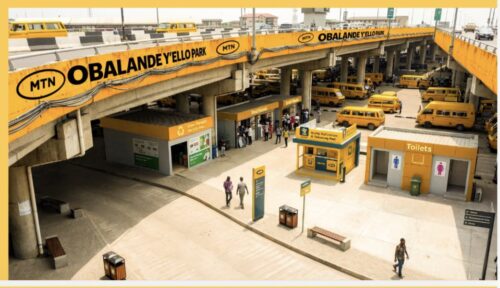
On January 27, 2026, via his X handle @tokunbo_wahab, Commissioner Wahab announced the partnership with MTN Nigeria to transform the Obalende Underbridge into the Y’ELLO Bus Park: a modern, well-structured transport hub. This collaboration is a classic example of Public-Private Partnership (PPP), where the government provides regulatory support and land, while the private entity (in this case, MTN, Africa’s leading telecommunications giant) invests in development and operations.

MTN’s involvement is rooted in its CSR ethos, with a track record of community projects across Nigeria. The deal stipulates that MTN will manage and operate the space for an initial three years, with renewal options. This structure ensures accountability and sustainability, as public conversations highlight: one commenter noted, “MTN will manage and operate the space for 3 years. And the deal is renewable,” while another expressed caution about long-term retention, referencing past projects like the Independence Tunnel at Maryland, which deteriorated after MTN’s exit until new partners stepped in.

What makes this PPP thoughtful? It goes beyond superficial beautification. The design converts a “notorious and degraded space” into a functional facility featuring an organized transport terminal, recycling drop-off station, road camp for LAWMA sweepers and security agencies, over 60 public toilet fixtures, kiosks, and more. Safety is prioritized with solar-powered lighting to enhance CCTV effectiveness and reduce blind spots. Health and environmental concerns are addressed through a biodigester system for wastewater management and a dedicated recycling station to curb illegal dumping. In line with climate goals, solar panels will power operations, reducing carbon footprints, and tree planting will improve air quality and aesthetics.

This integration of multiple stakeholders (from government ministries to private corporations and even security agencies) demonstrates a holistic approach. Unlike top-down impositions, the project incorporates feedback loops, as evidenced by public X discussions praising the “power of synergy and friendship” and noting the automation to minimize “agbero” (tout) influence, thereby taking control away from “non-state actors.”

Thoughtfulness in Design: Balancing Human Needs, Safety, and Sustainability
The thoughtfulness of the Obalende project lies in its multifaceted design that considers the diverse needs of Lagosians. Urban redevelopment often focuses on aesthetics at the expense of functionality, but here, the emphasis is on creating a “community-centred facility” that serves commuters, residents, sweepers, and security personnel alike.

Consider the public toilets: with over 60 fixtures, this addresses a chronic issue in Lagos, where lack of sanitation facilities leads to open defecation and health risks. The biodigester system, which converts waste into biogas or fertilizer, is a stroke of genius. It not only manages wastewater sustainably but also aligns with circular economy principles, turning a liability into an asset.

Security enhancements are equally thoughtful. Obalende has long been plagued by criminal activities under bridges, where poor lighting creates havens for illicit dealings. Solar-powered lighting and improved CCTV integration directly tackle this, improving nighttime visibility and deterring crime. Public reactions underscore this: “We are taking everything away from the ‘non-state actors’,” reflecting community relief at reduced tout influence through automation.

Environmental thoughtfulness shines through in the recycling station and tree planting. Lagos generates massive waste, much of it dumped illegally, exacerbating flooding and pollution. By incorporating a drop-off point, the project encourages responsible disposal, potentially reducing environmental degradation in the Obalende axis. Tree planting, meanwhile, combats urban heat islands and improves biodiversity, a subtle yet impactful nod to climate resilience.

This design philosophy echoes successful PPPs in Nigeria’s past. For instance, the Lekki-Epe Expressway project, a PPP between Lagos State and private investors, improved traffic flow and urban connectivity, though it faced tolling controversies. Similarly, the Lagos Bus Rapid Transit (BRT) system, another PPP, enhanced public transport efficiency, reducing congestion and emissions. The Obalende initiative builds on these by embedding environmental safeguards from the outset, avoiding the pitfalls of earlier projects where sustainability was an afterthought.

Moreover, the inclusion of EV charging points is a thoughtful anticipation of Nigeria’s shift toward green mobility. With global pressures to reduce fossil fuel dependence, Lagos (a city choking on vehicle emissions) positions itself as a leader in Africa’s electric vehicle adoption. This feature not only supports commuters but also signals to investors that Lagos is investment-ready for sustainable tech.

In essence, the project’s thoughtfulness manifests in its empathy for end-users. It’s not just about clearing space; it’s about creating value that uplifts the community, mitigates risks, and fosters inclusivity. As one X user imagined, “Wow! This is lovely… I am already imagining how beautiful it would be,” capturing the aspirational quality of this redesign.

Forward-Thinking Innovation: Pioneering Sustainability in a Climate-Vulnerable City
If thoughtfulness is the project’s heart, forward-thinking is its brain: a strategic orientation toward future challenges. Lagos faces existential threats from climate change, including rising sea levels, intensified flooding, and resource strains. The Y’ELLO Bus Park project embeds innovations that position it as a model for resilient urbanism.

Solar power integration is a prime example. By installing panels for lighting and operations, the project reduces reliance on Nigeria’s unreliable grid, cutting costs and emissions. This aligns with global Sustainable Development Goals (SDGs), particularly SDG 7 (Affordable and Clean Energy) and SDG 13 (Climate Action). In a country where power outages are routine, solar adoption ensures operational continuity, enhancing the park’s viability.

The biodigester and recycling components are equally prescient. Nigeria’s waste management crisis is acute, with Lagos alone producing over 13,000 tons daily. The biodigester promotes waste-to-energy conversion, a technology gaining traction in Africa for its dual benefits of sanitation and renewable energy. Coupled with the recycling station, it discourages illegal dumping, potentially diverting hundreds of tons from landfills annually.

Automation in the bus park is another forward-thinking element. By minimizing human intervention in operations (such as ticketing and parking), the project reduces corruption and inefficiency associated with “agberos.” This digital shift could integrate with smart city initiatives, like real-time tracking apps, making Obalende a node in Lagos’s emerging intelligent transport network.

Tree planting and air quality improvements anticipate health impacts of urbanization. With Lagos’s air pollution levels often exceeding WHO guidelines, greening efforts could lower respiratory diseases and enhance mental well-being. This holistic view extends to economic foresight: the park’s kiosks and terminals will create jobs, stimulating local commerce in a sustainable manner.

Comparatively, past Nigerian PPPs like the maritime developments in Apapa have leveraged private expertise for efficiency but often lacked environmental foresight. The Obalende project rectifies this by prioritizing decarbonization and sustainability, as highlighted in studies on PPPs’ role in green economies. By incorporating these elements, it not only addresses current woes but also prepares for a future where climate responsibility is non-negotiable.

Public discourse reinforces this: Comments like “I prefer a long-term retainership… We operate in a political environment; TW is destined for higher calling” acknowledge the need for enduring structures amid political flux. The renewable three-year term with MTN allows flexibility while ensuring continuity, a forward-thinking hedge against uncertainties.

A Triple Win: Benefits for MOE, TW, and Lagos State
The Obalende project is a resounding win across stakeholders, embodying the synergies of PPPs.

For the Ministry of the Environment and Water Resources (MOE), it’s a triumph in mandate fulfillment. MOE’s core objectives include combating degradation, promoting sustainability, and managing water resources. This initiative directly advances these by reclaiming polluted spaces, introducing waste management tech, and enhancing flood resilience through better land use. Financially, PPPs alleviate budget strains: with Nigeria’s infrastructure gap estimated at trillions of naira, private funding from MTN allows MOE to allocate resources elsewhere. Moreover, the project’s success could attract more partners, scaling MOE’s impact statewide.

For Commissioner Tokunbo Wahab (TW), this cements a legacy of visionary leadership. Known for his legal acumen and environmental advocacy, Wahab’s hands-on approach (from inspections to public announcements) showcases proactive governance. As public comments suggest, “TW is destined for higher calling,” this project bolsters his profile, demonstrating tangible results in a political landscape where environmental wins are rare. It also mitigates criticisms of evictions by emphasizing humane, sustainable redevelopment, enhancing his reputation as a thoughtful reformer.

For Lagos State at large, the wins are profound. Economically, the Y’ELLO Bus Park will streamline transport, reducing congestion in a key hub like Obalende, which connects Lagos Island to the mainland. This could boost productivity, with commuters saving time and money. Socially, improved safety and amenities foster community trust, reducing crime and health risks. Environmentally, lower emissions and better waste handling contribute to a cleaner Lagos, aligning with the state’s THEMES+ agenda (Traffic Management, Health, Education, etc.).

Broader implications include job creation (from construction to operations) and tourism appeal, as the beautified space draws visitors. In a city where 70% of residents rely on public transport, this hub enhances equity, particularly for low-income groups. Studies on PPPs in Nigeria highlight how such collaborations drive growth, with successes like housing developments in Lagos demonstrating improved service delivery.

Challenges remain, as noted in public conversations: Political transitions could disrupt continuity, and past PPPs like the Independence Tunnel underscore the need for robust contracts. Yet, the renewable model and joint sponsorship potential (e.g., with Coca-Cola) provide safeguards. Overall, this is a win that amplifies Lagos’s resilience, proving PPPs can bridge public needs with private innovation.

Public Reactions and the Path Forward: Building Consensus for Sustainable Urbanism
Public engagement, as seen on X, has been overwhelmingly positive, with users hailing the “beautiful” transformation and “synergy.” Concerns about long-term management are valid, prompting discussions on renewal and multi-sponsor models. This dialogue underscores the project’s inclusivity, allowing citizen input to refine implementation.

Looking ahead, the Obalende model could inspire replications in areas like Oja Oba or Adeniji-Ilubirin, as mentioned in Wahab’s statements. Nationally, it highlights PPPs’ potential in addressing infrastructure deficits, with benefits like private funding and expertise transfer. To maximize impact, stakeholders must prioritize transparency, community involvement, and performance metrics.

In conclusion, the Obalende Underbridge redevelopment is a masterclass in thoughtful, forward-thinking public-private collaboration. By transforming a degraded space into a sustainable hub, it delivers wins for MOE in environmental gains, for TW in legacy-building, and for Lagos in enhanced livability. As Nigeria navigates urbanization, such initiatives light the way toward a cleaner, safer, and more resilient future. Together, we can reclaim our cities, one bridge at a time.

Continue Reading


Join Us On Facebook

Most Popular


Warning: Undefined array key "slug" in /home/porsch10/public_html/wp-includes/class-wp-theme-json.php on line 2117

Warning: Undefined array key "slug" in /home/porsch10/public_html/wp-includes/class-wp-theme-json.php on line 2117

Warning: Undefined array key "slug" in /home/porsch10/public_html/wp-includes/class-wp-theme-json.php on line 2117