Connect with us


BIG STORY

Osun PDP: Ogunbiyi Attacks Ayu, Adeleke Quits, Elders Endorse Babayemi

Published

on

Three governorship aspirants of the Peoples Democratic Party in Osun State have withdrawn from the party’s primary election scheduled to hold on Tuesday (today).

Those who withdrew from the race on Monday are Akin Ogunbiyi, Fatai Akinbade, and Dele Adeleke.

Ogunbiyi, while announcing his withdrawal in Osogbo, said he withdrew from the contest because of the alleged bias of the PDP national chairman, Senator Iyorchia Ayu.

He said, “It is a very difficult decision for me because of the amount of investment and the hope that my personality and leadership would have given to Osun State.

“But when you have an umpire who is so biased to the extent of planning with the other group, what can you do?

“Senator Ayu has agreed to work with Ademola Adeleke and I am being told that I shouldn’t waste my money and we did everything possible. I can only conclude to withdraw from the race.”

Akinbade, in a statement obtained in Osogbo on Monday, said he was withdrawing from the race in respect of the decision of the party elders who have named Dotun Babayemi as the preferred aspirant.

The statement read, “The former SSG has declared his support for Dotun Babayemi who has been chosen by the party elders.

“Accordingly, he appealed to party members across the state, especially his supporters, to rally round Babayemi so that the party could triumph at the coming polls.”

Also, Adeleke, in a statement, said his decision to quit the race was in line with the decision of the PDP leaders who have decided to harmonize forces, “within the school of thought that I subscribed to so that we can jointly prosecute the primary election and win. I respect this decision and believe in their capacity to lead us to victory.”

Meanwhile, a statement issued on behalf of the PDP Elders’ Caucus, endorsed Babayemi.

The statement signed by a factional chairman of the party, Mr. Wale Ojo, further read, “On behalf of Osun State party executives, BOT members, apex party leaders and the entire members of our party in the state, after a painstaking deliberation of the elders of the party and in preparation for the state congress to elect the gubernatorial candidate of our party slated to hold on March 8, 2022, it was unanimously agreed that Prince Dotun Babayemi should fly the flag of the party in the impending state congress.”

Meanwhile, the state government has said some persons have stockpiled materials bearing the insignia of the All Progressives Congress, its government, and those of its governorship candidate, Adegboyega Oyetola, to adorn them and cause mayhem during the PDP governorship primary.

The governor’s Chief Press Secretary, Mr. Ismail Omipidan, in a statement in Osogbo, on Monday then called on security operatives to deal decisively with real and potential troublemakers before, during, and after the primary.

BIG STORY

US Adds Nigeria To List of Countries Facing Partial Travel Restrictions

Published

on

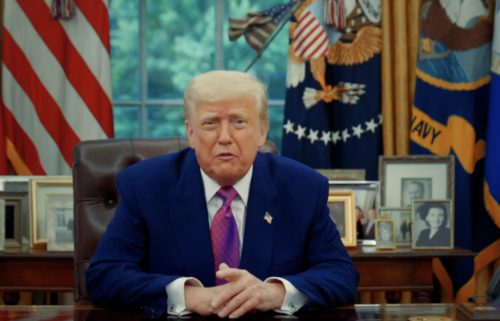
President Donald Trump on Tuesday signed a Proclamation further restricting entry to the United States for nationals from countries deemed high-risk due to “demonstrated, persistent, and severe deficiencies in screening, vetting, and information-sharing” that threaten U.S. national security and public safety.

Among the 15 additional countries newly subject to partial restrictions is Nigeria.

The announcement comes directly from the White House website, in a fact sheet titled “President Donald J. Trump Further Restricts and Limits the Entry of Foreign Nationals to Protect the Security of the United States”, issued December 16, 2025.

Trump had earlier, on October 31, declared Nigeria a ‘country of particular concern’ in response to allegations of a Christian genocide in the country.

The African Union chief said there was no genocide in Nigeria’s volatile north. And so did ECOWAS, addressing the recent surge in terrorist attacks across the region, including Nigeria, while firmly rejecting claims that these acts constitute genocide. Over and over, Tinubu, days ago, again dismissed claims that there is a Christian genocide in the country, insisting that neither Christians nor Muslims are being targeted for killing.

This had prompted a series of back-and-forth meetings among the US Congress and individuals and the Nigerian delegation, who have met both in Nigeria and the US since. On December 13, a US congressman, Riley Moore, said the US and Nigeria were close to reaching a strategic security agreement aimed at addressing terrorism and sectarian violence in Nigeria.

Days earlier, he stated that the US had concluded its fact-finding mission to Nigeria over alleged genocide and is expected to brief Trump before the end of the month.

However, the latest in the series of ban on Tuesday had the White House describe the action as “strengthening national security through common sense restrictions based on data.”

The Proclamation continues full restrictions and entry limitations on nationals from the original 12 high-risk countries under Proclamation 10949: Afghanistan, Burma, Chad, the Republic of the Congo, Equatorial Guinea, Eritrea, Haiti, Iran, Libya, Somalia, Sudan, and Yemen.

It also adds full restrictions and entry limitations on five additional countries: Burkina Faso, Mali, Niger, South Sudan, and Syria, along with individuals holding Palestinian Authority-issued travel documents. Laos and Sierra Leone, previously subject to partial restrictions, now face full restrictions.

Nationals from Burundi, Cuba, Togo, and Venezuela remain under partial restrictions.

The Proclamation adds partial restrictions and entry limitations on 15 additional countries, including Angola, Antigua and Barbuda, Benin, Cote d’Ivoire, Dominica, Gabon, The Gambia, Malawi, Mauritania, Nigeria, Senegal, Tanzania, Tonga, Zambia, and Zimbabwe.

The fact sheet notes that “exceptions for lawful permanent residents, existing visa holders, certain visa categories like athletes and diplomats, and individuals whose entry serves U.S. national interests” are included.

It also states that family-based immigrant visa carve-outs that carry “demonstrated fraud risks” have been narrowed, while case-by-case waivers remain possible.

In explaining the rationale, the White House fact sheet emphasizes that the Proclamation is necessary “to prevent the entry of foreign nationals about whom the United States lacks sufficient information to assess the risks they pose, garner cooperation from foreign governments, enforce our immigration laws, and advance other important foreign policy, national security, and counterterrorism objectives.”

The fact sheet quotes Trump directly: “It is the President’s duty to take action to ensure that those seeking to enter our country will not harm the American people.”

It adds that, after consultations with cabinet officials and assessments based on Executive Order 14161, Proclamation 10949, and country-specific information, “President Trump has determined that the entry of nationals from additional countries must be restricted or limited to protect U.S. national security and public safety interests.”

The restrictions are country-specific “in order to encourage cooperation with the subject countries in recognition of each country’s unique circumstances,” the fact sheet says, highlighting challenges such as “widespread corruption, fraudulent or unreliable civil documents and criminal records, and nonexistent birth-registration systems—systemically preventing accurate vetting.”

Some countries, it notes, “refuse to share passport exemplars or law-enforcement data,” while others allow Citizenship-by-Investment schemes that conceal identity and bypass vetting requirements.

The fact sheet also cites “high visa-overstay rates and refusal to repatriate removable nationals” and the presence of “terrorist, criminal, and extremist activity” in several restricted countries.

The White House fact sheet frames the move as part of President Trump’s ongoing national security agenda: “President Trump is keeping his promise to restore travel restrictions on dangerous countries and to secure our borders.”

It references the Supreme Court’s prior ruling on similar restrictions, noting that the Court found the policy “is squarely within the scope of Presidential authority” and that it is “expressly premised on legitimate purposes”—specifically “preventing entry of nationals who cannot be adequately vetted and inducing other nations to improve their practices.”

Finally, the fact sheet notes that Turkmenistan, which previously faced restrictions, has made progress in cooperation with the U.S., prompting the new Proclamation to lift the ban on its nonimmigrant visas while maintaining the suspension of entry for Turkmen nationals as immigrants.

Two US National Guard soldiers were shot in November near the White House, officials said, and police said a suspect was detained in an extraordinary security drama likely to fuel controversy over President Donald Trump’s crime crackdown.

Reacting, Trump said that he would suspend migration from what the US leader called “third-world countries”, a day after an Afghan national allegedly shot two National Guard soldiers in Washington, killing one.

His angry post, which also threatened to reverse “millions” of admissions granted under his predecessor, Joe Biden, marked a new escalation in the anti-migration stance of a second term that has been dominated by Trump’s mass deportation campaign.

Meanwhile, the Trump administration announced in the first week of December that it would review the immigration status of all permanent residents, or “Green Card” holders, from Afghanistan and 18 other countries following the attack.

U.S. officials identified the suspect in the shooting as a 29-year-old Afghan national who previously worked alongside American forces in Afghanistan.

The individual was granted asylum earlier this year, not permanent residency, according to AfghanEvac, an organisation that assists Afghans resettled in the United States after the Taliban takeover in 2021.

The review follows a June executive order from President Trump classifying 19 countries as “of Identified Concern.”

The order banned entry for nearly all nationals from 12 countries, including Afghanistan. The full list of these countries includes: Afghanistan, Myanmar, Chad, Congo-Brazzaville, Equatorial Guinea, Eritrea, Haiti, Iran, Libya, Somalia, Sudan, and Yemen.

Barely two weeks after in June, Trump commenced plans to place a general visa ban on Nigerians.

According to a report by the Washington Post, an internal memo signed by Secretary of State Marco Rubio outlined a proposal that could impose visa restrictions or entry bans on up to 36 additional nations.

These countries were expected to comply with newly established requirements from the U.S. State Department within a 60-day timeframe or face potential travel restrictions.

However, reports indicate that the timeframe elapsed in August 2025, and it was not until four months later that the new proclamation was issued.

What “Full” and “Partial” Restrictions Mean

Full bans/suspensions generally bar citizens of specified countries from entering the U.S. and block the issuance of most new immigrant and non-immigrant visas. Exceptions may still exist for lawful permanent residents, diplomats, or specific exempt categories.

Partial restrictions limit or suspend certain classes of visas (e.g., tourist, student, exchange), impose stricter vetting and shorter visa validity, and often require more rigorous screening before entry is permitted

Continue Reading

BIG STORY

Police Arrest Popular TikToker Peller Over Reckless Driving

Published

on

The Lagos State Police Command has arrested and detained popular social media influencer Habeeb Hamzat, popularly known as Peller, following a viral video showing him driving recklessly and crashing his vehicle during a live-stream.

According to a statement signed by the Police Public Relations Officer, SP Abimbola Adebisi, on Tuesday, the arrest followed public outrage over the incident, which occurred on Sunday, December 14, 2025.

In the statement, the police said the suspect’s actions posed a serious threat to public safety and warranted immediate intervention.

“The Lagos State Police Command has arrested and detained, for further investigation, Habeeb Hamzat aka ‘PELLER’, subsequent to the viral video that surfaced online on Sunday 14th December, 2025, in which he was seen driving recklessly, leading to a dangerous road crash and serious motor accident, while the incident was being live-streamed, thereby endangering his life and that of other road users”, the statement partly read.

The command described the act as extremely dangerous, stressing that such behaviour could have resulted in fatal consequences for both the suspect and innocent road users.

“His action constitutes a deliberate attempt to commit suicide and endangers the lives of other innocent people”,. the statement continued.

The police further disclosed that the matter had been transferred to the State Criminal Investigation Department for a comprehensive probe.

“The case is currently being investigated by the State Criminal Investigation Department (SCID). The outcome of the investigation will be made public, and the suspect will be charged to the court of competent jurisdiction in accordance with the law”, it added.

The statement added that while reacting to the incident, the Commissioner of Police, Lagos State Command, CP Olohundare Jimoh, issued a strong warning to social media influencers and members of the public against exploiting online platforms to engage in unlawful conduct.

“The Commissioner of Police, Lagos State, CP Olohundare Jimoh, strongly warns social media influencers, content creators and general members of the public to desist from using social media platforms to engage in or promote reckless, dangerous, or unlawful and criminal acts”. it added.

He warned that such behaviour would no longer be tolerated and assured residents of the command’s resolve to enforce the law without fear or favour.

“Such lawlessness will not be tolerated, and the full weight of the law will be applied on any offender. The Command further urges all road users to comply strictly with traffic regulations and remains committed to ensuring public peace and safety at all times.”

The incident has reignited public debate over the growing trend of risky stunts by content creators in pursuit of online engagement, with many Nigerians calling for stricter enforcement to deter similar acts.

Road traffic crashes remain a major public safety concern in Lagos, with authorities attributing many accidents to speeding, distracted driving and disregard for traffic regulations.

The police have consistently maintained that anyone found culpable in actions capable of endangering lives would be prosecuted, regardless of social status or online influence, as part of efforts to curb rising cases of reckless behaviour on the state’s roads.


Continue Reading

BIG STORY

Senate Asks NSA, DSS To Track Authors of Akpabio Death Rumours

Published

on

The Senate has asked the office of the National Security Adviser (ONSA) and the Department of State Services (DSS) to investigate and identify those behind social media reports alleging that Godswill Akpabio, the Senate president, died in a London hospital.

Titus Zam, senator representing Benue north-west, raised the matter during Tuesday’s plenary, describing the reports as dangerous and damaging to Nigeria’s leadership.

“I am raising this motion due to the social media reportage that alluded to the fact that Mr. Senate President died in a London hospital,” Zam said.

“This is a very serious matter; number three citizen in Nigeria; such reports about you, your person, and your office need to be investigated.”

Zam said the spread of false death reports was becoming a pattern, recalling that similar claims were recently made about Yakubu Gowon, the former head of state.

“It’s not only you that was reported in this negative manner; the former head of state, General Yakubu Gowon, was equally reported a few days ago to have died. This is not a good report about the leaders of our country,” Zam said.

The lawmaker called for urgent action against those responsible, arguing that sanctions would deter the spread of harmful misinformation.

“There is an urgent need to not just investigate, but to punish the promoters of such negative news about the leaders of this country,” he said.

“When sanctions are meted out against the promoters of such negative reports about our leaders it will serve as a deterrent to anybody who engages in such an infamous and dangerous act against the leadership of our democracy and our country.”

Zam added that those responsible could be traced through digital footprints.

“The social media promoters of negative information can be traced and they’ll be punished,” he said.

Responding, Akpabio said the problem of false reports was not limited to politicians, noting that misinformation had affected public figures across sectors.

The senate president thereafter asked ONSA and the DSS to identify the originators and promoters of the false reports and take appropriate action.


Continue Reading


Join Us On Facebook

Most Popular


Warning: Undefined array key "slug" in /home/porsch10/public_html/wp-includes/class-wp-theme-json.php on line 2117

Warning: Undefined array key "slug" in /home/porsch10/public_html/wp-includes/class-wp-theme-json.php on line 2117

Warning: Undefined array key "slug" in /home/porsch10/public_html/wp-includes/class-wp-theme-json.php on line 2117