Connect with us

Hours after a letter from the Minister of State, Petroleum Resources, Dr. Ibe Kachikwu, to President Muhammadu Buhari accusing the Group Managing Director (GMD) of the Nigerian National Petroleum Corporation (NNPC), Mr. Maikanti Baru, of insubordination and non transparent practices, was made public, another crisis has hit the oil corporation.

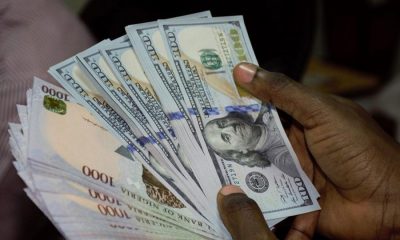
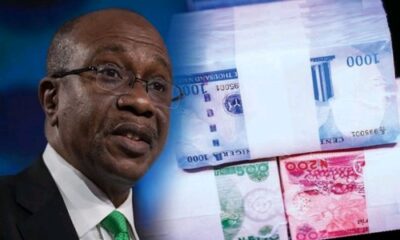
The Baru-led corporation is being accused of hiding $629 million (about N226 billion) in various banks without remitting the sum to the Treasury Single Account (TSA).

According to Freedom Online, its refusal to remit the sum, proceeds from its operations, and the interest accruing to appropriate accounts, may soon lead to trouble.

“In fact, it seems as if Baru’s cup is full and he may soon be shown the way out”, he said.

That the money sits idly in Nigerian banks – Sterling Bank, Keystone Bank, Diamond Bank, First Bank and Central Bank of Nigeria – may soon have serious consequences for those at the cooporation’s helm of affairs.

The money is lodged in various sums in the accounts.

An account in Sterling Bank with number 0023515951 holds $26,560,076.76 while the sum of $16.6 million is in an account with number 1006160930 in Keystone Bank.

The sum of $277.8 million is in another account with Diamond Bank numbered 0033789960 while $19 million sits in two accounts with First Bank – $12 million is in a current account numbered 2006307767 and $6.9 million is in another First Bank Escrow account with number 2016965894.

In addition to this total sum of $340,102,485.10, another sum of $289 million is placed via two cheques with the Central Bank of Nigeria (CBN).

According to sources, “requests from relevant offices to the NNPC to remit the total sum of the said $629,093,716.77 to the Nigerian Petroleum Development Company TSA account as is the practice have been rebuffed for reasons yet undisclosed”.

Treasury Single Account (TSA) is a financial policy in use in many countries all over the world to consolidate all inflows from all agencies of government into a single account.

TSA allows government banking to be unified, to enable the relevant stakeholders, such as the Ministry of Finance and Accountant General of the Federation have full oversight of all cash flows across various bank accounts.

TSA also helps check cases of multiple, sometimes, untraceable accounts operated by government MDAs for collection and spending of government revenues.

It helps keep a good record of revenue receipts and expenditures and block leakages, as no agency of government is allowed to keep any operational bank account.

TSA helps check cases of idle cash lying over extended periods in bank accounts held by agencies of government, giving room for unscrupulous officials to make private wealth from interests on such deposits or by trading with the money.

Also, the scheme makes it impossible for banks that are fond of using public sector funds to make free profits to continue to do so.

The introduction of the Treasury Single Account policy therefore has been useful in reducing the proliferation of bank accounts operated by ministries, departments and agencies, thereby ensuring financial accountability as well as transparency.

Though it was first introduced in 2012 by the Goodluck Jonathan administration, its implementation was largely not until the Muhammadu Buhari government came on board and gave the scheme real muscle.

It is against the background of TSA’s potential for curbing corruption that any flouting of its rules is sternly frowned upon by the Buhari administration which is seen to be fighting corruption.

Sources said this is not the first time NNPC’s management is flouting the TSA rule but the volume of money involved and the fact that relevant queries were raised by appropriate offices but ignored may have thrown the presidency into a rage.


Source: Freedom Online

BIG STORY

Tokunbo Wahab at 54: A Quiet Force in Public Service —– By Ayobami Ladipo

Published

on

As Tokunbo Wahab turns 54 today, the occasion feels more than another birthday on the calendar. It is a moment to recognize a public servant who has come to symbolize steadiness, discipline, and a certain uncommon seriousness about service.

Known publicly as the Lagos State Commissioner for the Environment and Water Resources, Tokunbo Wahab has spent recent years carrying out his responsibilities with a mix of firmness and restraint that is becoming increasingly rare in public life.

What stands out most about him is not noise, but consistency. In a world that often rewards the loudest voice in the room, Tokunbo Wahab has built a reputation around substance. He appears to understand something simple yet powerful: leadership is not only about holding public office but also about leaving people better than you found them. That is the kind of leadership people remember. It is the kind that builds confidence, sharpens others, and creates room for growth.

Those who admire him often speak of his human side just as much as his professional side. They describe a man who values people, takes mentorship seriously, and does not seem interested in protecting his own status at the expense of others’ rise. In many spaces, especially public service, it is easy for influence to become self-preservation. Wahab, at least by reputation, seems to lean in the opposite direction. He is the sort of leader who wants his protégés to succeed, not merely survive.

There is also something admirable in the way he carries responsibility without overplaying it. A good administrator does not always need applause to prove impact. Sometimes, impact is seen in the structure of the work, the clarity of the process, and the people who quietly grow under that leadership. That is where Tokunbo Wahab’s value seems to sit: in the patient work of building systems and building people at the same time.

At 54, he stands at a point where experience and maturity should naturally deepen purpose, and by every indication, that is exactly what has happened. He has become one of those figures whose presence suggests order. Not the kind of order that stifles, but the kind that gives direction. Not control for its own sake, but discipline with intent. In that sense, his birthday is not just a personal milestone; it is also a reminder of the kind of leadership people still respect when they see it up close.

So, on this special day, the tribute is simple. Tokunbo Wahab deserves to be celebrated not only for what he does, but for how he does it. For the grace in his administration. For the dignity in his conduct. For the way he appears to invest in people, not just positions. And for proving, in his own quiet way, that a good man in public office is still one of the most valuable things a society can have.

Sir …. I celebrate you today and always, my mentor, my leader, and benefactor.

Ayobami Adegboyega Ladipo
(Mr Porsche)

Continue Reading

BIG STORY

Tinubu Confirms Killing of ISIS Leader In Nigeria-US Joint Operation

Published

on

President Bola Tinubu has announced the killing of a senior Islamic State leader, Abu-Bilal Al-Manuki, also known as Abu-Mainok, during a joint operation carried out by Nigerian and United States forces in the Lake Chad Basin.

In a statement personally signed on Saturday, Tinubu said the operation marked “a significant example of effective collaboration in the fight against terrorism” between both countries.

The President said Nigerian troops, working with the US Armed Forces, carried out “a daring joint operation that dealt a heavy blow to the ranks of the Islamic State.”

He added that “early assessments confirm the elimination of the wanted IS senior leader, Abu-Bilal Al-Manuki, also known as Abu-Mainok, along with several of his lieutenants, during a strike on his compound in the Lake Chad Basin.”

Tinubu described the operation as a major step in advancing the security objectives of both countries and commended the forces involved for their conduct.

“Nigeria appreciates this partnership with the United States in advancing our shared security objectives. I extend my sincere gratitude to President Trump for his leadership and unwavering support in this effort,” the statement read.

The President also praised military personnel from both countries, saying, “I commend the personnel involved on both sides for their professionalism and courage, and I look forward to more decisive strikes against all terrorist enclaves across the nation.”

The development comes amid renewed military offensives against insurgent groups operating in the North-East and the Lake Chad region, where Islamic State-linked factions have sustained attacks on military formations and civilian communities.

United States President Donald Trump had earlier confirmed the operation, describing Al-Minuki as “the most active terrorist in the world.”

“Tonight, at my direction, brave American forces and the Armed Forces of Nigeria flawlessly executed a meticulously planned and very complex mission to eliminate the most active terrorist in the world from the battlefield,” Trump wrote on Truth Social on Friday.

Trump said the slain militant leader, whom he described as the “second in command of ISIS globally,” had believed he could evade capture in Africa.

“Abu-Bilal al-Minuki, second in command of ISIS globally, thought he could hide in Africa, but little did he know we had sources who kept us informed on what he was doing,” he said.

The US leader added that Al-Minuki, who was placed under American sanctions in 2023 over his ties to the Islamic State group, would “no longer terrorize the people of Africa, or help plan operations to target Americans.”

He further stated that “with his removal, ISIS’s global operation is greatly diminished,” while thanking the Nigerian government for its “partnership” in the operation.

The joint operation underscores growing security cooperation between Nigeria and the United States as both countries intensify efforts to weaken extremist networks operating across the Lake Chad Basin and the wider West African region.

Continue Reading

BIG STORY

ISIS Second-in-Command Killed By US, Nigerian Troops —– Trump

Published

on

US President Donald Trump says Abu-Bilal al-Minuki, the second-in-command of ISIS, has been killed in Nigeria.

Trump said al-Minuki was killed in a “complex mission” carried out by Nigerian and American troops.

The US president shared updates on the operation in a social media post in the wee hours of Saturday.

“Tonight, at my direction, brave American forces and the Armed Forces of Nigeria flawlessly executed a meticulously planned and very complex mission to eliminate the most active terrorist in the world from the battlefield,” Trump wrote.

“Abu-Bilal al-Minuki, second in command of ISIS globally, thought he could hide in Africa, but little did he know we had sources who kept us informed on what he was doing.

“He will no longer terrorise the people of Africa, or help plan operations to target Americans.

“With his removal, ISIS’s global operation is greatly diminished.”

Trump also acknowledged and thanked the Nigerian government for its “partnership on this operation”.

US-NIGERIA MILITARY COOPERATION

Nigeria had entered into a military partnership with the United States following Trump’s re-designation of the West African nation as a country of particular concern (CPC).

It was reported in February that a drone refuelling station was among the demands made by the US as part of the security partnership.

In March, the US deployed multiple MQ-9 drones alongside 200 troops to Nigeria to provide training and intelligence support to the country’s military in its fight against Islamist militants.

The Defence Headquarters had said the Nigerian troops, alongside the US forces, would commence a series of joint training engagements and intelligence-focused cooperation initiatives.

SECOND HIGH-PROFILE US OPERATION IN NIGERIA

Late last year, the US began conducting intelligence-gathering flights over swathes of Nigerian territory.

On Christmas Day, the US launched missile strikes on two terrorist enclaves in the Bauni forest in Tangaza LGA, Sokoto state.

It was widely reported that the strike involved more than a dozen Tomahawk cruise missiles fired from a Navy ship in the Gulf of Guinea.

But officials familiar with the operation told TheCable that the strikes involved drones.

Communities in Sokoto and Kwara states had reported explosions at the same time the US launched a fusillade of air strikes on ISIS terrorists.

The federal government later confirmed that the explosions in Kwara were caused by debris from the precision-guided munitions (PGMs) fired by the US.

Continue Reading

Most Popular


Warning: Undefined array key "slug" in /home/porsch10/public_html/wp-includes/class-wp-theme-json.php on line 2117

Warning: Undefined array key "slug" in /home/porsch10/public_html/wp-includes/class-wp-theme-json.php on line 2117

Warning: Undefined array key "slug" in /home/porsch10/public_html/wp-includes/class-wp-theme-json.php on line 2117