Connect with us


BIG STORY

Nigeria @65: The Worst Is Over, Hope Rising For Nigeria — President Tinubu

Published

on

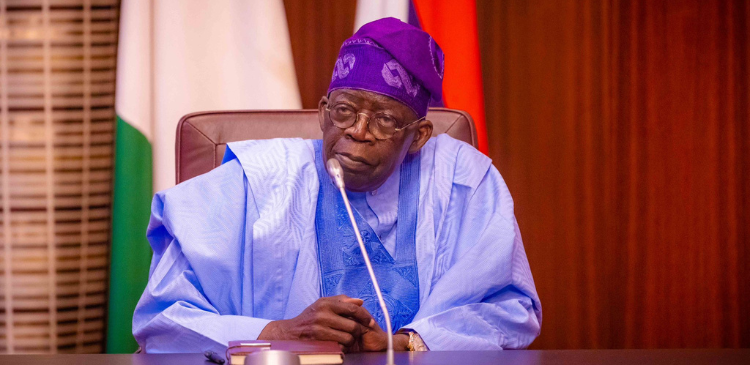
President Bola Tinubu on Wednesday declared that Nigeria’s most difficult period is now behind it, assuring citizens that the country is on a path toward economic recovery and growth.

In a national broadcast to mark Nigeria’s 65th Independence anniversary, Tinubu stated that the government’s reforms, initiated after he assumed office in May 2023, are now beginning to yield visible results. He said the administration had opted for “the path of tomorrow over the comfort of today,” and is now seeing “yesterday’s pains” give way to “relief.”

The President acknowledged the endurance of Nigerians through recent economic hardships and pledged continued dedication to national development, saying he would “justify the confidence” citizens had placed in him.

Reflecting on Nigeria’s history, Tinubu praised the resilience of the country, which, he said, had survived a civil war, years of military rule, and political instability. He described the 65th anniversary as a moment to honour the sacrifices of the nation’s founding fathers and to recognise the progress made since Independence in 1960.

Highlighting achievements in human capital development, Tinubu noted the expansion of educational institutions from only two tertiary institutions at independence to a combined total of 693 institutions by 2024, including universities, polytechnics, and colleges of education.

The President defended key economic policies undertaken by his administration, including the removal of fuel subsidies and the unification of foreign exchange rates. He said these moves were essential to correct distortions in the economy and stop rent-seeking practices that had favoured only a minority.

According to Tinubu, the reforms have redirected national resources towards more inclusive development, allowing for increased investment in infrastructure, education, healthcare, agriculture, and national security.

He outlined a list of 12 economic milestones achieved within his two years and four months in office. Among them, he reported a 4.23% GDP growth in Q2 2025—the fastest in four years—and a decline in inflation to 20.12%, the lowest in three years.

Further economic indicators shared by the President included a surge in non-oil revenue, a sharp drop in debt service-to-revenue ratio, and a rise in foreign reserves to $42.03 billion. Tinubu also noted that the country’s tax-to-GDP ratio had grown to 13.5%, with further gains expected when a new tax law takes effect in January.

Nigeria, he said, has recorded trade surpluses for five consecutive quarters, with manufactured exports growing by 173%. He added that non-oil exports now account for 48% of total trade, indicating progress in economic diversification.

On the oil and gas front, Tinubu stated that crude oil production had rebounded to 1.68 million barrels per day, supported by improved security and stakeholder management. He also announced the resumption of domestic refining of petroleum products and Nigeria’s emergence as a leading exporter of aviation fuel on the continent.

The President said the naira had stabilised following reforms in the foreign exchange market. He pointed to reduced volatility and narrowing of the gap between official and parallel market rates as signs of improved currency stability. He also mentioned a boost in investor confidence, citing a booming stock market, improved sovereign credit ratings, and the Central Bank’s first interest rate cut in five years.

On security, Tinubu stated that the military and other security agencies were “winning the war” against terrorism, banditry, and violent crime. He said “peace has returned” to many communities, particularly in the North-East and North-West, enabling the safe return of thousands of displaced persons.

He pledged to prioritise food security and invest in agriculture to reduce food prices. He also emphasised the need for critical infrastructure such as roads, schools, hospitals, ports, and airports to support future generations.

Turning to the youth, Tinubu described them as the “greatest assets of this blessed country” and highlighted initiatives aimed at empowering young Nigerians. These include the Nigeria Education Loan Fund, which has provided financial assistance to over 500,000 students, and credit programmes such as Credicorp and YouthCred, which offer loans for housing, digital devices, and post-NYSC resettlement.

He also cited the Investment in Digital and Creative Enterprises (iDICE) programme, valued at $600 million, which is supported by international development partners and aims to boost innovation and enterprise in the digital and creative sectors.

The President reported that under the national social investment programme, N330 billion had been disbursed to eight million vulnerable households, and significant work is ongoing to expand the country’s transport network, including road, rail, air, and seaport infrastructure. Major projects such as the Lagos-Calabar Coastal Highway and the Eastern Rail Project are currently underway.

Acknowledging the challenges that have accompanied reforms, Tinubu reiterated his earlier position that these were “temporary pains” necessary to prevent economic collapse. He said inflation and the high cost of living remain concerns, but insisted that “the alternative of allowing our country to descend into economic chaos or bankruptcy was not an option.”

Concluding his third Independence Day broadcast as President, Tinubu issued a rallying call for national productivity and unity. He encouraged Nigerians to support local industries, stating, “Let us be a nation of producers, not just consumers. Let us farm our land and build factories to process our produce.”

He also called for tax compliance and greater civic responsibility, adding, “Let us patronise ‘Made-in-Nigeria’ goods. I say Nigeria first. Let us pay our taxes. Finally, let all hands be on deck.”

With a message of optimism, Tinubu assured Nigerians that “the dawn of a new, prosperous, self-reliant Nigeria is here,” asserting that with divine support, the country would continue on its path to renewal.

BIG STORY

‘Excessive’ Security For Seyi Tinubu: How It Is Understood —–Folorunsho Tahir Hamsat

Published

on

The appropriateness or otherwise of security protection for a president’s family can be a subject of public debate. This debate is centred on the complex challenge of ensuring the safety of people connected to the presidency while being mindful of public accountability and the effective use of government resources.

This writer will focus solely on the provision of security for the president’s family, as understood, in layman’s terms. Recently, at a public function, President Tinubu’s son, Seyi,’s excessive security escort was criticized by Nobel laureate, Professor Wole Soyinka. The respected leader had argued that such resources were needed elsewhere.

From my study, it is standard international practice for a country’s president’s immediate family, including the children, to receive significant security protection. This is due to the high profile of the president and the potential national security risks that could arise from threats and various forms of harm to the president’s family members.

Nigeria is currently confronted by multiple security challenges like kidnapping and banditry, with the primary threat coming from the Islamic State of West Africa (ISWA) and Boko Haram. On that score, threatening or harming a president’s son, daughter, or wife could be used to blackmail the president and compromise his ability to perform state duties, thereby creating a national crisis. Thus, the goal of ‘excessively’ protecting the president’s family is to ensure the stability and continuity of the president’s function and, by extension, the nation, by mitigating high-level threats to the First Family.

I am not familiar with the local laws on the protection of private individuals, but, based on my research, in developed countries whose model of democracy Nigeria especially practices, such as the US, the provision of security by agencies like the DSS to the president’s immediate family is a federal law, not a discretionary choice.

The president’s family members often attend public schools or travel, requiring extensive, pre-planned security measures and an advance team to ensure their safety in such environments. Even the US law specifies that children of former presidents receive protection until they are 16 years old, unless declined.

In other climes, a sitting president can issue an executive order to extend protection to members of his family, including individuals not automatically covered by law. I will support this argument with two empirical evidence. Just before departing the White House, finally in January 2025, after the expiration of his constitutional two terms as president of the United States, Joe Biden extended protection for his adult children through the next seven months via an executive order.

That presidential order was critiqued by his successor, Donald Trump, and subsequently revoked by him. However, Trump himself did the same for his four adult children and two of their spouses before his first term ended in 2021, when they were given six months of additional protection beyond their stay in the government house. Thus, my interpretation of this subject is that, if it’s not unusual for a president before he leaves office to authorize an extended period of protection for their immediate family members, giving them full-time protection while holding the power is justified and not inappropriate.


-Tahir Hamsat is a Lagos-based journalist. He can be reached via 08051000485

Continue Reading

BIG STORY

JUST IN: Accord Party Clears Adeleke As Sole Aspirant For Osun Guber Primary

Published

on

Barely 16 hours after Governor Ademola Adeleke officially joined the Accord Party, the party’s national leadership has cleared him to participate in its gubernatorial primary.

The Nation recalled that Adeleke, on Tuesday evening, defected to the Accord Party alongside his deputy, Kola Adewusi, and other top aides.

In a statement, Elder Ibe Thankgod, Chairman of the Accord Party Screening Committee, confirmed that Adeleke had been screened ahead of Wednesday’s primary.

He noted that the governor met all the necessary requirements for nomination and participation, adding that the committee had cleared him as the sole aspirant for the party’s governorship ticket and completed all required documentation with relevant bodies.

The statement added that the committee presented Adeleke with a certificate of clearance and described him as a worthy gubernatorial aspirant.

Adeleke expressed gratitude to the screening committee and party leadership, affirming his readiness for the primary and the 2026 general elections.

“I am ready for the primary and I am ready for the general elections. We are winning by God’s grace,” he said.

Continue Reading

BIG STORY

Backlash Over My Interaction With Adeleke At Ooni’s Event ‘Needless Controversy’ — Remi Tinubu

Published

on

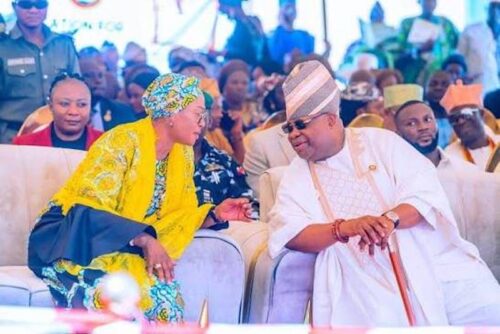
Nigeria’s First Lady, Senator Oluremi Tinubu, has dismissed public backlash over her interaction with Osun State Governor, Ademola Adeleke, calling the reactions a “needless controversy.”

In a statement posted on her Facebook page on Tuesday, Mrs Tinubu said critics often magnify minor issues and create distractions around leadership. She wrote:

“Those entrusted with leadership understand their duties and how to steer the affairs of society.

“More often, it is the followers and critics who scrutinize every step, amplify minor missteps, and turn them into needless controversy. Ọṣun lè tèǹtẹ̀ – Osun is ahead.”

The comments followed a video clip from the 10th coronation anniversary of the Ooni of Ife, Oba Adeyeye Ogunwusi, which showed Adeleke pausing after breaking into a short song during his speech.

Mrs Tinubu walked to the podium, gestured to him, and whispered to him — a moment that quickly went viral and drew sharp reactions online.

The First Lady’s statement marks her first public response since the video circulated.

The episode has since divided opinion.

Senior Special Assistant to the Governor on the Bureau of Social Services, Akintunde Bello, said the First Lady should be cautioned, insisting that her gesture toward an elected governor was inappropriate.

Similarly, African Democratic Congress chieftain Dele Momodu criticised the act, describing it as bullying and alleging that Mrs Tinubu had “openly disgraced and embarrassed Adeleke before a global audience.”

Some, however, believe that Mrs Tinubu’s action was justified.

Dayo Fashola, an aide to a former Osun State Governor Adegboyega Oyetola, on her verified Facebook page, said the interaction between the duo was lighthearted.

“What transpired between Oluremi Tinubu and Adeleke was light‑hearted and isn’t as serious as people are making it seem,” Fashola wrote.

Similarly, Facebook user Oyetunji Ayoade defended the First Lady, writing, “The highest respect the First Lady can give to Osun people is to stand up and inform him by herself, and she did.”

Neither Governor Adeleke nor the Presidency has issued further comments, even as the incident continues to dominate social media discussions.

Continue Reading


Join Us On Facebook

Most Popular


Warning: Undefined array key "slug" in /home/porsch10/public_html/wp-includes/class-wp-theme-json.php on line 2117

Warning: Undefined array key "slug" in /home/porsch10/public_html/wp-includes/class-wp-theme-json.php on line 2117

Warning: Undefined array key "slug" in /home/porsch10/public_html/wp-includes/class-wp-theme-json.php on line 2117