Connect with us


BIG STORY

NCDC Fears COVID-19 Spread May Worsen As Lockdown Ends Today, Says Normalcy Won’t Return Until 2021

Published

on

The Nigeria Centre for Disease Control has expressed fears that the number of coronavirus cases in the country will continue to rise for the next few months. This hint came as the lockdown imposed on the Federal Capital Territory, Lagos and Ogun states ends at 11:59 pm today.

The Director-General, NCDC, Dr Chikwe Ihekweazu, told Sunday PUNCH in an interview that the number of cases was likely to increase given the increasing capacity to find and test more cases.

There were 220 new cases on Saturday as the total rose to 2, 388. The number of discharged persons rose to 385 while the number of deaths increased to 85.

The new cases were 62 in Lagos; 52 in FCT; 31 in Kaduna; 13 in Sokoto; 10 in Kebbi; 9 in Yobe; 6 in Borno; 5 in each of Edo and Bauchi; 4 in each of Gombe, Enugu, Oyo; 3 in Zamfara and 2 in each of Nasarawa, Osun, Ebonyi, Kwara, Kano and Plateau states.

Earlier, as part of measures to contain the rising spread of the virus in the country, the President, Major General Muhammadu Buhari (retd.), on March 30 imposed a 14-day lockdown on the FCT, Lagos and Ogun states, followed by a two-week extension. He noted that the extension became necessary as the pandemic was no longer a joke and had become a matter of life and death.

At the expiration of the extension on April 27, the President, in a nationwide broadcast on Monday, again extended the lockdown by one week, which terminates today. The President, however, said a nationwide curfew between 8pm and 6am would follow as a further measure to contain the spread of the virus.

Many state governors also introduced similar restrictions in their states, even though some have begun easing the lockdown despite the rising number of cases across the country.

Asked about his projection on when Nigeria would likely reach its peak and how prepared the nation was for it, the NCDC DG said, “There are various projections that have been developed based on various contexts. With the increasing capacity to find and test more cases, we will continue to see an increase in cases in the next few months.

“Our strategy is to test quickly, detect confirmed cases, isolate and manage cases to recovery and follow up with contacts to reduce the risk of spread.

“In the absence of a vaccine for this disease, we must continue to adhere strictly to directives from the Federal Government on non-pharmaceutical interventions such as the closure of large gatherings and physical distancing. By doing these, we have a better chance of reducing the risk of spread of this disease quickly.”

When reminded that despite setting up 15 COVID-19 testing laboratories, less than 20,000 tests had been carried out so far, Ihekweazu said people could access the situation report on the NCDC website. “On the 1st of May alone, we recorded over 2,000 cases and this will continue to increase,” he added.

He added that in preparing for the increase in cases, the NCDC was working closely with state governments to rapidly scale up the capacity in treatment centres, even as he had hinted previously that the virus would eventually spread to all the states.

Notably, there has been an astronomical increase in the number of cases in the past few days. Since February 27 when Nigeria recorded its first case, the nation didn’t hit the 1,000 marks until about two months after, April 24 specifically when the number of cases rose from 981 to 1,095. The number of deaths then was 32.

But, barely one week after hitting the 1,000 marks, the number of cases reached the 2,000 marks on May 1, when the cases rose by 238 to hit 2,170. The number of deaths also more than doubled as the casualty figure rose to 85 within the period.

The Lagos State Commissioner for Health, Prof Akin Abayomi, had recently warned that the state, which is the epicentre of the deadly virus, had yet to reach its COVID-19 peak. He had also warned on March 27 that the state might see up to 39,000 cases but that if everyone practised good social distancing, the figure would be limited to about 13,000.

Prior to the President’s latest broadcast on Monday, the Nigerian Medical Association warned that lifting or easing the lockdown was premature, given the “exponential” rise in the number of cases on a daily basis. It also warned that with the rate at which the virus was spreading, the consequence of lifting the lockdown could be tragic.

The World Health Organisation has also warned repeatedly that it would be hasty for countries to start lifting lockdowns. “No country is safe from potentially overwhelming outbreaks as long as the coronavirus is circulating,” it added.

Despite the warnings not to lift the lockdown, the Federal Government, however, said it had put in place measures to contain the transmission of the disease.

The Presidential Task Force on COVID-19 announced on Wednesday during its media briefing that the use of face masks had become mandatory, noting that despite the directive that government offices and banks could resume operations from Monday, maintaining physical distancing and personal hygiene remained necessary.

“The restrictions on social and religious gatherings shall remain in place; state governments, corporate organisations and philanthropists are encouraged to support the production of cloth masks for citizens,” it added.

The National Coordinator of the task force, Dr Aliyu Sani, noted that to reduce the congestion, banks could only open between 8 am and 2 pm while civil servants on specific grade levels would be allowed to resume in their offices at specific times.

He stressed that all staff and bank customers must adhere to the personal hygiene and social distancing safety protocols, adding that all movements would be prohibited during the period except for essential services. He added that the ban on non-essential inter-state passenger travel remained until further notice.

But in a statement on Friday night, the NMA President, Dr Francis Faduyile, stressed that the timing for lifting the lockdown was premature because the nation was still battling with inadequate Personal Protective Equipment for health workers, lack of enough bed spaces in states for infected people and rising infections across the country, amongst others.

He added, “The easing of the lockdown even in phases is very premature. Nigeria should learn from her neighbour, Ghana, where the same action produced a 100 per cent increase in infection rate in just a week.”

We won’t return to normalcy until 2021, says NCDC DG

Meanwhile, the NCDC DG has said the country, like the rest of the world, will not return to life as it was before the coronavirus pandemic until 2021.

Ihekweazu, who spoke on Saturday on The Platform, an annual event of Covenant Christian Centre, explained that though mass gatherings could be difficult to avoid, it would be for the best.

According to him, it is a sacrifice “we will have to make as a people to get over this.”

He highlighted that members of the public would have to rethink how they conducted businesses, social gatherings such as weddings and religious gatherings in the short term.

The NCDC boss said, “We are faced with a difficult reality and we are not unique in this. Every country is, right now, looking at the same challenge and how to get us back to some level of normalcy.

“But the reality is that we are going to live with COVID-19 for the next year, at the very least. So, we have to start thinking about how to live safely with COVID-19.

“Some of the changes we will need to make are actually good things to have forever. With the emphasis on handwashing, (use of) sanitisers and respiratory hygiene, my goal as the leader of the NCDC is that we continue doing this forever.”

He added that the habits would also prevent the spread of COVID-19, but also many other diseases.

“I hope we don’t go back, like we did post-Ebola, to an era of not washing our hands. Who would want that? So, we really want some of these measures to go on,” Ihekweazu said.

While fielding a question on the daily fight against COVID-19, the infectious diseases expert hinted that the worst had yet to come. “We really are at the beginning of this outbreak globally,” he said.

Ihekweazu added, “The point where we will assess how many people died in Nigeria versus everywhere else — it maybe a year or two when we look back to the evolution of this outbreak. You can see that the outbreak comes in waves. We are not sure where we are on our own trajectory at the moment. It’s early days to reach conclusions around mortality.”

The NCDC DG noted that his team and many others across the country were working hard, adding that the state government and their care facilities were providing care for all those infected.

BIG STORY

Awujale Stool: Protest Rocks Ijebu Ode Over Imposition Plot

Published

on

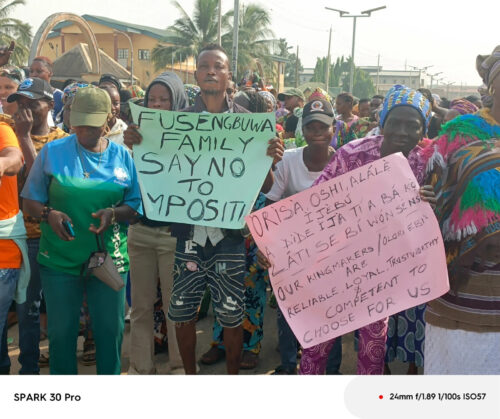
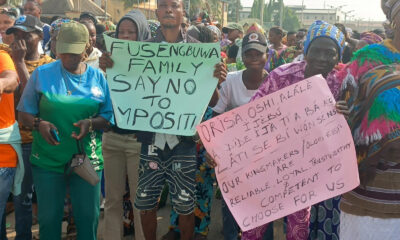
A peaceful protest broke out on Friday in Ijebu Ode over alleged plans to impose the next Awujale of Ijebuland.

The protesters marched through Awujale Palace Road on their way to the Ijebu Ode Local Government Secretariat to register their displeasure over the development.

Recall that the Ogun State Government, on Tuesday, in a statement signed by the Commissioner for Local Government and Chieftaincy Affairs, Ganiyu Hamzat, halted the Awujale selection process following a flood of petitions received from security agencies and other stakeholders.

Details later…

Continue Reading

BIG STORY

Fubara Is APC Leader In Rivers, Wike Has Been Compensated —– Bwala

Published

on

Daniel Bwala, special adviser to President Bola Tinubu on policy communication, says his principal aligns with the position of Nentawe Yilwatda, national chairman of the All Progressives Congress (APC), on the leadership hierarchy in Rivers state.

Bwala’s remarks come as the Rivers house of assembly continues impeachment proceedings against Siminalayi Fubara, amid a renewed war of words between the governor and Nyesom Wike, his predecessor.

On January 3, the APC chairman said Fubara, governor of Rivers, leads the party in the state.

Yilwatda said the APC accords governors the privilege of leading the party at the state level, while urging them to respect inclusion and avoid disenfranchising other party members.

Speaking on ‘Hard Copy’, a Channels Television programme, Bwala said the governor must be allowed to carry out his duties without undue interference.

The presidential aide added that Wike’s political standing in the state is limited to the Peoples Democratic Party (PDP).

“I agree with the point highlighted by the national chairman that in Rivers state, Governor Fubara is the leader of the APC. Wike is not a member of the APC, so he cannot speak for the party,” he said.

“He may be regarded as a leader within the PDP in Rivers state, having been a former governor, but the APC leader in the state is Governor Fubara.”

Bwala said Tinubu’s position is in tandem with the party’s internal rules and democratic principles.

“What the national chairman said is the position the president sticks to, because he respects party procedures. The president believes in the rule of law and due process, and the party will always respect that,” he said.

Bwala also addressed concerns over Wike’s influence within the federal government, noting that appointments do not supersede national interest.

“We’ve heard people complain that as a cabinet member, Wike enjoys certain benefits,” he said.

“Wike has been adequately compensated. The president believes in compensating people, but not at the expense of the interest of Nigeria. President Bola Tinubu gives latitude, but once you cross the line, you will know.”

He added that the cold war between Wike and Fubara is “being handled”.

“When you ask who is the leader of the party, the answer is the governor. The impeachment procedure must be consistent with the practice of law and constitutional requirements,” he added.

“The governor will deal with it. There are court orders stopping the impeachment, and the party is clear: nobody should stop Fubara from governing Rivers state.

“The president even respects the rights of states governed by the PDP. Even where the APC may want to challenge them, he believes that a governor, regardless of party, should be allowed to govern.”

Bwala concluded that the president’s stance reflects his commitment to democratic stability, constitutional order, and party discipline across the country.


Continue Reading

BIG STORY

Abductions: US Demands Action, FG Vows To Track Bandits

Published

on

The United States has raised serious concerns over Nigeria’s ability to protect Christian communities following the abduction of 177 worshippers in Kaduna State, as bandits were on Thursday sighted moving freely through forest corridors with their captives, days after storming churches without resistance.

On Sunday, gunmen attacked three churches in Kurmin Wali community in the Kajuru Local Government Area of Kaduna State and whisked away more than 177 worshippers, with 11 managing to escape, while 166 are still in captivity.

The US warning came as a high-level delegation of their officials arrived in Nigeria on Thursday on a week-long diplomatic tour aimed at reviewing counterterrorism efforts and the protection of vulnerable religious groups across Africa, the Middle East and Europe.

The meeting is part of the United States-Nigeria Joint Working Group and was co-chaired by the National Security Adviser, Nuhu Ribadu, and the US Under Secretary of State for Political Affairs, Allison Hooker.

It took place amid heightened diplomatic tensions after US President Donald Trump redesignated Nigeria as a Country of Particular Concern over alleged religious freedom violations. However, the Federal Government has repeatedly dismissed claims of systemic Christian persecution, maintaining that insecurity affects citizens of all religious backgrounds.

Hooker said recent attacks showed that despite reported security operations, Christian communities in parts of northern Nigeria remained dangerously exposed.

Hooker said, “Today, we are here to discuss how we can work together to deter violence against Christian communities; prioritising countering terrorism and insecurity; investigating attacks and holding perpetrators accountable; and reducing the number of killings, forced displacements, and abductions of Christians, particularly in the North Central States.

“On the protection of Christians, the Nigerian government recently secured the release of 38 Christians abducted from a church in Kwara state, and another 265 abducted from St. Mary’s Catholic school. This real progress is a direct result of our engagement with the Nigerian government.

“However, we are concerned about recent reports that gunmen kidnapped more than 170 Christians in Kaduna state on January 18. The government of Nigeria must do more to protect Christians and their right to practice their faith freely and safely.”

Hooker said the mass abduction in Kaduna underscored persistent security failures that the Nigerian government must urgently address.

She added that advancing religious freedom and security would deepen US-Nigeria relations in other areas, including trade, economic cooperation, health responses and the fight against terrorism.

She said, “Advancing religious freedom and security will help the United States and Nigeria to enhance the reciprocal benefits of our relationship: solidifying trade and economic deals, degrading terrorist groups that threaten our interests, and strengthening health responses, among many other areas. We hope to identify some ways to return internally displaced persons to the communities from which they were expelled in the North Central States, interdict weapons and funding going to terrorist groups, and expand investigations and ensure prosecution of individuals and groups committing atrocities.”

Her comments came amid fresh field reports confirming that the abductors of the Kurmin Wali worshippers were seen trekking with their victims between Ungwan Gamu and Maro communities in Kajuru Local Government Area, exploiting forest routes long known as bandit hideouts.

The abductors have reportedly demanded the return of 17 motorcycles, valued at N28.9m, which they claim were seized during recent military operations, as a condition for the release of the victims.

In response, National Security Adviser, Nuhu Ribadu, acknowledged the gravity of the situation, saying the Federal Government had intensified joint military operations, intelligence coordination and investigations into attacks on religious communities.

Ribadu said violence framed along religious lines was unacceptable and would be treated as an attack on the Nigerian state, assuring that perpetrators would be tracked and prosecuted.

“Nigeria is a deeply plural society, and the protection of all citizens: Christians, Muslims, and those of other beliefs, is non-negotiable. Violence framed along religious lines is treated as an attack on the Nigerian state itself. Our response, therefore, integrates security operations, rule of law, humanitarian safeguards and strategic communication, ensuring that operational successes translate into public confidence and strengthened social cohesion,” he said.

Ribadu said President Bola Ahmed Tinubu had authorised expanded security deployments, enhanced intelligence coordination and stronger investigations into attacks on religious communities, assuring that perpetrators would be tracked and prosecuted.

He said, “At the national level, and under the leadership of President Bola Ahmed Tinubu, Nigeria has taken deliberate and decisive steps to confront insecurity. The President has formally declared national security emergencies in vulnerable and high-risk areas, authorised intensified joint operations, and directed the sustained deployment of security forces to priority locations, particularly those communities experiencing recurrent attacks on civilians and religious groups.

“These directives have been matched with concrete action. Nigeria is expanding early-warning and rapid-response mechanisms, developing a national database to serve as a single, authoritative source of accurate and verifiable data on deaths and casualties arising from violence. This effort will strengthen evidence-based decision-making, accountability, and the effectiveness of security responses. Parallel to this, investigations and prosecutions related to attacks on religious communities have been intensified to ensure that violence is met not only with force, but with justice and accountability.”

Briefing journalists after the meeting, the Minister of Information and National Orientation, Mohammed Idris, said the engagement reflected sustained efforts to deepen security partnerships and deliver concrete results.

“This is the third high-level engagement with senior United States officials since November 2025. It shows that our partnership is active, serious, and focused on outcomes that matter to Nigerians,” Idris said in a statement by his media aide, Rabiu Ibrahim.

He noted that collaboration between the two countries had translated into operational gains on the ground.

“Our military and security agencies are working closely with US partners through intelligence sharing and operational coordination, and have strengthened ongoing operations, including Operation Hadin Kai in the North East and Operation Fasan Yamma,” he added.

Idris also highlighted the US commitment to deliver outstanding military equipment procured over the past five years, including drones, helicopters, and support systems, and noted readiness to provide surplus defence equipment.

On domestic measures, he stated, “Nigeria is acting decisively. Security agencies have clear instructions to protect communities and respond swiftly to threats.”

He added that the Federal Government was strengthening early-warning systems and developing a national database to generate accurate figures on deaths and casualties linked to violence.

“This will give us a single, trusted source of data to guide decisions, improve accountability, and sharpen our security response,” he said.

The minister urged Nigerians to remain patient and supportive as reforms continue.

“Our responsibility is to keep Nigerians informed and reassured. The work being done today is to ensure a safer country tomorrow,” he added.

The session was attended by senior Nigerian officials, including the Minister of Defence, Gen. Christopher Gwabin Musa (retd.), the Chief of Defence Staff, Gen. Olufemi Oluyede, and the Inspector General of Police, Kayode Egbetokun. Aside Hooker, the US delegation included Deputy Commander of AFRICOM Lt. Gen. John Brennan, and other senior officials.

Other countries that the US Under Secretary is billed to visit are Muscat, Oman; Manama, Bahrain; and Rome, Italy, the US Department of State announced in a statement on Wednesday.

Her itinerary includes strategic dialogues in Oman and Bahrain, where she will lead discussions aimed at advancing cooperation on a range of security, economic and cultural priorities with both governments.

In Rome, she will engage with international partners and counterparts on major global issues, including the Russia-Ukraine war, Venezuela and peace efforts in the Middle East.

She is also scheduled to meet representatives of United Nations agencies such as the World Food Programme and the Food and Agriculture Organisation to discuss oversight and accountability for US-funded assistance programmes, and to explore new agricultural trade opportunities for American farmers.

Hooker, who was appointed Under Secretary of State for Political Affairs in 2025, oversees key regional and bilateral policy issues across the State Department and plays a central role in shaping US diplomatic engagements globally.

The Village Head of Kurmin Wali, Ishaku Dan’azumi, told newsmen on Thursday that the sighting of the abductors and their victims followed threats issued by the abductors after they detected the presence of security operatives in the area.

Dan’azumi told newsmen in a telephone interview that the abductors and their victims were seen trekking on foot between neighbouring Ungwan Gamu and Maro communities. However, their exact destination could not be ascertained.

“They (abductors) accused us of bringing soldiers and claimed powerful people were backing us,” Dan’azumi said. “After that call, they disappeared. This (Thursday) morning, we were told that they were seen moving on foot with our people between Ungwan Gamu and Maro, but we do not know exactly where they are heading,” he said.

According to the traditional ruler, the development followed threats allegedly issued by the bandits on Wednesday evening after they noticed the presence of security operatives in the area.

“They said we were claiming to have ‘big people’ backing us because of the military presence,” Dan’azumi said.

 

Continue Reading


Join Us On Facebook

Most Popular


Warning: Undefined array key "slug" in /home/porsch10/public_html/wp-includes/class-wp-theme-json.php on line 2117

Warning: Undefined array key "slug" in /home/porsch10/public_html/wp-includes/class-wp-theme-json.php on line 2117

Warning: Undefined array key "slug" in /home/porsch10/public_html/wp-includes/class-wp-theme-json.php on line 2117