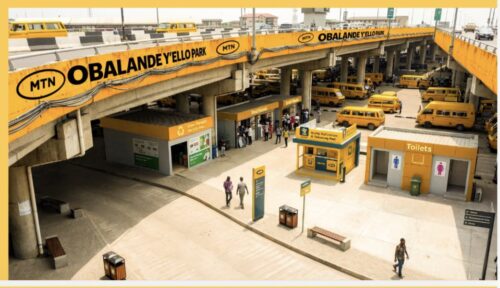
On January 21, 2026, Tokunbo Wahab, the Honorable Commissioner for the Environment and Water Resources in Lagos State, led an inspection of the Obalende Underbridge and motor park area. What followed was not just an enforcement action but a visionary step toward reclaiming public spaces for the greater good. This initiative, culminating in a groundbreaking partnership with MTN Nigeria announced on January 27, 2026, exemplifies the power of public-private collaboration in addressing entrenched urban issues.
By weaving together elements of environmental stewardship, technological innovation, social equity, and economic efficiency, this collaboration sets a precedent for how Nigeria can tackle its infrastructure deficits through synergistic partnerships. Drawing on historical context, project details, public reactions, and comparative analyses with past initiatives, we will unpack why this is not merely a redevelopment but a blueprint for resilient urban futures. In an era where climate change, population growth, and resource scarcity demand innovative solutions, this project will show what can be achieved when government vision meets private sector agility.
Setting the Stage for Change
Lagos, with its estimated 25 million residents, is a city of contrasts: gleaming skyscrapers juxtaposed against sprawling slums, vibrant markets overshadowed by environmental hazards. The underbridge spaces, in particular, have become emblematic of this paradox. Historically, areas like Obalende Underbridge have served as makeshift homes for squatters, hubs for unregulated motor parks, and dumping grounds for waste, fostering environmental degradation and security risks. These spaces, often overlooked in urban planning, contribute to flooding, pollution, and crime, undermining the city’s livability.
The issues are not new. As far back as 2024, the Lagos State Government issued notices to squatters in Obalende, signaling a long-term commitment to reform. Yet, enforcement lagged until Commissioner Wahab’s decisive intervention in January 2026. During his inspection, he emphasized that this was “not a sudden action,” but part of a broader strategy to redesign underbridge areas into “clean, safe, and functional public spaces.” This approach reflects a thoughtful recognition of the human element: squatters were given prior warnings, avoiding the pitfalls of abrupt displacements that have plagued similar evictions in the past. Instead of mere clearance, the plan involves handing the space over to a private sector partner for redevelopment and maintenance under Corporate Social Responsibility (CSR) frameworks.
This initial vision included features like a motor garage, public toilets, sleeping bays, and electric vehicle (EV) charging points: elements that address immediate needs while anticipating future trends. The objective? To end environmental degradation, expel criminal elements, and repurpose spaces sustainably. This sets the foundation for what would become the Y’ELLO Bus Park, a collaboration that amplifies these goals through private expertise.
The Genesis of a Transformative Partnership: Lagos State and MTN Nigeria
On January 27, 2026, via his X handle @tokunbo_wahab, Commissioner Wahab announced the partnership with MTN Nigeria to transform the Obalende Underbridge into the Y’ELLO Bus Park: a modern, well-structured transport hub. This collaboration is a classic example of Public-Private Partnership (PPP), where the government provides regulatory support and land, while the private entity (in this case, MTN, Africa’s leading telecommunications giant) invests in development and operations.
MTN’s involvement is rooted in its CSR ethos, with a track record of community projects across Nigeria. The deal stipulates that MTN will manage and operate the space for an initial three years, with renewal options. This structure ensures accountability and sustainability, as public conversations highlight: one commenter noted, “MTN will manage and operate the space for 3 years. And the deal is renewable,” while another expressed caution about long-term retention, referencing past projects like the Independence Tunnel at Maryland, which deteriorated after MTN’s exit until new partners stepped in.
What makes this PPP thoughtful? It goes beyond superficial beautification. The design converts a “notorious and degraded space” into a functional facility featuring an organized transport terminal, recycling drop-off station, road camp for LAWMA sweepers and security agencies, over 60 public toilet fixtures, kiosks, and more. Safety is prioritized with solar-powered lighting to enhance CCTV effectiveness and reduce blind spots. Health and environmental concerns are addressed through a biodigester system for wastewater management and a dedicated recycling station to curb illegal dumping. In line with climate goals, solar panels will power operations, reducing carbon footprints, and tree planting will improve air quality and aesthetics.
This integration of multiple stakeholders (from government ministries to private corporations and even security agencies) demonstrates a holistic approach. Unlike top-down impositions, the project incorporates feedback loops, as evidenced by public X discussions praising the “power of synergy and friendship” and noting the automation to minimize “agbero” (tout) influence, thereby taking control away from “non-state actors.”
Thoughtfulness in Design: Balancing Human Needs, Safety, and Sustainability
The thoughtfulness of the Obalende project lies in its multifaceted design that considers the diverse needs of Lagosians. Urban redevelopment often focuses on aesthetics at the expense of functionality, but here, the emphasis is on creating a “community-centred facility” that serves commuters, residents, sweepers, and security personnel alike.
Consider the public toilets: with over 60 fixtures, this addresses a chronic issue in Lagos, where lack of sanitation facilities leads to open defecation and health risks. The biodigester system, which converts waste into biogas or fertilizer, is a stroke of genius. It not only manages wastewater sustainably but also aligns with circular economy principles, turning a liability into an asset.
Security enhancements are equally thoughtful. Obalende has long been plagued by criminal activities under bridges, where poor lighting creates havens for illicit dealings. Solar-powered lighting and improved CCTV integration directly tackle this, improving nighttime visibility and deterring crime. Public reactions underscore this: “We are taking everything away from the ‘non-state actors’,” reflecting community relief at reduced tout influence through automation.
Environmental thoughtfulness shines through in the recycling station and tree planting. Lagos generates massive waste, much of it dumped illegally, exacerbating flooding and pollution. By incorporating a drop-off point, the project encourages responsible disposal, potentially reducing environmental degradation in the Obalende axis. Tree planting, meanwhile, combats urban heat islands and improves biodiversity, a subtle yet impactful nod to climate resilience.
This design philosophy echoes successful PPPs in Nigeria’s past. For instance, the Lekki-Epe Expressway project, a PPP between Lagos State and private investors, improved traffic flow and urban connectivity, though it faced tolling controversies. Similarly, the Lagos Bus Rapid Transit (BRT) system, another PPP, enhanced public transport efficiency, reducing congestion and emissions. The Obalende initiative builds on these by embedding environmental safeguards from the outset, avoiding the pitfalls of earlier projects where sustainability was an afterthought.
Moreover, the inclusion of EV charging points is a thoughtful anticipation of Nigeria’s shift toward green mobility. With global pressures to reduce fossil fuel dependence, Lagos (a city choking on vehicle emissions) positions itself as a leader in Africa’s electric vehicle adoption. This feature not only supports commuters but also signals to investors that Lagos is investment-ready for sustainable tech.
In essence, the project’s thoughtfulness manifests in its empathy for end-users. It’s not just about clearing space; it’s about creating value that uplifts the community, mitigates risks, and fosters inclusivity. As one X user imagined, “Wow! This is lovely… I am already imagining how beautiful it would be,” capturing the aspirational quality of this redesign.
Forward-Thinking Innovation: Pioneering Sustainability in a Climate-Vulnerable City
If thoughtfulness is the project’s heart, forward-thinking is its brain: a strategic orientation toward future challenges. Lagos faces existential threats from climate change, including rising sea levels, intensified flooding, and resource strains. The Y’ELLO Bus Park project embeds innovations that position it as a model for resilient urbanism.
Solar power integration is a prime example. By installing panels for lighting and operations, the project reduces reliance on Nigeria’s unreliable grid, cutting costs and emissions. This aligns with global Sustainable Development Goals (SDGs), particularly SDG 7 (Affordable and Clean Energy) and SDG 13 (Climate Action). In a country where power outages are routine, solar adoption ensures operational continuity, enhancing the park’s viability.
The biodigester and recycling components are equally prescient. Nigeria’s waste management crisis is acute, with Lagos alone producing over 13,000 tons daily. The biodigester promotes waste-to-energy conversion, a technology gaining traction in Africa for its dual benefits of sanitation and renewable energy. Coupled with the recycling station, it discourages illegal dumping, potentially diverting hundreds of tons from landfills annually.
Automation in the bus park is another forward-thinking element. By minimizing human intervention in operations (such as ticketing and parking), the project reduces corruption and inefficiency associated with “agberos.” This digital shift could integrate with smart city initiatives, like real-time tracking apps, making Obalende a node in Lagos’s emerging intelligent transport network.
Tree planting and air quality improvements anticipate health impacts of urbanization. With Lagos’s air pollution levels often exceeding WHO guidelines, greening efforts could lower respiratory diseases and enhance mental well-being. This holistic view extends to economic foresight: the park’s kiosks and terminals will create jobs, stimulating local commerce in a sustainable manner.
Comparatively, past Nigerian PPPs like the maritime developments in Apapa have leveraged private expertise for efficiency but often lacked environmental foresight. The Obalende project rectifies this by prioritizing decarbonization and sustainability, as highlighted in studies on PPPs’ role in green economies. By incorporating these elements, it not only addresses current woes but also prepares for a future where climate responsibility is non-negotiable.
Public discourse reinforces this: Comments like “I prefer a long-term retainership… We operate in a political environment; TW is destined for higher calling” acknowledge the need for enduring structures amid political flux. The renewable three-year term with MTN allows flexibility while ensuring continuity, a forward-thinking hedge against uncertainties.
A Triple Win: Benefits for MOE, TW, and Lagos State
The Obalende project is a resounding win across stakeholders, embodying the synergies of PPPs.
For the Ministry of the Environment and Water Resources (MOE), it’s a triumph in mandate fulfillment. MOE’s core objectives include combating degradation, promoting sustainability, and managing water resources. This initiative directly advances these by reclaiming polluted spaces, introducing waste management tech, and enhancing flood resilience through better land use. Financially, PPPs alleviate budget strains: with Nigeria’s infrastructure gap estimated at trillions of naira, private funding from MTN allows MOE to allocate resources elsewhere. Moreover, the project’s success could attract more partners, scaling MOE’s impact statewide.
For Commissioner Tokunbo Wahab (TW), this cements a legacy of visionary leadership. Known for his legal acumen and environmental advocacy, Wahab’s hands-on approach (from inspections to public announcements) showcases proactive governance. As public comments suggest, “TW is destined for higher calling,” this project bolsters his profile, demonstrating tangible results in a political landscape where environmental wins are rare. It also mitigates criticisms of evictions by emphasizing humane, sustainable redevelopment, enhancing his reputation as a thoughtful reformer.
For Lagos State at large, the wins are profound. Economically, the Y’ELLO Bus Park will streamline transport, reducing congestion in a key hub like Obalende, which connects Lagos Island to the mainland. This could boost productivity, with commuters saving time and money. Socially, improved safety and amenities foster community trust, reducing crime and health risks. Environmentally, lower emissions and better waste handling contribute to a cleaner Lagos, aligning with the state’s THEMES+ agenda (Traffic Management, Health, Education, etc.).
Broader implications include job creation (from construction to operations) and tourism appeal, as the beautified space draws visitors. In a city where 70% of residents rely on public transport, this hub enhances equity, particularly for low-income groups. Studies on PPPs in Nigeria highlight how such collaborations drive growth, with successes like housing developments in Lagos demonstrating improved service delivery.
Challenges remain, as noted in public conversations: Political transitions could disrupt continuity, and past PPPs like the Independence Tunnel underscore the need for robust contracts. Yet, the renewable model and joint sponsorship potential (e.g., with Coca-Cola) provide safeguards. Overall, this is a win that amplifies Lagos’s resilience, proving PPPs can bridge public needs with private innovation.
Public Reactions and the Path Forward: Building Consensus for Sustainable Urbanism
Public engagement, as seen on X, has been overwhelmingly positive, with users hailing the “beautiful” transformation and “synergy.” Concerns about long-term management are valid, prompting discussions on renewal and multi-sponsor models. This dialogue underscores the project’s inclusivity, allowing citizen input to refine implementation.
Looking ahead, the Obalende model could inspire replications in areas like Oja Oba or Adeniji-Ilubirin, as mentioned in Wahab’s statements. Nationally, it highlights PPPs’ potential in addressing infrastructure deficits, with benefits like private funding and expertise transfer. To maximize impact, stakeholders must prioritize transparency, community involvement, and performance metrics.
In conclusion, the Obalende Underbridge redevelopment is a masterclass in thoughtful, forward-thinking public-private collaboration. By transforming a degraded space into a sustainable hub, it delivers wins for MOE in environmental gains, for TW in legacy-building, and for Lagos in enhanced livability. As Nigeria navigates urbanization, such initiatives light the way toward a cleaner, safer, and more resilient future. Together, we can reclaim our cities, one bridge at a time.




















 BIG STORY4 days ago
 NEWS5 days ago
 BUSINESS3 days ago
 ENTERTAINMENT1 day ago
 BIG STORY2 hours ago
 ENTERTAINMENT24 hours ago
 POLITICS4 days ago
 BIG STORY4 days ago