Connect with us


BIG STORY

How Tokunbo Wahab Has Been Tackling Lagos’ Environmental Challenges — By Babajide Fadoju

Published

on

As the year 2024 winds down, Barrister Tokunbo Wahab, the Lagos State Commissioner for Environment and Water Resources, has cemented his position as one of the State’s most impactful leaders.

At a time when Lagos faces immense challenges ranging from waste management to flooding, Wahab has not only spearheaded transformative policies but has actively driven their implementation with visible results.

His hands-on approach and commitment to sustainability have reshaped the environmental landscape of the bustling megacity, earning him recognition as a leader who prioritizes action over rhetoric.

This year, Lagosians witnessed a determined fight against pollution, a bold restructuring of waste management systems, and an unwavering commitment to enforcing environmental laws. Under Wahab’s stewardship, the Lagos State Ministry of Environment and Water Resources has not only addressed long-standing issues but has also set a foundation for future resilience. This is not mere administration —it is leadership rooted in urgency, creativity, and a deep understanding of the environmental and infrastructural challenges facing the state.

As Lagos grapples with rapid urbanization, climate change, and the pressures of being Nigeria’s economic hub, Wahab’s efforts remind us that sustainable development is achievable when there is political will and a sense of purpose. From innovative waste-to-wealth initiatives to tackling open defecation and protecting Lagos’ green spaces, here’s an in-depth look at what Wahab has accomplished in 2024 and why his leadership matters.

Transforming waste management and sanitation: Waste-to-wealth initiatives and partnerships

This year marked a turning point in Lagos’ approach to waste management. Wahab, as the Man in charge of Environment, introduced waste-to-wealth programs designed to convert the City’s 13,000 tons of daily waste into valuable resources such as compost, energy, and recyclable materials.

Collaborating with private-sector partners, the state signed agreements to establish modern recycling plants and waste conversion facilities, creating a model that not only addresses waste disposal but generates economic opportunities. These initiatives have also provided jobs for informal waste pickers, integrating them into the formal economy.

Single-use plastics ban

In January 2025, Lagos will officially ban single-use plastics—a significant policy shift announced by Wahab this year. To prepare for this transition, his ministry launched an extensive public education campaign targeting businesses and residents, raising awareness about the environmental hazards of plastic waste. The ban, coupled with expanded recycling programs, is expected to significantly reduce plastic pollution, which has long plagued the city’s drainage systems and waterways.

Flood mitigation through better drainage systems

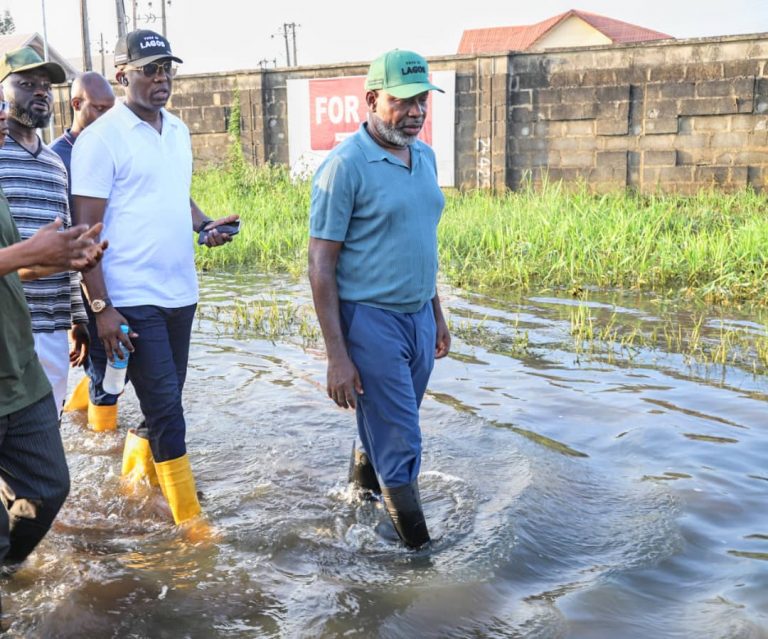
Flooding has been a perennial challenge in Lagos, particularly during the rainy season. Wahab’s leadership saw a proactive response, with major drainage systems cleared across the state.

Notable projects include the restoration of System 6C (Lord Chosen Canal) and work along the Orchid Corridor, areas notorious for heavy flooding.

His ministry also collaborated with local communities, encouraging residents to keep drains free of debris and participate in cleanup efforts. These interventions have brought tangible relief to neighborhoods that previously suffered devastating floods.

Combatting open defecation

Wahab’s ministry intensified its campaign against open defecation this year, enforcing sanitation laws while commissioning public toilet facilities in densely populated areas.

The effort is part of a broader plan to improve public hygiene and prevent the spread of diseases linked to poor sanitation. Advocacy efforts reached schools, markets, and community centers, ensuring that the message of clean and accessible sanitation was widely understood.

Enforcing environmental laws and green standards: Noise and air pollution enforcement

Wahab’s crackdown on noise pollution was a defining moment in 2024. Several establishments, including churches, mosques, and nightclubs, were sealed for violating noise regulations under the Lagos State Environmental Management and Protection Law of 2017.

This enforcement has brought long-needed relief to residents affected by excessive noise and set a precedent for future regulatory compliance.

Combating illegal street trading

Illegal street trading, especially the roadside sale of livestock and sickly puppies, has posed environmental and public health risks.

Wahab ensured strict enforcement of the law this year, deploying Kick Against Indiscipline (KAI) operatives to address the issue. This action not only protected public health but also reinforced the rule of law in Lagos’ marketplaces.

Tackling expired products in markets

In addition to enforcing pollution laws, Wahab targeted the sale of expired products in Lagos markets. The ministry conducted inspections and penalized offenders while urging traders to prioritize consumer safety.

His zero-tolerance approach underscored the government’s commitment to public health.

Promoting sustainable real estate development

At the Lagos Real Estate Marketplace Conference & Exhibition, Wahab emphasized the importance of green standards in Lagos’ booming real estate sector.

Partnering with agencies like LAWMA, LASEPA, and LASPARK, he ensured that environmental protection remains a core principle in urban development.

Restoring ecosystems and empowering communities: Reviving green spaces and protecting wetlands

In 2024, LASPARK, under Wahab’s supervision, restored several green spaces across Lagos. Parks were renovated, tree-planting campaigns were launched, and wetlands were protected from encroachment. These efforts have not only improved air quality but also provided recreational opportunities for residents.

Public awareness and grassroots engagement

Wahab has been a vocal advocate for environmental stewardship, leading campaigns that emphasize community responsibility.

Through the #CleanerLagos initiative, he has inspired grassroots efforts to promote cleanliness in neighborhoods. His focus on behavioral change has resonated with residents, making environmental conservation a shared responsibility.

Integrated waste management systems

Recognizing the need for long-term solutions, Wahab’s ministry introduced integrated waste management systems that combine recycling, composting, and safe disposal.

This approach has streamlined waste processing and reduced the pressure on Lagos’ landfill sites, offering a sustainable path forward.

Improving access to potable water

The Lagos State Water Corporation, under Wahab’s direction, repaired critical pipelines, including those in Yaba, ensuring access to clean water for thousands of residents.

This achievement reflects the ministry’s broader commitment to infrastructure improvement.

Conclusion: A legacy of action and hope

Wahab’s leadership in 2024 represents a paradigm shift in how Lagos approaches its environmental challenges. His policies and projects demonstrate a clear understanding of the complex interplay between urban growth, environmental sustainability, and public health.

Beyond addressing immediate issues, Wahab has laid the foundation for a more resilient and sustainable Lagos.

His work has shown that leadership is not about lofty promises but about rolling up one’s sleeves and driving change where it matters most.

From combating flooding to enforcing environmental laws, from advocating for waste conversion to restoring green spaces, Wahab’s achievements this year are a testament to what is possible when determination meets vision.

As Lagosians look to 2025, the path forward is clear: building on the successes of 2024, embracing sustainable practices, and fostering a city where everyone plays a role in protecting the environment.

Tokunbo Wahab has not only set the bar high but has also shown us what true environmental stewardship looks like.

BIG STORY

Awujale Stool: Protest Rocks Ijebu Ode Over Imposition Plot

Published

on

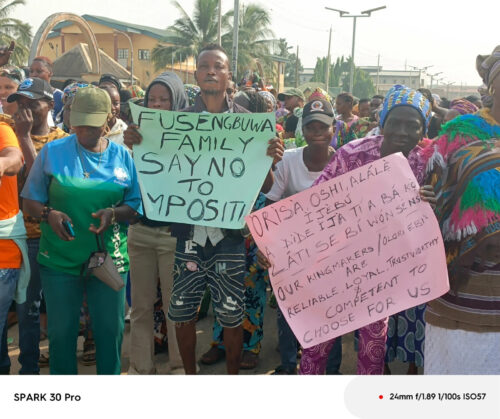
A peaceful protest broke out on Friday in Ijebu Ode over alleged plans to impose the next Awujale of Ijebuland.

The protesters marched through Awujale Palace Road on their way to the Ijebu Ode Local Government Secretariat to register their displeasure over the development.

Recall that the Ogun State Government, on Tuesday, in a statement signed by the Commissioner for Local Government and Chieftaincy Affairs, Ganiyu Hamzat, halted the Awujale selection process following a flood of petitions received from security agencies and other stakeholders.

Details later…

Continue Reading

BIG STORY

Fubara Is APC Leader In Rivers, Wike Has Been Compensated —– Bwala

Published

on

Daniel Bwala, special adviser to President Bola Tinubu on policy communication, says his principal aligns with the position of Nentawe Yilwatda, national chairman of the All Progressives Congress (APC), on the leadership hierarchy in Rivers state.

Bwala’s remarks come as the Rivers house of assembly continues impeachment proceedings against Siminalayi Fubara, amid a renewed war of words between the governor and Nyesom Wike, his predecessor.

On January 3, the APC chairman said Fubara, governor of Rivers, leads the party in the state.

Yilwatda said the APC accords governors the privilege of leading the party at the state level, while urging them to respect inclusion and avoid disenfranchising other party members.

Speaking on ‘Hard Copy’, a Channels Television programme, Bwala said the governor must be allowed to carry out his duties without undue interference.

The presidential aide added that Wike’s political standing in the state is limited to the Peoples Democratic Party (PDP).

“I agree with the point highlighted by the national chairman that in Rivers state, Governor Fubara is the leader of the APC. Wike is not a member of the APC, so he cannot speak for the party,” he said.

“He may be regarded as a leader within the PDP in Rivers state, having been a former governor, but the APC leader in the state is Governor Fubara.”

Bwala said Tinubu’s position is in tandem with the party’s internal rules and democratic principles.

“What the national chairman said is the position the president sticks to, because he respects party procedures. The president believes in the rule of law and due process, and the party will always respect that,” he said.

Bwala also addressed concerns over Wike’s influence within the federal government, noting that appointments do not supersede national interest.

“We’ve heard people complain that as a cabinet member, Wike enjoys certain benefits,” he said.

“Wike has been adequately compensated. The president believes in compensating people, but not at the expense of the interest of Nigeria. President Bola Tinubu gives latitude, but once you cross the line, you will know.”

He added that the cold war between Wike and Fubara is “being handled”.

“When you ask who is the leader of the party, the answer is the governor. The impeachment procedure must be consistent with the practice of law and constitutional requirements,” he added.

“The governor will deal with it. There are court orders stopping the impeachment, and the party is clear: nobody should stop Fubara from governing Rivers state.

“The president even respects the rights of states governed by the PDP. Even where the APC may want to challenge them, he believes that a governor, regardless of party, should be allowed to govern.”

Bwala concluded that the president’s stance reflects his commitment to democratic stability, constitutional order, and party discipline across the country.


Continue Reading

BIG STORY

Abductions: US Demands Action, FG Vows To Track Bandits

Published

on

The United States has raised serious concerns over Nigeria’s ability to protect Christian communities following the abduction of 177 worshippers in Kaduna State, as bandits were on Thursday sighted moving freely through forest corridors with their captives, days after storming churches without resistance.

On Sunday, gunmen attacked three churches in Kurmin Wali community in the Kajuru Local Government Area of Kaduna State and whisked away more than 177 worshippers, with 11 managing to escape, while 166 are still in captivity.

The US warning came as a high-level delegation of their officials arrived in Nigeria on Thursday on a week-long diplomatic tour aimed at reviewing counterterrorism efforts and the protection of vulnerable religious groups across Africa, the Middle East and Europe.

The meeting is part of the United States-Nigeria Joint Working Group and was co-chaired by the National Security Adviser, Nuhu Ribadu, and the US Under Secretary of State for Political Affairs, Allison Hooker.

It took place amid heightened diplomatic tensions after US President Donald Trump redesignated Nigeria as a Country of Particular Concern over alleged religious freedom violations. However, the Federal Government has repeatedly dismissed claims of systemic Christian persecution, maintaining that insecurity affects citizens of all religious backgrounds.

Hooker said recent attacks showed that despite reported security operations, Christian communities in parts of northern Nigeria remained dangerously exposed.

Hooker said, “Today, we are here to discuss how we can work together to deter violence against Christian communities; prioritising countering terrorism and insecurity; investigating attacks and holding perpetrators accountable; and reducing the number of killings, forced displacements, and abductions of Christians, particularly in the North Central States.

“On the protection of Christians, the Nigerian government recently secured the release of 38 Christians abducted from a church in Kwara state, and another 265 abducted from St. Mary’s Catholic school. This real progress is a direct result of our engagement with the Nigerian government.

“However, we are concerned about recent reports that gunmen kidnapped more than 170 Christians in Kaduna state on January 18. The government of Nigeria must do more to protect Christians and their right to practice their faith freely and safely.”

Hooker said the mass abduction in Kaduna underscored persistent security failures that the Nigerian government must urgently address.

She added that advancing religious freedom and security would deepen US-Nigeria relations in other areas, including trade, economic cooperation, health responses and the fight against terrorism.

She said, “Advancing religious freedom and security will help the United States and Nigeria to enhance the reciprocal benefits of our relationship: solidifying trade and economic deals, degrading terrorist groups that threaten our interests, and strengthening health responses, among many other areas. We hope to identify some ways to return internally displaced persons to the communities from which they were expelled in the North Central States, interdict weapons and funding going to terrorist groups, and expand investigations and ensure prosecution of individuals and groups committing atrocities.”

Her comments came amid fresh field reports confirming that the abductors of the Kurmin Wali worshippers were seen trekking with their victims between Ungwan Gamu and Maro communities in Kajuru Local Government Area, exploiting forest routes long known as bandit hideouts.

The abductors have reportedly demanded the return of 17 motorcycles, valued at N28.9m, which they claim were seized during recent military operations, as a condition for the release of the victims.

In response, National Security Adviser, Nuhu Ribadu, acknowledged the gravity of the situation, saying the Federal Government had intensified joint military operations, intelligence coordination and investigations into attacks on religious communities.

Ribadu said violence framed along religious lines was unacceptable and would be treated as an attack on the Nigerian state, assuring that perpetrators would be tracked and prosecuted.

“Nigeria is a deeply plural society, and the protection of all citizens: Christians, Muslims, and those of other beliefs, is non-negotiable. Violence framed along religious lines is treated as an attack on the Nigerian state itself. Our response, therefore, integrates security operations, rule of law, humanitarian safeguards and strategic communication, ensuring that operational successes translate into public confidence and strengthened social cohesion,” he said.

Ribadu said President Bola Ahmed Tinubu had authorised expanded security deployments, enhanced intelligence coordination and stronger investigations into attacks on religious communities, assuring that perpetrators would be tracked and prosecuted.

He said, “At the national level, and under the leadership of President Bola Ahmed Tinubu, Nigeria has taken deliberate and decisive steps to confront insecurity. The President has formally declared national security emergencies in vulnerable and high-risk areas, authorised intensified joint operations, and directed the sustained deployment of security forces to priority locations, particularly those communities experiencing recurrent attacks on civilians and religious groups.

“These directives have been matched with concrete action. Nigeria is expanding early-warning and rapid-response mechanisms, developing a national database to serve as a single, authoritative source of accurate and verifiable data on deaths and casualties arising from violence. This effort will strengthen evidence-based decision-making, accountability, and the effectiveness of security responses. Parallel to this, investigations and prosecutions related to attacks on religious communities have been intensified to ensure that violence is met not only with force, but with justice and accountability.”

Briefing journalists after the meeting, the Minister of Information and National Orientation, Mohammed Idris, said the engagement reflected sustained efforts to deepen security partnerships and deliver concrete results.

“This is the third high-level engagement with senior United States officials since November 2025. It shows that our partnership is active, serious, and focused on outcomes that matter to Nigerians,” Idris said in a statement by his media aide, Rabiu Ibrahim.

He noted that collaboration between the two countries had translated into operational gains on the ground.

“Our military and security agencies are working closely with US partners through intelligence sharing and operational coordination, and have strengthened ongoing operations, including Operation Hadin Kai in the North East and Operation Fasan Yamma,” he added.

Idris also highlighted the US commitment to deliver outstanding military equipment procured over the past five years, including drones, helicopters, and support systems, and noted readiness to provide surplus defence equipment.

On domestic measures, he stated, “Nigeria is acting decisively. Security agencies have clear instructions to protect communities and respond swiftly to threats.”

He added that the Federal Government was strengthening early-warning systems and developing a national database to generate accurate figures on deaths and casualties linked to violence.

“This will give us a single, trusted source of data to guide decisions, improve accountability, and sharpen our security response,” he said.

The minister urged Nigerians to remain patient and supportive as reforms continue.

“Our responsibility is to keep Nigerians informed and reassured. The work being done today is to ensure a safer country tomorrow,” he added.

The session was attended by senior Nigerian officials, including the Minister of Defence, Gen. Christopher Gwabin Musa (retd.), the Chief of Defence Staff, Gen. Olufemi Oluyede, and the Inspector General of Police, Kayode Egbetokun. Aside Hooker, the US delegation included Deputy Commander of AFRICOM Lt. Gen. John Brennan, and other senior officials.

Other countries that the US Under Secretary is billed to visit are Muscat, Oman; Manama, Bahrain; and Rome, Italy, the US Department of State announced in a statement on Wednesday.

Her itinerary includes strategic dialogues in Oman and Bahrain, where she will lead discussions aimed at advancing cooperation on a range of security, economic and cultural priorities with both governments.

In Rome, she will engage with international partners and counterparts on major global issues, including the Russia-Ukraine war, Venezuela and peace efforts in the Middle East.

She is also scheduled to meet representatives of United Nations agencies such as the World Food Programme and the Food and Agriculture Organisation to discuss oversight and accountability for US-funded assistance programmes, and to explore new agricultural trade opportunities for American farmers.

Hooker, who was appointed Under Secretary of State for Political Affairs in 2025, oversees key regional and bilateral policy issues across the State Department and plays a central role in shaping US diplomatic engagements globally.

The Village Head of Kurmin Wali, Ishaku Dan’azumi, told newsmen on Thursday that the sighting of the abductors and their victims followed threats issued by the abductors after they detected the presence of security operatives in the area.

Dan’azumi told newsmen in a telephone interview that the abductors and their victims were seen trekking on foot between neighbouring Ungwan Gamu and Maro communities. However, their exact destination could not be ascertained.

“They (abductors) accused us of bringing soldiers and claimed powerful people were backing us,” Dan’azumi said. “After that call, they disappeared. This (Thursday) morning, we were told that they were seen moving on foot with our people between Ungwan Gamu and Maro, but we do not know exactly where they are heading,” he said.

According to the traditional ruler, the development followed threats allegedly issued by the bandits on Wednesday evening after they noticed the presence of security operatives in the area.

“They said we were claiming to have ‘big people’ backing us because of the military presence,” Dan’azumi said.

 

Continue Reading


Join Us On Facebook

Most Popular


Warning: Undefined array key "slug" in /home/porsch10/public_html/wp-includes/class-wp-theme-json.php on line 2117

Warning: Undefined array key "slug" in /home/porsch10/public_html/wp-includes/class-wp-theme-json.php on line 2117

Warning: Undefined array key "slug" in /home/porsch10/public_html/wp-includes/class-wp-theme-json.php on line 2117