Connect with us


BIG STORY

Bill To Make Voting Mandatory Passes Second Reading At House Of Reps

Published

on

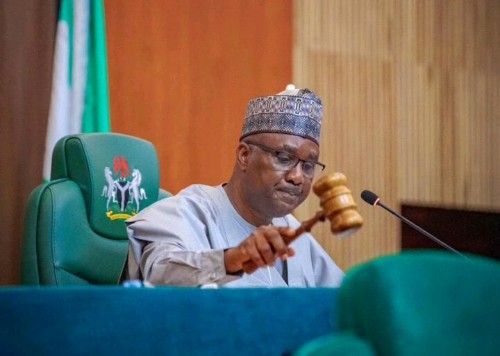
A bill proposing mandatory voting in elections for qualified Nigerians has passed the crucial second reading stage at the house of representatives. This development signifies a significant step towards potential changes in Nigeria’s electoral process and could have considerable implications for voter turnout and democratic participation.

The bill, which is sponsored by Tajudeen Abbas, speaker of the house, passed the second reading stage after an extensive debate on Thursday. The fact that the bill is sponsored by the Speaker himself underscores its importance within the House of Representatives and suggests a strong push for its eventual passage into law.

Leading the debate, Daniel Ago, the co-sponsor, said the proposed legislation seeks to amend the Electoral Act 2022 to tackle the problem of low voter turnout. Ago’s emphasis on addressing low voter turnout highlights the core objective of the mandatory voting bill and its potential to reshape electoral engagement in Nigeria.

He said compulsory voting law would increase civic engagement and voter participation, making electoral involvement a legal obligation rather than a personal choice. The argument for mandatory voting centers on the idea that it could lead to a more engaged citizenry and higher participation rates in elections, thereby strengthening Nigeria’s democracy.

Ago said the bill, if passed into law, would strengthen democracy by improving representation, foster a more politically aware country, and reduce vote buying. These potential benefits, as outlined by Ago, suggest that proponents believe mandatory voting could lead to a more robust and less corrupt electoral system in Nigeria.

Benjamin Kalu, the deputy speaker, supported the bill and said adding that citizens are expected to perform certain civic responsibilities. Kalu’s support from a key leadership position within the House further indicates the significance and potential backing for the mandatory voting proposal.

He cited Australia, where voting is compulsory, saying it is a crime not to vote, noting that it has resulted in a stable and inclusive governance in the country. The example of Australia, a country with mandatory voting, is used to illustrate the potential positive impacts on governance and inclusivity.

“In Australia, it is an offence not to vote in any election. There are some incentives that you will be denied for not voting,” he said. Kalu’s reference to penalties and potential denial of incentives in Australia provides a glimpse into the mechanisms that could be considered for enforcing mandatory voting in Nigeria.

Kalu said Nigerians should be part of the decision-making in elections. This statement underscores the fundamental democratic principle that mandatory voting aims to uphold – ensuring broader participation in shaping the country’s leadership and direction.

Awaji-Inombek Abiante, a People’s Democratic Party (PDP) member from Rivers state, said there are no incentives for citizens to support a compulsory voting law. Abiante’s dissenting voice raises a crucial question about the motivation and potential resistance to making voting obligatory in Nigeria.

Abiante referenced Kalu’s argument, asking what incentives citizens would be denied if they do not vote. This specific question challenges the practical implementation and potential consequences of a mandatory voting system in the Nigerian context.

“What are the incentives that would be denied to citizens?” he asked. “Voting should be free,” Abiante added. Abiante’s concern about potential penalties and his assertion that “voting should be free” represent key arguments against mandatory participation in elections.

Abiante also expressed concerns about the voter register, saying, “It is not clean”. This highlights a critical underlying issue – the integrity of the electoral roll – which some argue needs to be addressed before considering mandatory voting.

“Who will provide the logistics for Nigerians abroad to come home and vote?” Abiante asked. This practical question points to the significant logistical challenges of implementing mandatory voting for Nigerians living outside the country.

But Abbas responded, noting that there are some exceptions in specific laws. Abbas’s acknowledgment of potential exceptions suggests that the bill may consider certain circumstances under which voting might not be compulsory.

Mark Esset, a lawmaker from Akwa Ibom state, who also rejected the bill, said the house should not enact a compulsory voting law when citizens have “lost confidence” in voting process. Esset’s opposition is based on the argument that addressing the lack of trust in the electoral system should precede any move towards mandatory voting.

“It is a good bill, but we are trying to build something on nothing. While we want to make voting compulsory, there should also be a law to make voting count,” he said. Esset emphasizes the importance of ensuring the credibility and impact of votes as a prerequisite for mandatory participation.

While lawmakers were opposing the bill, Kalu consistently interrupted them, citing order 9, demanding that they confine their argument to the rules of the debate. This procedural intervention during the debate highlights the tensions and differing viewpoints surrounding the mandatory voting proposal within the House.

Abbas had to correct him, clarifying that the debates were in line with the bill’s general principles. The Speaker’s intervention suggests an effort to ensure a fair and comprehensive discussion of the bill’s merits and drawbacks.

When the speaker called for a voice vote on the bill, the “ayes” were louder than the “nays”. The outcome of this voice vote indicates that the bill has significant support within the House of Representatives as it moves to the next legislative stage.

BIG STORY

#BON 2025: Obasa, Elegushi Endow Award Categories, As Addme, Indomie, Abundish Join Award Sponsors

Published

on

All roads lead to the Wole Soyinka Centre for Culture and Creative Arts, formerly known as the National Arts Theatre, this Sunday, December 14, for the highly anticipated 17th edition of the Best of Nollywood (BON) Awards.

The event is set to be hosted by the dynamic duo of Bukunmi ‘KieKie’ Adeaga-Ilori and Adams Ibrahim Adebola (popularly known as VJ Adams), with the Executive Governor of Lagos State, His Excellency Babajide Sanwo-Olu, serving as the official Host Governor.

The ceremony promises to be a spectacular celebration of cinematic excellence. This year’s awards are not only a recognition of Nollywood’s best creative and technical talents but also a showcase of significant corporate and private support for the industry, highlighted by the endowment of key award categories.

These endowments underline a strategic partnership between the film industry and various high-profile entities and personalities.

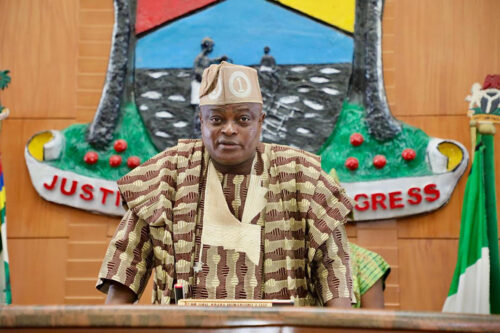
The BON Awards proudly recognizes the commitment of several partners to fostering excellence in filmmaking. Among the esteemed endowers is the Speaker of the Lagos State House of Assembly, Rt. Hon. Mudashiru Obasa, who has generously endowed the coveted Best Indigenous Movie (Yoruba) category, emphasising the importance of local cultural narratives.

Further bolstering the awards, the prominent Lagos monarch, Oba Saheed Elegushi, has endowed the most prestigious prize of the night, the Best Movie category, highlighting his commitment to the overall success and quality of Nigerian cinema.

Corporate sponsors are also showing strong support, with Addme championing acting talent by endowing the Best Actress of the Year category, while Indomie shows its support for emerging talent through the Best Child Actor award.

Abundish highlights the creative technical aspects of filmmaking by endowing the Best Use of Food in a Movie category.

The founder of BON Awards, Seun Oloketuyi, noted that these endorsements provide crucial resources and prestige to the categories, ensuring the continued celebration of authentic storytelling and technical innovation within the industry.

“The support from Rt. Hon. Obasa for the Best Indigenous Movie award emphasizes the importance of preserving and promoting our rich cultural narratives through film,” said Oloketuyi.

“Likewise, the commitments from Addme, Indomie, Abundish, and the generous support of Oba Elegushi underscore the value placed on acting prowess and the creative technical elements that bring our stories to life.”

As the biggest names in Nollywood gather in Lagos, all eyes will be on the Wole Soyinka Centre for Culture and Creative Arts for what is set to be one of the most memorable nights in Nigerian cinema.

Continue Reading

BIG STORY

‘Excessive’ Security For Seyi Tinubu: How It Is Understood —–Folorunsho Tahir Hamsat

Published

on

The appropriateness or otherwise of security protection for a president’s family can be a subject of public debate. This debate is centred on the complex challenge of ensuring the safety of people connected to the presidency while being mindful of public accountability and the effective use of government resources.

This writer will focus solely on the provision of security for the president’s family, as understood, in layman’s terms. Recently, at a public function, President Tinubu’s son, Seyi,’s excessive security escort was criticized by Nobel laureate, Professor Wole Soyinka. The respected leader had argued that such resources were needed elsewhere.

From my study, it is standard international practice for a country’s president’s immediate family, including the children, to receive significant security protection. This is due to the high profile of the president and the potential national security risks that could arise from threats and various forms of harm to the president’s family members.

Nigeria is currently confronted by multiple security challenges like kidnapping and banditry, with the primary threat coming from the Islamic State of West Africa (ISWA) and Boko Haram. On that score, threatening or harming a president’s son, daughter, or wife could be used to blackmail the president and compromise his ability to perform state duties, thereby creating a national crisis. Thus, the goal of ‘excessively’ protecting the president’s family is to ensure the stability and continuity of the president’s function and, by extension, the nation, by mitigating high-level threats to the First Family.

I am not familiar with the local laws on the protection of private individuals, but, based on my research, in developed countries whose model of democracy Nigeria especially practices, such as the US, the provision of security by agencies like the DSS to the president’s immediate family is a federal law, not a discretionary choice.

The president’s family members often attend public schools or travel, requiring extensive, pre-planned security measures and an advance team to ensure their safety in such environments. Even the US law specifies that children of former presidents receive protection until they are 16 years old, unless declined.

In other climes, a sitting president can issue an executive order to extend protection to members of his family, including individuals not automatically covered by law. I will support this argument with two empirical evidence. Just before departing the White House, finally in January 2025, after the expiration of his constitutional two terms as president of the United States, Joe Biden extended protection for his adult children through the next seven months via an executive order.

That presidential order was critiqued by his successor, Donald Trump, and subsequently revoked by him. However, Trump himself did the same for his four adult children and two of their spouses before his first term ended in 2021, when they were given six months of additional protection beyond their stay in the government house. Thus, my interpretation of this subject is that, if it’s not unusual for a president before he leaves office to authorize an extended period of protection for their immediate family members, giving them full-time protection while holding the power is justified and not inappropriate.


-Tahir Hamsat is a Lagos-based journalist. He can be reached via 08051000485

Continue Reading

BIG STORY

JUST IN: Accord Party Clears Adeleke As Sole Aspirant For Osun Guber Primary

Published

on

Barely 16 hours after Governor Ademola Adeleke officially joined the Accord Party, the party’s national leadership has cleared him to participate in its gubernatorial primary.

The Nation recalled that Adeleke, on Tuesday evening, defected to the Accord Party alongside his deputy, Kola Adewusi, and other top aides.

In a statement, Elder Ibe Thankgod, Chairman of the Accord Party Screening Committee, confirmed that Adeleke had been screened ahead of Wednesday’s primary.

He noted that the governor met all the necessary requirements for nomination and participation, adding that the committee had cleared him as the sole aspirant for the party’s governorship ticket and completed all required documentation with relevant bodies.

The statement added that the committee presented Adeleke with a certificate of clearance and described him as a worthy gubernatorial aspirant.

Adeleke expressed gratitude to the screening committee and party leadership, affirming his readiness for the primary and the 2026 general elections.

“I am ready for the primary and I am ready for the general elections. We are winning by God’s grace,” he said.

Continue Reading


Join Us On Facebook

Most Popular


Warning: Undefined array key "slug" in /home/porsch10/public_html/wp-includes/class-wp-theme-json.php on line 2117

Warning: Undefined array key "slug" in /home/porsch10/public_html/wp-includes/class-wp-theme-json.php on line 2117

Warning: Undefined array key "slug" in /home/porsch10/public_html/wp-includes/class-wp-theme-json.php on line 2117