Connect with us


BIG STORY

Adeduntan Sustains His Winning Streak, Pioneers Leadership Excellence In Banking

Published

on

Since his appointment as MD/CEO of First Bank of Nigeria Limited in 2016, Dr. Adesola Adeduntan has completely transformed the financial institution and has made it attractive to every strata of the society. From an institution that used to be perceived as an old-generation bank, FirstBank is now a darling to all as it leverages latest digital tools to meet its customers’ needs. Also, under Adeduntan’s leadership, the 128-year old bank has made huge contributions to national development, thereby stimulating development, setting standards and motivating excellent output across sectors. Clearly, these contributions to national development were what endeared Adeduntan to President Muhammadu Buhari who recently saluted him on his recognition by Cranfield University, UK, one of the most prestigious citadels of learning in Europe. Adeduntan will on Wednesday, June 22, be conferred with Doctor of Science, Honoris Causa and he would be delivering an address to the graduating class of the university. This feat, the president in a statement by his Special Adviser (Media and Publicity), Femi Adesina, described as, “another testament to the fact that Nigeria is blessed with the brightest and the best in all areas of human endeavor.” Buhari lauded Adeduntan for being a role model to the younger generation, showing that hard work pays, and with resourcefulness and doggedness, great heights are achievable.

Adeduntan holds a Doctor of Veterinary Medicine from the University of Ibadan, Master’s in Business Administration from Cranfield University, and is Fellow of Institute of Chartered Accountants of Nigeria (ICAN), as well as Chartered Institute of Bankers of Nigeria (CIBN).

The president sent best wishes to Adeduntan and family as he hoisted Nigeria’s flag proudly to receive an honor Cranfield University said was in recognition of his outstanding contribution to business. Incidentally, Buhari’s commendation came on the day the bank successfully held its AGM which showed a stellar performance in its financials, a transformational result that put the bank on course to reclaiming its leadership position of the financial sector.

Adeduntan has a distinguished career in finance having held senior positions at Citibank Nigeria, KPMG and Arthur Andersen Nigeria. He studied at Cranfield University as a British Chevening Scholar, achieving an MBA in 2005.

Commenting on the honour by Cranfield University, the FirstBank boss said: “I am extremely humbled and most grateful to the university for this recognition. My time at Cranfield served as a catalyst for my professional and personal development propelling me to the leadership position I occupy today.

“I am a firm believer in talent management, being vital to further accelerate Africa’s growth to enable it to benefit from its demographic dividend and the opportunities therein. I look forward to sharing my experiences with the students on the universal applicability of the skills the Cranfield MBA provides to positively impact the world.”

On his part, the Chief Executive and Vice-Chancellor of Cranfield University, Professor Karen Holford CBE FREng also congratulated Adeduntan, saying: “It is an honour to welcome Dr Adeduntan back to Cranfield to recognise all his professional achievements in this way. His own experience at Cranfield University has propelled his career forward and this serves as a true inspiration for our graduates both this year and in the future.”

Indeed, Adeduntan is an accomplished professional with distinctive international and domestic experience in commercial and investment banking, development finance, audit, and consulting; a philanthropist and leader with keen interest in providing platforms for the development of other young leaders.

The FirstBank Group, the commercial banking arm of FBN Holdings Plc, which he heads is made up of First Bank of Nigeria and subsidiaries including FBNBank UK, FBNBank DRC, FBNBank Ghana, FBNBank Senegal, FBNBank Guinea, FBNBank Gambia, FBNBank Sierra Leone and First Pension Custodian as well as Representative Offices in France and China.

Adeduntan is overseeing one of the most extensive transformation programmes in sub-Saharan African financial services industry, with the goal to reposition FirstBank Group to market pre-eminence.

He is leading FirstBank Group on the journey to win the most significant emerging business opportunities in the financial services industry through the development and execution of a digital-led strategy that has established FirstBank as the dominant player in digital banking.

FirstBank Group’s transformation programme, under the leadership of Adeduntan has enabled the bank to grow customer accounts from about 10 million in 2015 to over 36 million (including digital wallets), become the second largest issuer of cards in Africa with over 11.8 million issued cards, onboard over 18.6 million active customers on FirstBank’s digital banking platforms, and initiate and grow the most expansive bank-led Agent Banking Network in Africa with over 170,000 agents.

His career in banking and finance, spanning almost three decades, has earned him various recognitions and awards including Forbes Best of Africa – Outstanding Leader in Africa, Distinguished Alumnus Award by both the Cranfield University’s School of Management and the University of Ibadan, African Banking Personality of the Year, African Banker of the Year Award; Banking Icon of the Decade by the Sun Newspapers and induction into the African Leadership Magazine (ALM) Hall of Fame, Honorary Citizenship of the State of Georgia and Congressional Commendation Award from the Georgia Senate – USA, Bank CEO of the Year by the AES Excellence Club and several other awards.

He has attended various executive and leadership programmes at Harvard Business School (USA), Wharton School (USA), London Business School (UK), IESE (Spain), University of Oxford (UK), University of Cambridge (UK), CEIBS (China) and INSEAD (France). He is a fellow of both the Institute of Chartered Accountants of Nigeria (ICAN) and the Chartered Institute of Bankers of Nigeria (CIBN).

Adeduntan’s leadership drive also reflected in First Bank Nigeria Limited’s recently released full year 2021 financial statement. The results clearly showed the strength and resilience of the iconic African elephant as well as the financial institution’s leadership in the industry. The impressive results were a reflection of the robust strength and growth of the iconic African elephant, showing that the bank has taken its rightful position among the industry leaders.

In addition, it showed the level of work the current board, management and staff of the bank have put in to turn the tide in the 128 years old institution with entrenched corporate governance.

The full year 2021 performance by the bank represented a shift in the financial institution’s performance trajectory and was made possible through its undeterred commitment in pursuing its transformational agenda; cutting across customer-led innovation, building a digitalised bank, culture change, reinventing the bank’s workplace and safeguarding its assets for the digital age.

For the first time, FirstBank Group posted the best result in more than a decade history of the bank by crossing the N100 billion profit line. Specifically, in the full year 2021 financial statement, the FirstBank Group reported a 73.9 per cent growth in its profit after tax to N117.8 billion, as against the N67.8 billion recorded as of December 2020, just as its profit before tax stood at N130.9 billion, which was a significant rise by 77.9 per cent year-on-year, as against the N73.6 billion it was as of December 2020.

FirstBank’s gross earnings also increased by 30.3 per cent to N716.8 billion in 2021, up from N550.3 billion it was as of December 2020. Also, it recorded non-interest income of N342.2 billion in the year under review, which was 106.4 per cent higher than the N165.8 billion recorded as of December 2020. As a result of years of strategic restructuring of its balance sheet and operations, its gross earnings also moved northwards by 30.3 per cent, its total assets was up 15.9 per cent to N8.5 trillion as of the end of 2021, as against the N7.4 trillion recorded the previous year, just as its customer deposits also climbed by 19.5 per cent to N5.6 trillion, up from the N4.7 trillion recorded the previous year. The bank’s customer loans and advances also improved by 28 per cent to N2.8 trillion in the year under review, up from N2.2 trillion the previous year.

FirstBank has shown innovation, resilience and commitment to growth by significantly reducing its non-performing loans (NPL) from 25% in 2016 to an acceptable level of 6.1% in 2021.

To demonstrate that the bank’s performance in 2021 was not a fluke, the Bank equally performed excellently well in Q1 2022. FirstBank recorded 32% increase in gross earnings to N180bn in Q1’22 from N136.6bn in Q1’21. Profit after tax was up 108% to N32.4 billion (Q1’22) relative to N15.6 billion (Q1’21). This impressive performance is hinged on robust loan portfolio, effective cost structure and increased digital services.FirstBank recorded the highest decline in its cost-to-income ratio in Q1 2022, dropping from 79.5% recorded in Q1 2021 to 67.03% amongst tier-1 Banks in the review period.

With FirstBank under Adeduntan, the safety of customers and the security of their transactions come first. This has ensured the bank keeps the trust of Nigerians gained over the many years of its enduring legacy of safety and security.

The bank also delivers unique and bespoke financial services solutions across all customer segments underpinned by its commitment to innovation and the customer experience. It also leverages its strong investment banking capabilities to support clients in defining and executing innovative debt solutions as well as offer strategic advice at the highest level, arrange tailor-made financing structures, manage risk and ultimately help clients to realise their aspirations

Since its establishment in 1894, FirstBank has consistently built relationships with customers focusing on the fundamentals of good corporate governance, strong liquidity, optimised risk management and leadership.

Over the years, the bank has led the financing of private investment in infrastructure development in the Nigerian economy by playing key roles in the federal government’s privatisation and commercialisation schemes. With its global reach, FirstBank provides prospective investors wishing to explore the vast business opportunities that are available in Nigeria, an internationally competitive world-class brand and a credible financial partner. It is expected that the leadership excellence and recognitions accorded to Adeduntan would continue to reflect positively on the FirstBank brand and fundamentals of the bank so that the elephant will continue to stand ‘gidigba.’

Culled from ThisDay

BIG STORY

Awujale Stool: Protest Rocks Ijebu Ode Over Imposition Plot

Published

on

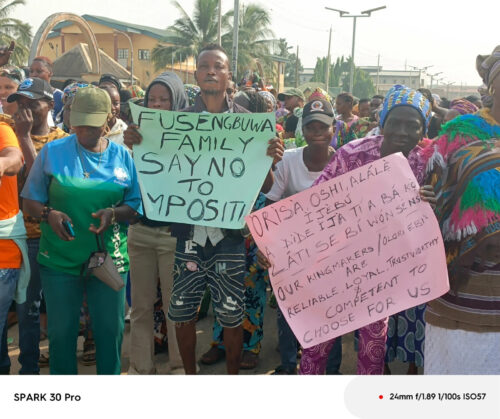
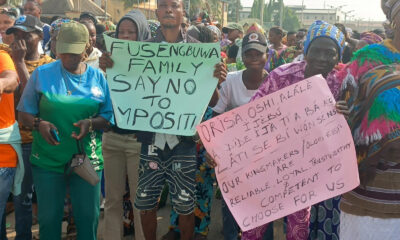
A peaceful protest broke out on Friday in Ijebu Ode over alleged plans to impose the next Awujale of Ijebuland.

The protesters marched through Awujale Palace Road on their way to the Ijebu Ode Local Government Secretariat to register their displeasure over the development.

Recall that the Ogun State Government, on Tuesday, in a statement signed by the Commissioner for Local Government and Chieftaincy Affairs, Ganiyu Hamzat, halted the Awujale selection process following a flood of petitions received from security agencies and other stakeholders.

Details later…

Continue Reading

BIG STORY

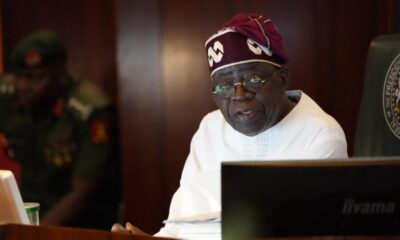
Fubara Is APC Leader In Rivers, Wike Has Been Compensated —– Bwala

Published

on

Daniel Bwala, special adviser to President Bola Tinubu on policy communication, says his principal aligns with the position of Nentawe Yilwatda, national chairman of the All Progressives Congress (APC), on the leadership hierarchy in Rivers state.

Bwala’s remarks come as the Rivers house of assembly continues impeachment proceedings against Siminalayi Fubara, amid a renewed war of words between the governor and Nyesom Wike, his predecessor.

On January 3, the APC chairman said Fubara, governor of Rivers, leads the party in the state.

Yilwatda said the APC accords governors the privilege of leading the party at the state level, while urging them to respect inclusion and avoid disenfranchising other party members.

Speaking on ‘Hard Copy’, a Channels Television programme, Bwala said the governor must be allowed to carry out his duties without undue interference.

The presidential aide added that Wike’s political standing in the state is limited to the Peoples Democratic Party (PDP).

“I agree with the point highlighted by the national chairman that in Rivers state, Governor Fubara is the leader of the APC. Wike is not a member of the APC, so he cannot speak for the party,” he said.

“He may be regarded as a leader within the PDP in Rivers state, having been a former governor, but the APC leader in the state is Governor Fubara.”

Bwala said Tinubu’s position is in tandem with the party’s internal rules and democratic principles.

“What the national chairman said is the position the president sticks to, because he respects party procedures. The president believes in the rule of law and due process, and the party will always respect that,” he said.

Bwala also addressed concerns over Wike’s influence within the federal government, noting that appointments do not supersede national interest.

“We’ve heard people complain that as a cabinet member, Wike enjoys certain benefits,” he said.

“Wike has been adequately compensated. The president believes in compensating people, but not at the expense of the interest of Nigeria. President Bola Tinubu gives latitude, but once you cross the line, you will know.”

He added that the cold war between Wike and Fubara is “being handled”.

“When you ask who is the leader of the party, the answer is the governor. The impeachment procedure must be consistent with the practice of law and constitutional requirements,” he added.

“The governor will deal with it. There are court orders stopping the impeachment, and the party is clear: nobody should stop Fubara from governing Rivers state.

“The president even respects the rights of states governed by the PDP. Even where the APC may want to challenge them, he believes that a governor, regardless of party, should be allowed to govern.”

Bwala concluded that the president’s stance reflects his commitment to democratic stability, constitutional order, and party discipline across the country.


Continue Reading

BIG STORY

Abductions: US Demands Action, FG Vows To Track Bandits

Published

on

The United States has raised serious concerns over Nigeria’s ability to protect Christian communities following the abduction of 177 worshippers in Kaduna State, as bandits were on Thursday sighted moving freely through forest corridors with their captives, days after storming churches without resistance.

On Sunday, gunmen attacked three churches in Kurmin Wali community in the Kajuru Local Government Area of Kaduna State and whisked away more than 177 worshippers, with 11 managing to escape, while 166 are still in captivity.

The US warning came as a high-level delegation of their officials arrived in Nigeria on Thursday on a week-long diplomatic tour aimed at reviewing counterterrorism efforts and the protection of vulnerable religious groups across Africa, the Middle East and Europe.

The meeting is part of the United States-Nigeria Joint Working Group and was co-chaired by the National Security Adviser, Nuhu Ribadu, and the US Under Secretary of State for Political Affairs, Allison Hooker.

It took place amid heightened diplomatic tensions after US President Donald Trump redesignated Nigeria as a Country of Particular Concern over alleged religious freedom violations. However, the Federal Government has repeatedly dismissed claims of systemic Christian persecution, maintaining that insecurity affects citizens of all religious backgrounds.

Hooker said recent attacks showed that despite reported security operations, Christian communities in parts of northern Nigeria remained dangerously exposed.

Hooker said, “Today, we are here to discuss how we can work together to deter violence against Christian communities; prioritising countering terrorism and insecurity; investigating attacks and holding perpetrators accountable; and reducing the number of killings, forced displacements, and abductions of Christians, particularly in the North Central States.

“On the protection of Christians, the Nigerian government recently secured the release of 38 Christians abducted from a church in Kwara state, and another 265 abducted from St. Mary’s Catholic school. This real progress is a direct result of our engagement with the Nigerian government.

“However, we are concerned about recent reports that gunmen kidnapped more than 170 Christians in Kaduna state on January 18. The government of Nigeria must do more to protect Christians and their right to practice their faith freely and safely.”

Hooker said the mass abduction in Kaduna underscored persistent security failures that the Nigerian government must urgently address.

She added that advancing religious freedom and security would deepen US-Nigeria relations in other areas, including trade, economic cooperation, health responses and the fight against terrorism.

She said, “Advancing religious freedom and security will help the United States and Nigeria to enhance the reciprocal benefits of our relationship: solidifying trade and economic deals, degrading terrorist groups that threaten our interests, and strengthening health responses, among many other areas. We hope to identify some ways to return internally displaced persons to the communities from which they were expelled in the North Central States, interdict weapons and funding going to terrorist groups, and expand investigations and ensure prosecution of individuals and groups committing atrocities.”

Her comments came amid fresh field reports confirming that the abductors of the Kurmin Wali worshippers were seen trekking with their victims between Ungwan Gamu and Maro communities in Kajuru Local Government Area, exploiting forest routes long known as bandit hideouts.

The abductors have reportedly demanded the return of 17 motorcycles, valued at N28.9m, which they claim were seized during recent military operations, as a condition for the release of the victims.

In response, National Security Adviser, Nuhu Ribadu, acknowledged the gravity of the situation, saying the Federal Government had intensified joint military operations, intelligence coordination and investigations into attacks on religious communities.

Ribadu said violence framed along religious lines was unacceptable and would be treated as an attack on the Nigerian state, assuring that perpetrators would be tracked and prosecuted.

“Nigeria is a deeply plural society, and the protection of all citizens: Christians, Muslims, and those of other beliefs, is non-negotiable. Violence framed along religious lines is treated as an attack on the Nigerian state itself. Our response, therefore, integrates security operations, rule of law, humanitarian safeguards and strategic communication, ensuring that operational successes translate into public confidence and strengthened social cohesion,” he said.

Ribadu said President Bola Ahmed Tinubu had authorised expanded security deployments, enhanced intelligence coordination and stronger investigations into attacks on religious communities, assuring that perpetrators would be tracked and prosecuted.

He said, “At the national level, and under the leadership of President Bola Ahmed Tinubu, Nigeria has taken deliberate and decisive steps to confront insecurity. The President has formally declared national security emergencies in vulnerable and high-risk areas, authorised intensified joint operations, and directed the sustained deployment of security forces to priority locations, particularly those communities experiencing recurrent attacks on civilians and religious groups.

“These directives have been matched with concrete action. Nigeria is expanding early-warning and rapid-response mechanisms, developing a national database to serve as a single, authoritative source of accurate and verifiable data on deaths and casualties arising from violence. This effort will strengthen evidence-based decision-making, accountability, and the effectiveness of security responses. Parallel to this, investigations and prosecutions related to attacks on religious communities have been intensified to ensure that violence is met not only with force, but with justice and accountability.”

Briefing journalists after the meeting, the Minister of Information and National Orientation, Mohammed Idris, said the engagement reflected sustained efforts to deepen security partnerships and deliver concrete results.

“This is the third high-level engagement with senior United States officials since November 2025. It shows that our partnership is active, serious, and focused on outcomes that matter to Nigerians,” Idris said in a statement by his media aide, Rabiu Ibrahim.

He noted that collaboration between the two countries had translated into operational gains on the ground.

“Our military and security agencies are working closely with US partners through intelligence sharing and operational coordination, and have strengthened ongoing operations, including Operation Hadin Kai in the North East and Operation Fasan Yamma,” he added.

Idris also highlighted the US commitment to deliver outstanding military equipment procured over the past five years, including drones, helicopters, and support systems, and noted readiness to provide surplus defence equipment.

On domestic measures, he stated, “Nigeria is acting decisively. Security agencies have clear instructions to protect communities and respond swiftly to threats.”

He added that the Federal Government was strengthening early-warning systems and developing a national database to generate accurate figures on deaths and casualties linked to violence.

“This will give us a single, trusted source of data to guide decisions, improve accountability, and sharpen our security response,” he said.

The minister urged Nigerians to remain patient and supportive as reforms continue.

“Our responsibility is to keep Nigerians informed and reassured. The work being done today is to ensure a safer country tomorrow,” he added.

The session was attended by senior Nigerian officials, including the Minister of Defence, Gen. Christopher Gwabin Musa (retd.), the Chief of Defence Staff, Gen. Olufemi Oluyede, and the Inspector General of Police, Kayode Egbetokun. Aside Hooker, the US delegation included Deputy Commander of AFRICOM Lt. Gen. John Brennan, and other senior officials.

Other countries that the US Under Secretary is billed to visit are Muscat, Oman; Manama, Bahrain; and Rome, Italy, the US Department of State announced in a statement on Wednesday.

Her itinerary includes strategic dialogues in Oman and Bahrain, where she will lead discussions aimed at advancing cooperation on a range of security, economic and cultural priorities with both governments.

In Rome, she will engage with international partners and counterparts on major global issues, including the Russia-Ukraine war, Venezuela and peace efforts in the Middle East.

She is also scheduled to meet representatives of United Nations agencies such as the World Food Programme and the Food and Agriculture Organisation to discuss oversight and accountability for US-funded assistance programmes, and to explore new agricultural trade opportunities for American farmers.

Hooker, who was appointed Under Secretary of State for Political Affairs in 2025, oversees key regional and bilateral policy issues across the State Department and plays a central role in shaping US diplomatic engagements globally.

The Village Head of Kurmin Wali, Ishaku Dan’azumi, told newsmen on Thursday that the sighting of the abductors and their victims followed threats issued by the abductors after they detected the presence of security operatives in the area.

Dan’azumi told newsmen in a telephone interview that the abductors and their victims were seen trekking on foot between neighbouring Ungwan Gamu and Maro communities. However, their exact destination could not be ascertained.

“They (abductors) accused us of bringing soldiers and claimed powerful people were backing us,” Dan’azumi said. “After that call, they disappeared. This (Thursday) morning, we were told that they were seen moving on foot with our people between Ungwan Gamu and Maro, but we do not know exactly where they are heading,” he said.

According to the traditional ruler, the development followed threats allegedly issued by the bandits on Wednesday evening after they noticed the presence of security operatives in the area.

“They said we were claiming to have ‘big people’ backing us because of the military presence,” Dan’azumi said.

 

Continue Reading


Join Us On Facebook

Most Popular


Warning: Undefined array key "slug" in /home/porsch10/public_html/wp-includes/class-wp-theme-json.php on line 2117

Warning: Undefined array key "slug" in /home/porsch10/public_html/wp-includes/class-wp-theme-json.php on line 2117

Warning: Undefined array key "slug" in /home/porsch10/public_html/wp-includes/class-wp-theme-json.php on line 2117