Connect with us

BIG STORY

Petrol Prices Crash At Depots Due To Low Demand

Published

on

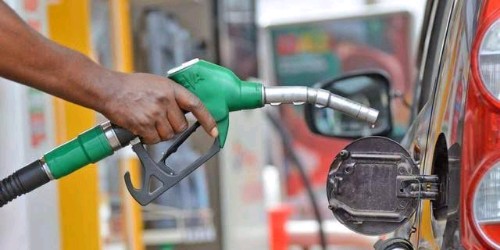
Petrol depots have crashed the prices of fuel amidst speculations of a rise to N700 per litre this month.

The Independent Petroleum Marketers Association of Nigeria (IPMAN) yesterday denied plan by the association to increase the pump price of petrol to N700 per litre this month.

On the contrary, The Nation confirmed that private depots crashed their prices to between N495 and N496 per litre from between N502 and N503 per litre.

The Nigerian National Petroleum Company Limited (NNPCL) depot however retained its N479.6/litre price.

National Vice President, Alhaji Abubakar Maigandi, said on the phone that the crash in prices stemmed from low demand for fuel.

He said the high prices caused by the new foreign exchange policy were beyond the means of customers.

He said: “They (private petrol depots) are even reducing the prices compared to last week’s.

They are selling at the rate of N495 to N496/litre. You know it reached N502 to N503/litre.

“In Lagos, most of the depots, that is what they are selling. NNPC is maintaining its old rate of N479.6/litre.

“There is no much demand because people, especially civil servants, are complaining that there is no money.”

He urged importers of the product to expedite action, noting that there has been no fresh stocking since the removal of subsidy.

Continuing, Maigandi said: “Nobody has imported petrol since the removal of subsidy. Even NNPC did not import.

“We are all using the old stock. But I know probably this month there will be new stock. If not, there may be scarcity.”

IPMAN denies plan to hike petrol to N700 per litre

In a separate interview, IPMAN Chairman in the Southwest, Alhaji Dele Tajudeen, denied alleged plan by the association to increase pump price of petrol to N700 per litre nationwide.

He, therefore, urged Nigerians to disregard the speculation and not to engage in panic buying.

Tajudeen stressed that the price of the product would not be more that what it is being currently sold.

He commended President Bola Tinubu for removing the subsidy on petrol, adding that it was long overdue.

“Even in the PIA Bill, it is clearly stated that the subsidy must be removed,” he told the News Agency of Nigeria (NAN).

“So, I want to commend him for removing the subsidy and I want to say that we are in support totally. This is because the subsidy was a scam.”

He said the slight increase in pump price was because of the transportation cost and that Nigerians should be at rest as the commodity will not be out of reach for the masses.

“I want to disabuse the mind of the people that they should not panic about it. There is no cause for alarm. We are in control and there is nothing like that.

“So, people should rest assured that there is no way they can buy petrol more than the price it is being sold now.

“If we look at the price from NNPC retail limited, which is an integral part of NNPC limited, they have more advantages than independent marketers and major marketers.

”So, it was the retail price that they announced; they had never given a specific price to the independent marketers.

“However, I have read what somebody put in the paper. It is just speculation; it is not a reality. There is nothing like that, I want to assure the masses.

“There is no how the price can go to N700, because even if the FX is N700 or N800, that has nothing to take the price of petroleum from N500 to N700,” Tajudeen said.

He noted that the product had been deregulated hence the differential in prices was due to transportation as it is related to location.

”If you are moving products within Lagos, the price may not be more than N300,000. But if you are moving up to Ibadan or thereabout, it could be as much as N500,000.

”And if you are going to Ilorin, it could be as high as N700,000. That would account for differential in prices.

“I want to say with all sense of authority that as of today within the Lagos metropolis, nobody should sell more than N515 to N520 per litre.

”Though NNPC has given us the price, the reality of it is that what we buy from the market, because NNPC limited is not the only source for our product; we get from private depots.

“So, whatever we buy is what we put our own margin and sell.

”But as of today, the highest you can get anywhere should be around N550; Lagos N510 per litre; Ogun State between N500 and N520,” Tajudeen said.

The Major Oil Marketers of Nigeria said recently that consumption of PMS had reduced by 20% from 66 million litres per day to just over 40 litres.

Its Executive Secretary, Mr. Clement Isong, said adjustment of lifestyle due to increased rates was responsible for the decline in demand.

His words: “What we are hearing is that the consumption came down. It used to be 66 million litres per day for the country, but it came down to just over 40 million litres per day.

“But there are many reasons why it came down. People are still adjusting their lifestyle. The price has also gone up in many countries because in some countries their supply was coming from Nigeria.

“They have all developed alternative supply sources. So a lot of their volumes were coming from and will still come from Nigeria until they develop less alternative ways for themselves.

“It is only after they have developed, when the market settles that we will know what Nigeria’s volumes will be.

“Also, remember that we are building a couple of refineries in Nigeria. So, we will have legitimate export of product once we have satisfied our national demand.

Credit: The Nation

“Too, I will say averagely in the month of June, supply is down by 20% to just over 40ml/day. But it is still not Uhuru. It is not the final position.”

BIG STORY

Reps Release Constitution Amendment Bills, To Vote On State Police Creation Today

Published

on

The House of Representatives has released the final print of the Constitution Alteration Bills seeking to provide a constitutional framework for the establishment of state police, among others, scheduled for consideration and voting during Today’s plenary.

The development marks a significant milestone in the ongoing review of the Constitution of the Federal Republic of Nigeria, 1999 (as amended).

A statement signed by Spokesman, House of Representatives, Rep. Akintunde Rotimi, noted that the bills represent the culmination of several months of rigorous legislative work undertaken by the House Committee on Constitution Review, following the receipt and consideration of numerous Constitution amendment proposals from lawmakers, government institutions, professional bodies, civil society organisations, traditional institutions, and citizens across the country.

The review process involved extensive stakeholder engagement through zonal and national public hearings, consultative meetings, expert sessions, and town hall engagements held across the six geopolitical zones, ensuring broad-based citizen participation and input.

The Constitution Alteration Bills span critical thematic areas, including: Electoral Reforms, Judicial Reforms, Security and Policing, Local Government Administration, Inclusive Governance and Citizenship, Legislature, Devolution of Powers, Human Rights, Fiscal Reforms, Strengthening of Institutions, Traditional Institutions, and Creation of States and Local Governments.

Of particular priority is the Constitution Alteration Bill seeking to provide a constitutional framework for the establishment of State Police. The proposal has emerged as one of the most extensively debated reform initiatives in the current review cycle, attracting widespread public interest and stakeholder engagement across the federation.

The bill seeks to strengthen Nigeria’s security architecture by creating an additional layer of policing, while providing constitutional safeguards, clearly defined operational frameworks, oversight mechanisms, and delineation of powers between federal and state policing authorities.

According to the statement, its consideration reflects the growing national consensus on the need for innovative and locally responsive approaches to addressing contemporary security challenges.

Commenting on the development, the Deputy Speaker of the House of Representatives and Chairman of the House Committee on Constitution Review, Rt. Hon. Benjamin Kalu described the release of the final print as a defining moment in the House’s commitment to delivering a more responsive and effective constitutional framework for Nigeria.

According to him, “The release of the final print of these Constitution Alteration Bills reflects the extensive consultations, scrutiny, and bipartisan collaboration that have characterised this reform process. These proposals embody the aspirations, concerns, and recommendations expressed by Nigerians from all walks of life.

“Of particular significance is the proposal on State Police, which responds to longstanding calls for a more effective and decentralised policing framework capable of addressing emerging security challenges across the federation.

“As the House prepares to vote, we remain guided by our constitutional responsibility to strengthen democratic governance, deepen federalism, promote inclusion, enhance security, and build institutions capable of meeting the demands of a modern and prosperous nation.”

The House is expected to vote on the bills during today’s plenary, provided the constitutionally prescribed quorum is attained.

Should the required quorum not be met, consideration and voting will be deferred to the next legislative day in accordance with the Constitution and the Standing Orders of the House, the statement added.

The House of Representatives said it remains firmly committed to an open, inclusive, and transparent constitution review process and to advancing reforms that strengthen Nigeria’s democratic institutions, promote national unity, improve governance outcomes, deepen citizen participation, and respond to the evolving needs and aspirations of the Nigerian people.


Continue Reading

BIG STORY

Governorship Aspirants Spent ₦30bn On Primaries — EFCC

Published

on

The Executive Chairman of the Economic and Financial Crimes Commission (EFCC), Ola Olukoyede, has said that some governorship aspirants in Nigeria spent between N20 billion and N30 billion to secure electoral victory during the last primary elections, warning that the trend poses a serious threat to democratic governance and fuels corruption in public office.

While delivering the inaugural High-Level Guest Speakers’ Series organised by the Centre for Peace and Strategic Studies (CPSS), University of Ilorin, on Wednesday, the EFCC boss said that huge financial resources deployed during elections often compel elected officials to divert public funds after assuming office in a bid to recover their investments.

He spoke on the theme, “De-risking and Mobilising Critical Stakeholders for Peaceful and Credible 2027 Elections in Nigeria”.

According to him, the huge financial outlay required to win elections often creates pressure on public office holders to divert public funds after assuming office, citing an example of what it requires to win a governorship election.

Olukoyede noted the EFCC remains committed to tackling vote-buying and other forms of financial inducement capable of undermining the integrity of Nigeria’s electoral process.

“The commercialisation of votes weakens the foundation of good governance because it compromises the political recruitment process. Leaders who buy their way into office are more likely to focus on recovering their investments rather than serving the public interest”, he said.

According to him, the anti-graft agency had made several arrests across the country over vote-buying and related electoral offences, with several convictions already secured.

He noted that those prosecuted include politicians, electoral officials, and ordinary citizens found culpable of electoral misconduct.

The EFCC chairman warned that impunity in the electoral process could undermine democracy and national stability, stressing that there must be no sacred cows in enforcing electoral laws.

He also disclosed that the commission plans to deploy drones and other technological tools to strengthen election monitoring ahead of the 2027 general elections, particularly in tracking vote-buying and financial inducements at polling units.

Olukoyede called on political parties and their supporters to embrace issue-based campaigns and reject inflammatory rhetoric that could incite violence.

He urged stakeholders, including the Independent National Electoral Commission (INEC), security agencies, civil society organisations, the media, and political actors, to work collaboratively to ensure peaceful, free, and credible elections.

Earlier, the Vice-Chancellor of the University of Ilorin, Professor Wahab Egbewole (SAN), described electoral corruption as a major threat to national security and democratic development.

Egbewole said credible elections are essential for national stability, economic growth, and public confidence in governance, stressing the need for stronger collaboration between academic institutions and agencies responsible for safeguarding electoral integrity.

In his welcome address, the Director of the Centre for Peace and Strategic Studies, Professor G.A. Animasawun, said the lecture series was conceived to provide a platform for proactive engagement on threats to Nigeria’s electoral process ahead of the 2027 polls.

He noted that the initiative would bring together policymakers, security experts, electoral officials, civil society groups, and scholars to develop practical solutions for peaceful and credible elections.

The event attracted representatives of security agencies, electoral bodies, civil society organisations, members of the academic community, and students.

Continue Reading

BIG STORY

US Military Presence in Nigeria Based on Invitation —– AFRICOM

Published

on

The United States Africa Command has said its military cooperation with Nigeria is firmly grounded in respect for Nigerian sovereignty and mutual interest, stressing that American forces operate in the country strictly by invitation and within an agreed bilateral framework.

AFRICOM’s Director of Public Affairs, Col Rebecca Heyse, stated this during an X Space discussion on Tuesday, titled “Strengthening Security Through Strategic Information Sharing: United States and Nigerian Military Partnership Against Terrorism.”

Heyse was unequivocal that the partnership was not an imposition.

“Our operations and cooperation with Nigeria are rooted in fundamental respect for Nigerian sovereignty. We operate strictly by invitation and under the US-Nigeria Joint Working Group framework,” she said.

Heyse said the United States remained committed to the partnership for as long as both countries considered it mutually beneficial.

“As long as there are shared security threats and the framework continues to be of value to both countries, the United States remains committed to the partnership,” she said.

The spokesperson for the Defence Headquarters, Maj Gen Samiala Uba, reinforced this position from the Nigerian side, making clear that it was Nigeria, not the United States, that determined the scope and duration of the collaboration.

“The cooperation is at the instance of Nigeria. The competencies, specialised capabilities and expertise the United States brings are things we require, and as long as we require them, we will continue to work together under the Joint Working Group framework,” he said.

Uba disclosed that hundreds of Nigerian military personnel were currently undergoing training in the North-East as part of the partnership, describing the benefits as significant.

“The Armed Forces of Nigeria are benefiting immensely from this collaboration, including skills development and specialised training. There are many operational lessons we continue to learn through our interaction with the United States,” he said.

Presidential spokesman, Sunday Dare, also weighed in, crediting the partnership with improving the pace and consistency of Nigeria’s counter-insurgency operations.

“We want to thank the US government for the active collaboration they have had with our military.

“Nigeria has seen the war against terror increase in tempo and consistency, and we have recorded massive successes in counter-insurgency operations,” he said.

In November 2025, President Donald Trump designated Nigeria a “Country of Particular Concern,” claiming that Christianity faced an existential threat in the country and that thousands of Christians were being killed by radical Islamists.

The Federal Government, however, rejected the allegation of the “mass murder” of Christians and instead sought collaboration with the United States to further prosecute the counter-insurgency war.

On Christmas Day 2025, at Trump’s direction, AFRICOM conducted missile strikes against ISIS militants in Nigeria’s Sokoto State in coordination with Nigerian authorities.

Following the strikes, the United States dispatched around 200 troops to train Nigerian military forces battling Islamist militants.

The partnership has since yielded significant results with the killing of Abu-Bilal al-Minuki, described by some as ISIS’s “second in command” globally.


Continue Reading


Join Us On Facebook

Most Popular


Warning: Undefined array key "slug" in /home/porsch10/public_html/wp-includes/class-wp-theme-json.php on line 2117

Warning: Undefined array key "slug" in /home/porsch10/public_html/wp-includes/class-wp-theme-json.php on line 2117

Warning: Undefined array key "slug" in /home/porsch10/public_html/wp-includes/class-wp-theme-json.php on line 2117