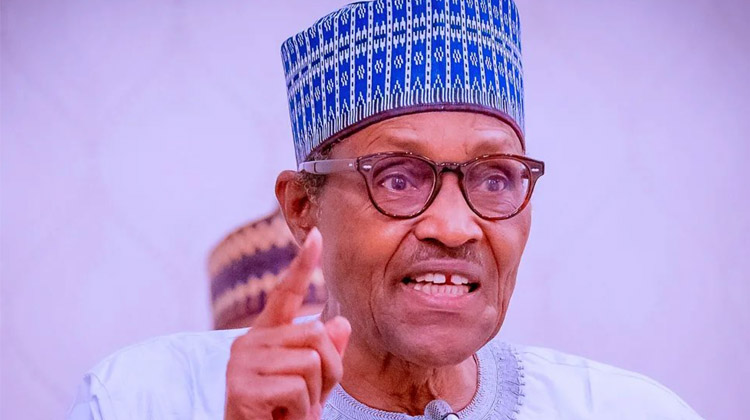
The passing of former President Muhammadu Buhari has stirred renewed discussions about the future of his political loyalists, particularly those who belonged to the now-defunct Congress for Progressive Change, which he established in 2009.
Since President Bola Tinubu assumed office in 2023, the influence of Buhari’s CPC allies has diminished. Prominent figures like former Kaduna State Governor Nasir El-Rufai and ex-SGF Babachir Lawal have publicly criticized Tinubu’s potential reelection bid.
Analysts suggest that Buhari’s death could present new challenges for the APC, especially given his significant support base, long estimated to exceed 12 million people.
Signs of friction are emerging between the APC and the African Democratic Congress, as both parties attempt to court Buhari’s base. This shift comes after comments by former military Head of State, General Abdulsalami Abubakar, who remarked that Buhari’s death might redefine Nigeria’s political future.
“That shows the magnitude of what has befallen Nigeria,” Abdulsalami stated. “With the passing away of Buhari, politics in Nigeria will certainly change — I hope for the better.”
The ADC’s interim National Publicity Secretary, Bolaji Abdullahi, claimed during a PUNCH interview that many of Buhari’s key allies had already aligned with their coalition.
“Most of the Buhari loyalists are already with us,” Abdullahi said. “The majority of them, the entire North is already with our party. We are very confident. The passing of the former President will only cement that for us because that was his wish when he was alive — that his members should join the coalition.”
He added, “As you can see, there is a strong representation of CPC and Buhari loyalists in the senior ranks of the coalition — the likes of Babachir Lawal, Abubakar Malami, Isah Pantami, Emeka Nwajuba, Nasir El-Rufai, Rotimi Amaechi, Rauf Aregbesola and the rest of them. Those are Buhari people. And their presence in the leadership of the coalition indicates that that’s where Buhari stood.”
Abdullahi also emphasized that the coalition is determined to uphold Buhari’s legacy, arguing that the APC had sidelined and criticized the late President during his life.
“Why would they remain part of the APC?” he asked. “Is it because they enjoy the humiliation and the exclusion they have suffered? Or is it because they’ve watched the government demonise the legacy of Buhari while he was alive?”
He also blamed the Tinubu administration for attributing Nigeria’s economic problems to Buhari. “President Tinubu’s government has blamed Buhari for almost every economic woe. So, why would Buhari followers or loyalists remain with the APC?”
Some CPC figures still in the APC include former Nasarawa Governor, Senator Tanko Al-Makura; Babale Ila; Ibrahim Gobir; Senator Ibrahim Musa; Sanusi Aliyu; Mohammed Tukur; Senator Ahmed Sani; Ibrahim Chachangi; Yusuf Bala; and the party’s current North West National Vice Chairman, Garuba Datti.
Others include Katsina State Governor, Dikko Radda; Revenue Mobilisation Allocation and Fiscal Commission Chairman, M.B. Shehu; NDLEA Chairman, retired General Buba Marwa; former House of Representatives Speaker, Aminu Bello Masari; Adamu Farouk; Okoi Obono-Obla; former DG of the Voice of Nigeria, Osita Okechukwu; Senator Ibrahim Musa; and Nasiru Argungu.
Also still in the APC are former Katsina Governor Aminu Masari; Nasarawa Governor Abdullahi Sule; Adamu Adamu; Senator Mustafa Salihu; Almajiri Geidam; Waziri Bulama; Dr. Nasiru Argungu; Dr. Dominic Alancha; Ayuba Balami; Lucy Ajayi; Captain Bala Jibrin; Uche Ufearoh; Yusuf Salih; and Alkali Ajikolo, among others.
However, sources within the party told The PUNCH that although many of these individuals are presently supporting the APC in the lead-up to 2027, not all are expected to remain. Some disgruntled members, particularly those who feel marginalized since Buhari left office, may eventually exit.
Another member of the ADC coalition, former APC North-West Vice Chairman Salihu Lukman, said Buhari’s death signals the close of a political era where his endorsement could secure electoral wins.
During an appearance on Arise TV, Lukman noted, “What we must learn, most especially in the coalition, is that we don’t have somebody with the kind of intimidating profile like that of the late Buhari. Our leaders must have a kind of team spirit.”
He stressed that the goal isn’t only to defeat the APC or Tinubu, but to build a new political system that meets the people’s expectations.
“I know that many politicians look forward to him raising their hands and endorsing them. That translates almost into victory in many places in the North. Now we don’t have any figure like that. Politicians must relate to citizens with higher humility rather than the current arrogance,” he added.
APC pushes back
In reaction to the growing rumors of defections, APC Publicity Director Bala Ibrahim insisted that Buhari’s supporters remain ideologically committed to the APC.
“No, they will not support ADC, it’s not possible. They are people of different ideologies. They are more comfortable with and in APC,” he said.
While acknowledging that Buhari’s death leaves a void, Ibrahim believes it will spur the party to reflect and improve.
“Yes, political atmosphere will change for our party. But it is not a vacuum that will deform the party. It is a vacuum that will push the party into sobriety… The party is doing something to reconcile, reassess the situation, and see to it that there is a very good sense of mending,” he added.
Shittu dismisses claim
Former Communications Minister Adebayo Shittu, another CPC stalwart, denied claims that he’s leaving the APC for the ADC.
“No way, I am not leaving the APC. In fact, I am even planning to run for Oyo governorship seat on the platform of the party in 2027. And I have no doubt I will defeat any opponent to clinch it if I am given the APC ticket,” he stated.
On the broader impact of Buhari’s death, Shittu said, “No, the exit of Buhari can’t break up or divide the APC. Although you can’t rule out the fact that some elements of CPC may go… there are more people moving into the APC.”
Arewa leaders react
Reactions from northern political figures remain mixed.
Anthony Sani, former Secretary General of the Arewa Consultative Forum, believes the APC will remain on course.
“I do not think there will be any substantial change in direction by the APC after the death of former President Buhari. He said he would remain in the APC, which had made him President twice,” Sani said. “Given the attitude of his supporters, I do not see how they will betray Buhari, even in his grave.”
He also questioned the strength of the coalition, citing a lack of distinct policies and zoning disadvantages.
“The politics of zoning does not favour the coalition. President Tinubu is about the only one who has only one term to go, and northerners cannot trust Peter Obi, they cannot support Atiku Abubakar to dismantle the zoning,” he added.
On the other hand, Arewa Youth Consultative Forum President, Yerima Shettima, warned that Buhari’s death might result in a leadership vacuum within the APC.
“Buhari’s leadership was characterised by a blend of loyalty and divisiveness. His death could trigger a power vacuum. The APC would face a critical juncture in its trajectory,” Shettima stated.
He added that how the APC manages Buhari’s legacy would determine the party’s future.
“If the party fails to address the grievances of the populace, it risks losing credibility and support,” he warned.
Shettima said the CPC bloc could either rise as the custodian of Buhari’s values or transition into an entirely new political entity, depending on how it responds to ongoing internal shifts.


















 BIG STORY3 days ago
 BIG STORY2 days ago
 BIG STORY3 days ago
 BIG STORY5 days ago
 BIG STORY3 days ago
 BIG STORY2 days ago
 BIG STORY2 days ago
 BIG STORY2 days ago