Adebayo Adelabu, the minister of power, has announced that Nigeria is on track to generate and distribute 8,000 megawatts (MW) of electricity before the conclusion of President Bola Tinubu’s first term in 2027.
Adelabu made the statement during a ministerial press briefing organized by Mohammed Idris, minister of information and national orientation, on Thursday.
He noted that the current administration had increased power generation by 1,700 megawatts within two years — a feat that previously took the nation 35 years to achieve with just a 2,000 megawatt rise.
He expressed confidence that if the current pace is maintained, the power ministry will reach or exceed the “8,000 megawatts” milestone by the end of Tinubu’s term.
“In the country’s history of the power sector, let me thank our agencies, our operators, that this was achieved during our time,” Adelabu stated.
“We have crossed the bar of 6,000 megawatts for the first time in the history of Nigeria’s power sector.”
He added, “That is not enough, this achievement was followed by a peak generation evacuation of 5,801.44 megawatts on 4th of March 2025, which also saw an impressive daily energy output, the highest ever, 128,370.75 megawatts per day on that very day.”
He emphasized the significance of the accomplishment, noting that previous daily averages hovered between 118,000 and 119,000 megawatts. “We achieved 128,000. That is the highest energy ever consumed in a day since the power sector came to being in Nigeria, and we are proud to achieve this.”
Adelabu further explained, “In summary, the average daily power generated and distributed in the first quarter of 2025 was 5,700 megawatts.”
He compared this to the 4,100 megawatts average recorded in the third quarter of 2023 when he assumed office in August. “This indicates a growth of 1,600 megawatts, nearly 40% growth since we assumed office at the ministry.”
He said past spikes in power generation lacked consistency and sustainability. “It took the country about 40 years. In 1984, when Alhaji Rilwanu Lukman was the federal minister of power, we achieved 2,000 megawatts of power generation.”
He continued, “We took this to 4,000, about 2016–2022, so it took the country between 35 to 40 years to achieve 2,000 incremental generation.”
Adelabu credited the Tinubu administration for achieving a 1,700-megawatt increase in just a year and a half, saying, “Thanks to our Mr. President for his support.”
“What we are saying is that past administrations have their own positives, creation of the NIPPs, a lot of things that they achieved.”
“If they have been adding at least 1,000 megawatts of power since 1999, we’d be talking about 26,000 megawatts, plus 4,000, that would be about 30,000 megawatts of power in Nigeria today, but we cannot keep dwelling in the past.”
“It’s the way forward. Now that we have created the trajectory, if we sustain this trajectory, I can assure you that before the end of this administration in 2027, we should be able to generate and distribute nothing less than 8,000 megawatts of power.”
“So, given that it took the country almost 40 years to achieve an incremental 2,000 megawatts average energy, we accomplished this.”
‘NATIONAL GRID STRONGER IN TINUBU’S ADMINISTRATION’
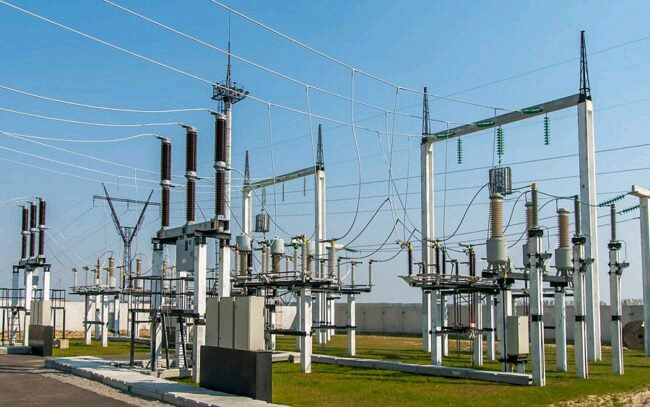
Adelabu highlighted improvements in the stability of the national grid under the Tinubu government, crediting the Transmission Company of Nigeria (TCN) for reinforcing critical infrastructure by installing 61 new transformers.
“It is a huge grid to cover over 200 million people, and it’s been there for so long, and we know that the maintenance history has been poor, replacement history has been poor, expansion history has been poor,” he said.
“It is old, so collectively enabling our grid 8.7 gigawatt operational capacity, as of today, if we grow our generation to 8,700 megawatts, the grid can still carry it, thanks to the activities of the TCN and the FGN power company.”
He explained that just two years ago, the grid would collapse when generation hit 5,000 megawatts. “Then we have evacuated 5,800 megawatts successfully without the grid blinking, it was still stable, so we can transport 8,700 megawatts.”
To reinforce the network, he noted that TCN installed 61 new transformers totaling 5,589 MVA in 2024, followed by nine more in the first quarter of 2025 across Lagos, Benin, Bauchi, Oshogbo, Kano, and Kaduna.
“In the 2025 appropriation, we already have N25 billion to support TCN to complete some of these projects and that will also improve power supply,” he said.
Beyond TCN efforts, Adelabu spoke of the “presidential power initiative” led by the FGN power company. “The pilot phase delivered infrastructure across 13 locations, adding 700 megawatts to the national grid.”
He also addressed past issues: “We experience a number of grid disturbances towards the end of last year; but since January up till today, four months into the new year, we have not seen any major disturbance to the grid.”
“I can assure you, we do everything possible to maintain and sustain the current scenario. If there’s any little disturbance, our turnaround time is being worked upon, within one to two hours, the grid will be up.”
Adelabu concluded by highlighting progress in decentralizing the grid. He said regionalisation is key to minimizing disruptions. “The eastern and western supergrid approvals currently in progress will revolutionise the national grid and reduce failures.”
He added, “Nigeria needs regionalisation of the national grid so that if there is a problem in one part of the country, it will not affect other parts.”
























 BIG STORY1 day ago
 BIG STORY14 hours ago
 BIG STORY3 days ago
 BIG STORY3 days ago
 BIG STORY1 day ago
 BIG STORY14 hours ago
 BIG STORY11 hours ago
 BIG STORY2 days ago