Connect with us


BIG STORY

Naira Crisis: Vote The Candidate Of Your Choice, Vote Your Conscience — Buhari Addresses The Nation [SEE FULL TEXT]

Published

on

President Muhammadu Buhari on Thursday directed the Central Bank of Nigeria to recirculate old N200 notes till April 10.

Buhari who gave the directive during his address to Nigerians blamed unscrupulous bankers for the scarcity of new naira notes being experienced in the country.

Below is his full address:

My Dear Compatriots,

I have found it necessary to address you today, on the state of the nation and to render account on the efforts of our administration to sustain and strengthen our economy, enhance the fight against corruption and sustain our gains in the fight against terrorism and insecurity which has, undoubtedly, been impacted by several internal and external factors.

Particularly, I am addressing you, as your democratically elected President, to identify with you and express my sympathy, over the difficulties being experienced as we continue the implementation of new monetary policies, aimed at boosting our economy and tightening of the loopholes associated with money laundering.

Let me re-assure Nigerians, that strengthening our economy, enhancing security and blockage of leakages associated with illicit financial flows remain top priority of our administration. And I shall remain committed to my oath of protecting and advancing the interest of Nigerians and the nation, at all times.

In the last quarter of 2022, I authorised the Central Bank of Nigeria (CBN) to redesign the N200, N500, and N1000 Nigerian banknotes.

For a smooth transition, I similarly approved that the redesigned banknotes should circulate concurrently with the old bank notes, till 31 January 2023, before the old notes, cease to be legal tender.

In appreciation of the systemic and human difficulties encountered during implementation and in response to the appeal of all citizens, an extension of ten days was authorized till 10th February, 2023 for the completion of the process. All these activities are being carried out within the ambit of the Constitution, the relevant law under the CBN Act 2007 and in line with global best practices.

READ MORE: Breaking: Buhari Extends Validity Of ‘Only’ Old N200 Notes Till April 10
Powered by Inline Related Posts

Fellow citizens, while I seek your understanding and patience during this transient phase of implementation, I feel obliged to avail you a few critical points underpinning the policy decision. These include:

a. The need to restore the statutory ability of the CBN to keep a firm control over money in circulation. In 2015 when this administration commenced its first term, Currency-in-Circulation was only N1.4trillion.

b. The proportion of currency outside banks grew from 78%in 2015 to 85% in 2022. As of October 2022, therefore, currency in circulation had risen to N3.23 trillion; out of which only N500 billion was within the Banking System while N2.7 trillion remained permanently outside the system; thereby distorting the financial policy and efficient management of inflation;

c. The huge volume of Bank Notes outside the banking system has proven to be practically unavailable for economic activities and by implication, retard the attainment of potential economic growth;

d. Economic growth projections make it imperative for government to aim at expanding financial inclusion in the country by reducing the number of the unbanked population; and

e. Given the prevailing security situation across the country, which keeps improving, it also becomes compelling for government to deepen its continuing support for security agencies to successfully combat banditry and ransom-taking in Nigeria

Notwithstanding the initial setbacks experienced, the evaluation and feedback mechanism set up has revealed that gains have emerged from the policy initiative.

I have been reliably informed that since the commencement of this program, about N2.1 trillion out of the banknotes previously held outside the banking system, had been successfully retrieved.

This represents about 80% of such funds. In the short to medium and long terms, therefore, it is expected that there would be:

a. A strengthening of our macro economic parameters;

b. Reduction of broad money supply leading to a deceleration of the velocity of money in the economy which should result in less pressures on domestic prices

c. Lowering of Inflation as a result of the accompanying decline in money supply that will slow the pace of inflation;

d. Collapse of Illegal Economic Activities which would help to stem corruption and acquisition of money through illegal ways;

e. Exchange Rate stability;

f. Availability of Easy Loans and lowering of interest rates; and

g. Greater visibility and transparency of our financial actions translating to efficient enforcement of our anti- money laundering legislations.

I am not unaware of the obstacles placed on the path of innocent Nigerians by unscrupulous officials in the banking industry, entrusted with the process of implementation of the new monetary policy. I am deeply pained and sincerely sympathise with you all, over these unintended outcomes.

To stem this tide, I have directed the CBN to deploy all legitimate resources and legal means to ensure that our citizens are adequately educated on the policy; enjoy easy access to cash withdrawal through availability of appropriate amount of currency; and ability to make deposits.

I have similarly directed that the CBN should intensify collaboration with anti-corruption agencies, so as to ensure that any institution or person(s) found to have impeded or sabotaged the implementation should be made to bear the full weight of the law.

During the extended phase of the deadline for currency swap, I listened to invaluable pieces of advice from well meaning citizens and institutions across the nation.

I similarly consulted widely with representatives of the State Governors as well as the Council of State. Above all, as an administration that respects the rule of law, I have also noted that the subject matter is before the courts of our land and some pronouncements have been made.

To further ease the supply pressures particularly to our citizens, I have given approval to the CBN that the old N200 bank notes be released back into circulation and that it should also be allowed to circulate as legal tender with the new N200, N500, and N1000 banknotes for 60 days from February 10, 2023 to April 10 2023 when the old N200 notes ceases to be legal tender.

In line with Section 20(3) of the CBN Act 2007, all existing old N1000 and N500 notes remain redeemable at the CBN and designated points.

Considering the health of our economy and the legacy we must bequeath to the next administration and future generations of Nigerians, I admonish every citizen to strive harder to make their deposits by taking advantage of the platforms and windows being provided by the CBN.

Let me assure Nigerians that our administration will continue to assess the implementation with a view to ensuring that Nigerians are not unnecessarily burdened. In this regard, the CBN shall ensure that new notes become more available and accessible to our citizens through the banks.

I wish to once more appeal for your understanding till we overcome this difficult transient phase within the shortest possible time.

Fellow citizens, on the 25th of February, 2023 the nation would be electing a new President and National Assembly members. I am aware that this new monetary policy has also contributed immensely to the minimization of the influence of money in politics.

This is a positive departure from the past and represents a bold legacy step by this administration, towards laying a strong foundation for free and fair elections.

I urge every citizen therefore, to go out to vote for their candidates of choice without fear, because security shall be provided and your vote shall count.

I, however, admonish you to eschew violence and avoid actions capable of disrupting the electoral processes. I wish us all a successful General Elections.

Thank you for listening. God bless the Federal Republic of Nigeria.

BIG STORY

We Will Get It Right With Security —- Obasa

Published

on

Speaker of the Lagos State House of Assembly, Rt. Hon Mudashiru Obasa has affirmed that with the support of all Nigerians, President Bola Ahmed Tinubu would get it right with his concerted reengineering of the nation’s security architecture.

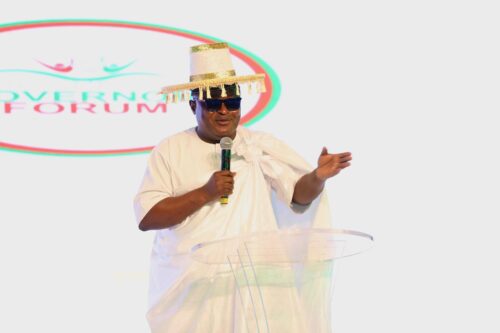
Speaking at the APC Stakeholders and Progressives Governors Forum meeting held Saturday, December 6, at the Eko Hotel and Suites, Victoria Island, Lagos, Obasa said he did not doubt that President Tinubu and the All Progressives Congress, APC-led federal government, would do all that they can to ensure that they secure the life and property of every Nigerian.

According to Obasa, “We have seen the president in action and how he is innovating and working hard to resolve our many challenges, especially insecurity, and we believe he will get it done. He’s still the man who can do it. That is why we must do everything within our powers to ensure that he is returned in 2027.”

Speaker Obasa teed off with robust commendations for the governors for their shared dedication and commitment to helping President Tinubu resolve Nigeria’s insecurity problem.

He urged them to galvanise their people when they return to their various states to be a part of the solution to Nigeria’s security challenge, and not stay aloof.

Speaker Obasa added that security is not just about the governors, “It is about everybody. We must all be involved in fighting this problem. We must give the President all the support that we can so that he will succeed in his attempts to redirect the trajectory of Nigeria.”

The PGF had converged on Lagos between December 5 and 6 for a meeting convened by the Chairman of the Forum, Senator Hope Uzodimma, Governor of Imo State, and hosted by Governor Babajide Sanwo-Olu of Lagos State.

In a communique read by Governor Uzodinma, the governors passed a vote of confidence on President Tinubu’s administration, and pledged support for his Renewed Hope Agenda and re-election in 2027.

The Forum, according to Governor Uzodinma, reviewed the security situation across the country and expressed appreciation for the improved coordination between federal, state, and local security structures, as well as the courage and sacrifices of security agencies and community volunteers. They also resolved to strengthen local security architecture in all the states.

Governor Uzodinma said that their two-day engagement provided an opportunity to review the nation’s current trajectory, deepen coordination among the governors, and reaffirm their firm support for the Renewed Hope Agenda of President Tinubu. “The PGF commended President Bola Ahmed Tinubu for his steadfast commitment to stabilizing the economy, strengthening national security, and laying the foundations of sustainable growth through the Renewed Hope Agenda,” he said.

Continue Reading

BIG STORY

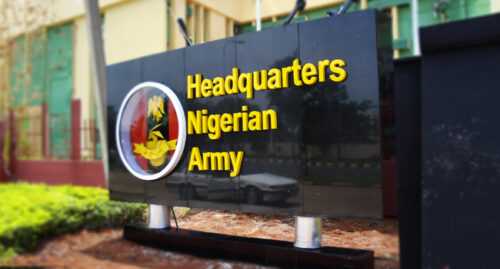
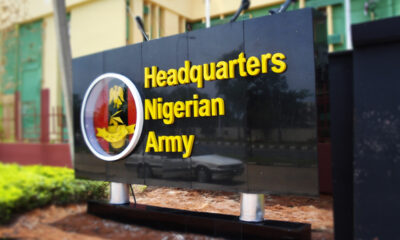
Nigerian Army Suspends Officer Retirements Amid National Security Emergency

Published

on

The Nigerian Army has suspended all statutory and voluntary retirements for certain categories of officers following the nationwide security emergency declared by President Bola Tinubu.

An internal memo dated December 3, signed by Maj. Gen. E. I. Okoro on behalf of the Chief of Army Staff, and sighted by our correspondent, stated that the suspension of retirements is aimed at retaining manpower, experience, and operational capacity as the Armed Forces expand in response to rising insecurity.

The document, referencing the Harmonized Terms and Conditions of Service Officers (HTACOS) 2024, noted that although officers are ordinarily expected to retire upon reaching their age limit, completing 35 years of service, or after repeated promotion or conversion failures, service extension is permissible under Paragraph 3.10(e) in the interest of the military.

The memo partly read: “Military service of a commissioned officer entails a period of unbroken service in the AFN from the date of enlistment or commissioning to the date of retirement. The period of service is determined by conditions enshrined in the HTACOS Officers 2024. These include attainment of age ceilings on various ranks, a maximum length of service of 35 years, and other criteria provided in Paragraphs 11.02(d) and 17.15, among extant regulations.

“Notwithstanding these provisions, Chapter 3.10(e) of HTACOS Officers 2024 allows for the extension of service to officers in the interest of the service.

“The President and Commander-in-Chief declared a nationwide security emergency on November 26, mandating the expansion of the AFN and other security agencies. In line with this, and to rapidly expand manpower, it has become expedient to temporarily suspend all statutory and voluntary retirements from the Nigerian Army with immediate effect.”

According to the circular, the temporary suspension applies to officers who fall into the following categories: officers who failed promotion examinations three times; officers passed over three times at promotion boards; officers who have reached the age ceiling for their ranks; officers who failed conversion boards three times; and officers who have attained 35 years of service.

“Officers in these categories who are not interested in an extension of service are to continue with the normal retirement procedure. Officers desirous of extension should note that upon extension, they are not eligible for career progression, including promotion, career courses, NA sponsorship, self-sponsored courses, secondment, or extra-regimental appointments,” the memo stated.

It directed all commanders to disseminate the directive and manage morale, adding that the policy would be reviewed as the security situation improves.

President Bola Tinubu, on November 26, 2025, declared a nationwide security emergency and directed the military, police, and intelligence agencies to expand recruitment and deploy thousands of additional personnel.

Continue Reading

BIG STORY

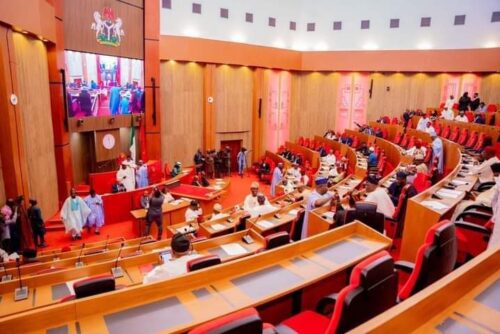
Senate Orders Nationwide Crackdown As Lead Poisoning Hits Ogijo Lagos

Published

on

The Senate on Thursday expressed grave alarm over a fast-spreading lead-poisoning crisis in Ogijo, a densely populated community straddling the boundary between Ikorodu (Lagos) and Ogun East Senatorial District.

It described it as a full-blown environmental and public-health emergency that threatened thousands of lives.

The motion, jointly sponsored by Mukhail Adetokunbo Abiru (Lagos East) and Gbenga Daniel (Ogun East), was brought under Matters of Urgent Public Importance pursuant to Orders 41 and 51 of the Senate Standing Orders, 2023 (as amended).

Lawmakers cited scientifically verified reports of extreme lead contamination linked to a cluster of used lead-acid battery recycling factories operating in the area for years.

According to the Senate, the crisis had left residents battling persistent headaches, abdominal pain, memory loss, seizures, and developmental delays in children, symptoms strongly associated with chronic lead exposure.

The chamber noted with concern that the Federal Government had already begun clampdowns, with the Minister of State for Labour and Employment, Nkeiruka Onyejeocha, shutting down seven battery-recycling factories and ordering a temporary halt to lead-ingot exportation pending safety investigations.

Senators said they were “alarmed that residents have for several years complained of persistent headaches, abdominal pains, loss of memory, seizures, cognitive decline, and developmental delays in children, symptoms strongly associated with chronic lead exposure.”

Despite years of community protests, the smelters allegedly continued operating openly, releasing toxic fumes and particulate dust into surrounding homes, markets and playgrounds.

“It is regrettable that despite years of community outcry, smelter furnaces continued operating, discharging toxic fumes from melted batteries directly into surrounding neighbourhoods. We are concerned that while some factory operators deny wrongdoing, community exposure remains extreme.

“The Senate acknowledges and commends the proactive efforts of the Lagos and Ogun State Governments and their relevant ministries and agencies for conducting early inspections, raising community awareness and working with federal authorities to contain the exposure,” lawmakers said.

The chamber further cited disturbing findings by independent testing commissioned by The Examination and The New York Times, which revealed severe contamination in both residents’ blood samples and soil within the industrial cluster.

Some environmental samples, senators noted, showed lead levels “up to 186 times the global maximum safety threshold.”

A major dimension of the scandal, lawmakers said, was that lead processed in Ogijo had already been traced into international supply chains, reaching global battery and automobile manufacturers who either did not address the findings or relied solely on assurances from Nigerian suppliers.

The Senate lamented that while some factory operators deny wrongdoing, community exposure remains dangerously high amid weak accountability and gaps in Nigeria’s regulatory frameworks.

Senators nonetheless praised emergency actions taken by the Lagos and Ogun state governments, commending their early inspections, public-awareness campaigns and support for affected families.

Citing Sections 14(2)(b) and 20 of the 1999 Constitution, the Senate emphasised the government’s responsibility to safeguard citizens’ welfare and ensure a safe environment.

Following extensive deliberations, the Senate resolved to commend both the Federal Government and the Lagos and Ogun State Governments for their swift intervention in shutting down non-compliant lead-recycling factories.

Lawmakers urged continued enforcement, including factory closures, export suspensions, prosecution of violators, and strengthened industrial safety monitoring.

The chamber mandated the Federal Ministry of Health and the Nigeria Centre for Disease Control (NCDC) to deploy emergency medical teams to Ogijo to provide free toxicology screenings, blood-lead management, chelation therapy, and ongoing treatment for affected children and adults.

Simultaneously, the Federal Ministry of Environment and NESREA were directed to carry out comprehensive environmental remediation, mapping soil, groundwater, air, and household dust contamination.

The Senate also called on the Federal Ministry of Solid Minerals and relevant regulatory agencies to enforce strict compliance standards for battery-recycling and lead-processing operations nationwide.

Additionally, it recommended establishing a National Lead Poisoning Response and Remediation Task Force within NEMA and directed the Committee on Legislative Compliance to monitor progress and report back within six weeks.

The Senate described the Ogijo crisis as a preventable tragedy that must serve as a national wake-up call on industrial pollution, regulatory failure and the urgent need to protect vulnerable communities from hazardous waste.


Continue Reading


Join Us On Facebook

Most Popular


Warning: Undefined array key "slug" in /home/porsch10/public_html/wp-includes/class-wp-theme-json.php on line 2117

Warning: Undefined array key "slug" in /home/porsch10/public_html/wp-includes/class-wp-theme-json.php on line 2117

Warning: Undefined array key "slug" in /home/porsch10/public_html/wp-includes/class-wp-theme-json.php on line 2117