Connect with us


BIG STORY

N70,000 Minimum Wage: States’ Salaries Increase By 90% To N3.8tn

Published

on

The amount allocated for personnel expenses, including salaries and allowances for state civil servants, has risen from N2.036 trillion spent in 2024 to N3.87 trillion in the approved 2025 budget.

Although the 36 sub-national governments budgeted a total of N2.8 trillion for salaries, they only disbursed N2.036 trillion throughout 2024, a reduction of N764 billion, according to the budget implementation report.

Data from the 2025 approved budget for all 36 state governments shows an almost 90.23 percent increase due to the introduction of the new N70,000 minimum wage and the rise in political appointments.

These figures are also available on Open States, a platform supported by BudgIT, which serves as a repository for government budget data.

The report also revealed that at least 27 states in the federation would not be able to pay workers’ salaries this year without waiting for federal allocations from the central government.

In July 2024, President Bola Tinubu approved a substantial increase in the minimum wage for Nigerian workers, raising it from N30,000 to N70,000.

This decision came after months of intensive negotiations between the government and labor unions.

However, the implementation of the new wage increase has been gradual across the country, with some states still not adopting the revised minimum wage.

In response to this delay, the Nigerian Labour Congress issued a stern ultimatum to state governments, demanding full implementation of the new wage by December 1, 2024.

Despite this pressure, many states have yet to begin paying the revised minimum wage, further delaying the financial relief workers expected.

An in-depth analysis of the budget documents revealed significant disparities in personnel costs across states. 20 states experienced a personnel cost increase of over 50%, while 16 states saw more moderate increases below 50%.

A closer examination revealed that states like Abia, Cross Rivers, Ekiti, Niger, Rivers, and Taraba saw the highest increase in their payroll, exceeding 100% of their 2024 personnel cost budget. Conversely, states such as Gombe, Osun, and Ondo had the lowest salary increase percentages, staying below 15%.

Detailed analysis of salary increases across states showed that Abia saw a notable rise in personnel costs, escalating from N33.045 billion to N77.34 billion, a 134% increase. Similarly, Adamawa’s personnel costs rose from N48.61 billion to N74.23 billion, a 52.7% increase.

In Akwa Ibom, personnel costs surged from N91.74 billion to N126.69 billion, reflecting a 38.1% growth.

Anambra state, under Governor Charles Soludo, also approved a significant rise from N34.001 billion to N63.41 billion, indicating an 86.45% increase.

Bauchi followed suit with an increase from N42.29 billion to N70.41 billion, showcasing an uplift of about 66.5%.

Meanwhile, Bayelsa saw its personnel costs climb from N60.18 billion to N114.21 billion, a rise of over 89%, indicating a strong investment in its workforce.

In Cross River, the personnel cost grew sharply from N35.02 billion to N106.12 billion, a 202% increase, one of the highest among the states. Delta also recorded a significant increase from N139.999 billion to N185 billion, reflecting a 32.5% rise.

Ebonyi had an increase from N23.076 billion to N36.66 billion, growing by 58.9%.

Edo’s personnel expenses surged from N74.58 billion to N101.29 billion, a 35.8% increase, while Ekiti saw a notable rise from N30.69 billion to N62.51 billion, almost doubling its personnel cost.

Enugu also experienced a substantial rise from N47.988 billion to N70.954 billion, a 48% increase.

However, Gombe stood out with a slight decrease in personnel costs, falling from N40.52 billion to N40.28 billion, a dip of just 0.6%.

On the other hand, Imo saw an increase from N41.92 billion to N67.4 billion, showing a rise of 60.9%.

Jigawa’s personnel costs jumped from N51.445 billion to N90.73 billion, a 76.4% increase, while Kaduna’s personnel expenses grew by 23.4%, rising from N68.010 billion to N83.94 billion.

Kano, which saw one of the largest increases, saw its personnel costs surge from N89.97 billion to N150.996 billion, a staggering 67.8% rise.

Katsina, with an increase from N29.69 billion to N58.62 billion, experienced a growth rate of 97.6%. Kogi’s personnel budget grew from N64.798 billion to N109.96 billion, an increase of 69.8%.

Kwara followed a similar trend, rising from N51.045 billion to N69.152 billion, a growth of 35.5%.

Lagos saw the largest increase, more than doubling its personnel costs from N225.114 billion to N401.12 billion.

In Nasarawa, personnel expenses rose from N48.704 billion to N80.456 billion, a 65.2% increase, while Niger saw an even more significant leap from N25.36 billion to N104.301 billion, a growth of 311.5%. Ondo experienced an increase from N75.96 billion to N139.726 billion, an 83.9% rise, while Osun also registered a significant increase, from N55.571 billion to N102.89 billion, an 85.1% growth.

Oyo experienced a massive increase in personnel costs, rising from N116.207 billion to N214.116 billion, an 84.3% increase.

Similarly, Plateau saw its personnel expenditure climb from N38.963 billion to N67.144 billion, marking a 72.5% increase.

Rivers State, under Governor Siminalayi Fubara, recorded a remarkable rise from N167.05 billion to N343.196 billion, a 105.6% increase.

Sokoto also saw a significant increase, from N55.32 billion to N64.711 billion, a 17% rise.

Taraba experienced a notable increase from N36.319 billion to N95.23 billion, a 162% rise, while Yobe recorded a 34% increase, rising from N47.95 billion to N64.12 billion.

Zamfara saw a moderate increase, with personnel costs rising from N34.21 billion to N58.38 billion, a growth of 70.7%.

Meanwhile, the substantial rise in salaries and allowances across various states has introduced new challenges.

With the sharp increase in personnel costs, at least 27 states now face the reality of being unable to meet their payroll obligations without depending on federal allocations from the central government.

This means only 9 out of the 36 state governments can independently pay their workers without relying on federal funds.

This represents an increase from 24 states that couldn’t cover their salaries without federal assistance in 2024, based on the analysis of state governments’ approved budgets for the 2024 fiscal year.

States with strong internal revenue include Lagos, Abia, Benue, Enugu, Ogun, Niger, Kaduna, Kwara, and Osun.

According to the budget analysis, 27 states cannot cover their salary expenses from internally generated revenue alone and may have to rely on federal allocations or borrow from banks and related institutions.

This situation means the wage bills in these states now surpass their internally generated revenue, raising concerns about worker productivity and the states’ efficiency in generating revenue.

Speaking (with The Punch), the economist emphasized that the latest data highlights the need to reduce governance costs across the country.

Commenting on the situation, Muda Yusuf, director and CEO of the Centre for the Promotion of Private Enterprise, argued that several factors contribute to states’ low revenue generation and bloated civil service workforces.

He explained, “The IGR issue must be recognized, as there are significant disparities in states’ natural resources. You can’t compare a coastal state like Lagos or Delta, which have numerous oil companies that pay taxes through P.A.Y.E., with states like Jigawa, Gombe, or Kogi, where most businesses are SMEs, and agriculture is predominant. How much IGR can you generate from these businesses? Essentially, these states rely heavily on workers’ salaries for IGR.

“The second issue is the bloated workforce many states have, which they don’t need. In some ministries, there are ghost workers, and some employees don’t even show up at work. Some ministries could operate efficiently with half the staff they have. But due to political pressures and other factors, they carry far too many workers.”

Professor Segun Ajibola, an economics professor at Babcock University, emphasized that states must strive to raise internal revenue without putting excessive pressure on their citizens. He also urged states to reduce governance costs, eliminate waste, streamline ministries, and improve transparency.

Marcel Okeke, former chief economist at Zenith Bank, pointed out that the expansion of ministries and governance at the national level would impact subnational wage bills.

“Most decisions by governors are politically driven rather than economically sound,” he stated. “From the location of companies to the appointment of aides and advisers, there are cases of governors appointing hundreds or thousands of assistants. What are these people doing? Can’t they manage with fewer assistants? Additionally, many ministries are bloated, with positions that should be held by one person being filled by five people, some of whom carry files without contributing meaningfully. Conducting staff audits can help address these issues.”

Okechukwu Nwagunma, executive director of the Rule of Law and Accountability Advocacy Centre, criticized government officials for their lack of vision, sincerity and patriotism.

Nwagunma pointed out that despite promises from the president to cut the cost of governance by reducing the number of appointees and ministries, the reality is the opposite—new ministries are being created, and a record number of appointees are being appointed.

He said, “The government at all levels in Nigeria is composed mainly of people who are visionless, insincere, unpatriotic, selfish, and insensitive to the suffering of the people they claim to serve.

“They do the opposite of everything they claim they will do. The president talked about reducing the cost of governance by pruning down the number of government appointees and ministries. But the president is busy creating new ministries and appointing the highest ever number of appointees, both as ministers and aides.

“The same thing is happening at the state levels. State governors appoint needless numbers of aides with almost every other aid having their aides. While the state of the economy continues to worsen, with government policies unable to alleviate the suffering of the majority of Nigerians who continue to groan in deprivation, poverty, and hunger, the same government officials continue to live in obscene and provocative opulence and extravagant lifestyles. And they ask Nigerians to be patient and to continue to make sacrifices.”


Credit: The Punch

BIG STORY

We Will Get It Right With Security —- Obasa

Published

on

Speaker of the Lagos State House of Assembly, Rt. Hon Mudashiru Obasa has affirmed that with the support of all Nigerians, President Bola Ahmed Tinubu would get it right with his concerted reengineering of the nation’s security architecture.

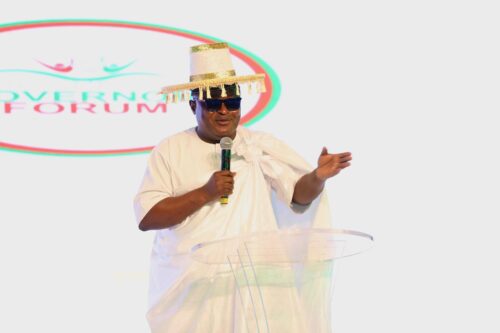
Speaking at the APC Stakeholders and Progressives Governors Forum meeting held Saturday, December 6, at the Eko Hotel and Suites, Victoria Island, Lagos, Obasa said he did not doubt that President Tinubu and the All Progressives Congress, APC-led federal government, would do all that they can to ensure that they secure the life and property of every Nigerian.

According to Obasa, “We have seen the president in action and how he is innovating and working hard to resolve our many challenges, especially insecurity, and we believe he will get it done. He’s still the man who can do it. That is why we must do everything within our powers to ensure that he is returned in 2027.”

Speaker Obasa teed off with robust commendations for the governors for their shared dedication and commitment to helping President Tinubu resolve Nigeria’s insecurity problem.

He urged them to galvanise their people when they return to their various states to be a part of the solution to Nigeria’s security challenge, and not stay aloof.

Speaker Obasa added that security is not just about the governors, “It is about everybody. We must all be involved in fighting this problem. We must give the President all the support that we can so that he will succeed in his attempts to redirect the trajectory of Nigeria.”

The PGF had converged on Lagos between December 5 and 6 for a meeting convened by the Chairman of the Forum, Senator Hope Uzodimma, Governor of Imo State, and hosted by Governor Babajide Sanwo-Olu of Lagos State.

In a communique read by Governor Uzodinma, the governors passed a vote of confidence on President Tinubu’s administration, and pledged support for his Renewed Hope Agenda and re-election in 2027.

The Forum, according to Governor Uzodinma, reviewed the security situation across the country and expressed appreciation for the improved coordination between federal, state, and local security structures, as well as the courage and sacrifices of security agencies and community volunteers. They also resolved to strengthen local security architecture in all the states.

Governor Uzodinma said that their two-day engagement provided an opportunity to review the nation’s current trajectory, deepen coordination among the governors, and reaffirm their firm support for the Renewed Hope Agenda of President Tinubu. “The PGF commended President Bola Ahmed Tinubu for his steadfast commitment to stabilizing the economy, strengthening national security, and laying the foundations of sustainable growth through the Renewed Hope Agenda,” he said.

Continue Reading

BIG STORY

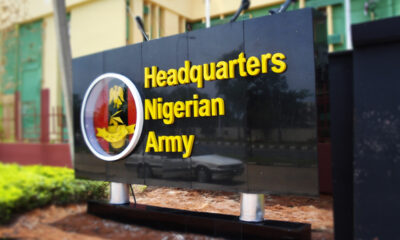
Nigerian Army Suspends Officer Retirements Amid National Security Emergency

Published

on

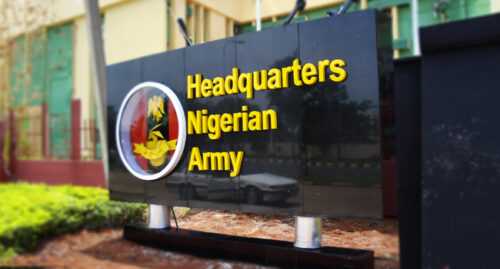
The Nigerian Army has suspended all statutory and voluntary retirements for certain categories of officers following the nationwide security emergency declared by President Bola Tinubu.

An internal memo dated December 3, signed by Maj. Gen. E. I. Okoro on behalf of the Chief of Army Staff, and sighted by our correspondent, stated that the suspension of retirements is aimed at retaining manpower, experience, and operational capacity as the Armed Forces expand in response to rising insecurity.

The document, referencing the Harmonized Terms and Conditions of Service Officers (HTACOS) 2024, noted that although officers are ordinarily expected to retire upon reaching their age limit, completing 35 years of service, or after repeated promotion or conversion failures, service extension is permissible under Paragraph 3.10(e) in the interest of the military.

The memo partly read: “Military service of a commissioned officer entails a period of unbroken service in the AFN from the date of enlistment or commissioning to the date of retirement. The period of service is determined by conditions enshrined in the HTACOS Officers 2024. These include attainment of age ceilings on various ranks, a maximum length of service of 35 years, and other criteria provided in Paragraphs 11.02(d) and 17.15, among extant regulations.

“Notwithstanding these provisions, Chapter 3.10(e) of HTACOS Officers 2024 allows for the extension of service to officers in the interest of the service.

“The President and Commander-in-Chief declared a nationwide security emergency on November 26, mandating the expansion of the AFN and other security agencies. In line with this, and to rapidly expand manpower, it has become expedient to temporarily suspend all statutory and voluntary retirements from the Nigerian Army with immediate effect.”

According to the circular, the temporary suspension applies to officers who fall into the following categories: officers who failed promotion examinations three times; officers passed over three times at promotion boards; officers who have reached the age ceiling for their ranks; officers who failed conversion boards three times; and officers who have attained 35 years of service.

“Officers in these categories who are not interested in an extension of service are to continue with the normal retirement procedure. Officers desirous of extension should note that upon extension, they are not eligible for career progression, including promotion, career courses, NA sponsorship, self-sponsored courses, secondment, or extra-regimental appointments,” the memo stated.

It directed all commanders to disseminate the directive and manage morale, adding that the policy would be reviewed as the security situation improves.

President Bola Tinubu, on November 26, 2025, declared a nationwide security emergency and directed the military, police, and intelligence agencies to expand recruitment and deploy thousands of additional personnel.

Continue Reading

BIG STORY

Senate Orders Nationwide Crackdown As Lead Poisoning Hits Ogijo Lagos

Published

on

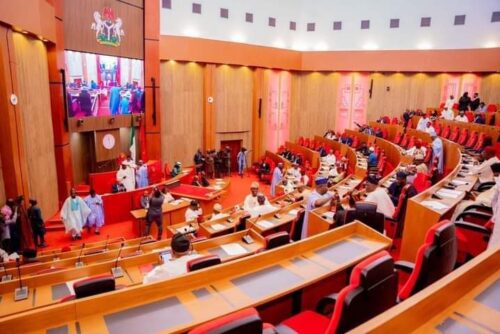
The Senate on Thursday expressed grave alarm over a fast-spreading lead-poisoning crisis in Ogijo, a densely populated community straddling the boundary between Ikorodu (Lagos) and Ogun East Senatorial District.

It described it as a full-blown environmental and public-health emergency that threatened thousands of lives.

The motion, jointly sponsored by Mukhail Adetokunbo Abiru (Lagos East) and Gbenga Daniel (Ogun East), was brought under Matters of Urgent Public Importance pursuant to Orders 41 and 51 of the Senate Standing Orders, 2023 (as amended).

Lawmakers cited scientifically verified reports of extreme lead contamination linked to a cluster of used lead-acid battery recycling factories operating in the area for years.

According to the Senate, the crisis had left residents battling persistent headaches, abdominal pain, memory loss, seizures, and developmental delays in children, symptoms strongly associated with chronic lead exposure.

The chamber noted with concern that the Federal Government had already begun clampdowns, with the Minister of State for Labour and Employment, Nkeiruka Onyejeocha, shutting down seven battery-recycling factories and ordering a temporary halt to lead-ingot exportation pending safety investigations.

Senators said they were “alarmed that residents have for several years complained of persistent headaches, abdominal pains, loss of memory, seizures, cognitive decline, and developmental delays in children, symptoms strongly associated with chronic lead exposure.”

Despite years of community protests, the smelters allegedly continued operating openly, releasing toxic fumes and particulate dust into surrounding homes, markets and playgrounds.

“It is regrettable that despite years of community outcry, smelter furnaces continued operating, discharging toxic fumes from melted batteries directly into surrounding neighbourhoods. We are concerned that while some factory operators deny wrongdoing, community exposure remains extreme.

“The Senate acknowledges and commends the proactive efforts of the Lagos and Ogun State Governments and their relevant ministries and agencies for conducting early inspections, raising community awareness and working with federal authorities to contain the exposure,” lawmakers said.

The chamber further cited disturbing findings by independent testing commissioned by The Examination and The New York Times, which revealed severe contamination in both residents’ blood samples and soil within the industrial cluster.

Some environmental samples, senators noted, showed lead levels “up to 186 times the global maximum safety threshold.”

A major dimension of the scandal, lawmakers said, was that lead processed in Ogijo had already been traced into international supply chains, reaching global battery and automobile manufacturers who either did not address the findings or relied solely on assurances from Nigerian suppliers.

The Senate lamented that while some factory operators deny wrongdoing, community exposure remains dangerously high amid weak accountability and gaps in Nigeria’s regulatory frameworks.

Senators nonetheless praised emergency actions taken by the Lagos and Ogun state governments, commending their early inspections, public-awareness campaigns and support for affected families.

Citing Sections 14(2)(b) and 20 of the 1999 Constitution, the Senate emphasised the government’s responsibility to safeguard citizens’ welfare and ensure a safe environment.

Following extensive deliberations, the Senate resolved to commend both the Federal Government and the Lagos and Ogun State Governments for their swift intervention in shutting down non-compliant lead-recycling factories.

Lawmakers urged continued enforcement, including factory closures, export suspensions, prosecution of violators, and strengthened industrial safety monitoring.

The chamber mandated the Federal Ministry of Health and the Nigeria Centre for Disease Control (NCDC) to deploy emergency medical teams to Ogijo to provide free toxicology screenings, blood-lead management, chelation therapy, and ongoing treatment for affected children and adults.

Simultaneously, the Federal Ministry of Environment and NESREA were directed to carry out comprehensive environmental remediation, mapping soil, groundwater, air, and household dust contamination.

The Senate also called on the Federal Ministry of Solid Minerals and relevant regulatory agencies to enforce strict compliance standards for battery-recycling and lead-processing operations nationwide.

Additionally, it recommended establishing a National Lead Poisoning Response and Remediation Task Force within NEMA and directed the Committee on Legislative Compliance to monitor progress and report back within six weeks.

The Senate described the Ogijo crisis as a preventable tragedy that must serve as a national wake-up call on industrial pollution, regulatory failure and the urgent need to protect vulnerable communities from hazardous waste.


Continue Reading


Join Us On Facebook

Most Popular


Warning: Undefined array key "slug" in /home/porsch10/public_html/wp-includes/class-wp-theme-json.php on line 2117

Warning: Undefined array key "slug" in /home/porsch10/public_html/wp-includes/class-wp-theme-json.php on line 2117

Warning: Undefined array key "slug" in /home/porsch10/public_html/wp-includes/class-wp-theme-json.php on line 2117