Warning: Undefined array key "slug" in /home/porsch10/public_html/wp-includes/class-wp-theme-json.php on line 2102

Warning: Undefined array key "slug" in /home/porsch10/public_html/wp-includes/class-wp-theme-json.php on line 2102

Warning: Undefined array key "slug" in /home/porsch10/public_html/wp-includes/class-wp-theme-json.php on line 2102
Marketers Import 156.9m Litres As Petrol Landing Cost Drops To N853
Connect with us


BIG STORY

Marketers Import 156.9m Litres As Petrol Landing Cost Drops To N853

Published

on

Amidst an ongoing price war between players in the nation’s downstream oil sector, fresh investigations have revealed that the landing cost of imported Premium Motor Spirit (petrol) dropped to N853 per litre on Tuesday.

This comes as marketers secured regulatory approval to import 117,000 metric tonnes—equivalent to 156.897 million litres—of petrol within eight days, from April 8 to 16, 2025, to boost fuel supply nationwide.

These figures were revealed in separate documents obtained by our correspondent from the Nigerian Port Authority and the Major Energies Marketers Association of Nigeria.

Last week, Nigerians heaved a sigh of relief after the Dangote refinery resumed sales of its refined petroleum products in naira and slashed its loading cost to N865 per litre. The relief was evident after its initial suspension of the sales of petroleum products increased the pump price to almost N1,000.

But a new drop looks imminent as the latest Competency Centre daily energy data showed that the landing cost has reduced to N853 per litre, N12 lower than the price offered by the 650,000-capacity refinery in Lagos.

Dealers said the N853 per litre on-spot estimated import parity into tanks, which factors in various expenses including shipping, import duties, and exchange rates, is a considerable reduction of N3 from the N856.75 per litre landing cost last week Monday and N852.02 on Tuesday.

The document showed that on-the-spot sales at the NPSC-NOJ terminal dropped to N853.12 per litre, while the average cost for 30 days also dropped to N844.84 per litre.

The document also noted that the price of Brent crude was benchmarked at $64.76 per barrel, from $62.82 per barrel quoted on Tuesday, with an exchange rate of N1,603.78 per dollar. This price was calculated based on 38,000 metric tonnes by the marketers.

It further noted that the refinery priced its PMS coastal price at $682.75 per metric tonne, its gantry price at N926.58 per litre and its coastal price at $603.50 per MT for AGO.

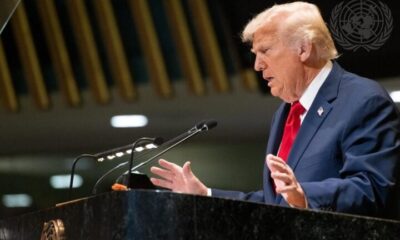
It read, “International petroleum product prices declined after President Trump announced new tariffs on Chinese goods, triggering concerns about the global economy and weaker fuel demand. Despite initial fears of supply disruption, the market reacted harshly due to oversupply and slowing industrial activity.

“However, prices began to recover slightly when President Trump later paused some of the tariffs, easing trade tensions and boosting market sentiment. Overall, this highlights how demand-side concerns are increasingly outweighing supply risks in shaping oil market dynamics.

“Dangote Refinery reduced its petrol ex-depot price to N865 per litre during the week, intensifying competition in Nigeria’s downstream oil sector. The foreign exchange rate continues to exhibit significant volatility, with the Naira experiencing renewed depreciation, thereby further delaying imports.

“Nevertheless, as landing costs are directly tied to these variables, they are expected to fluctuate several times intra-day. Cost savings can be achieved through optimising supply chain management by securing long-term contracts at favourable rates and leveraging economies of scale to streamline inland distribution networks.”

Meanwhile, an analysis of the NPA document revealing details of each import showed that the commodities landed at the Tincan port in Lagos and the Calabar port in Cross River State.

The first shipment carrying 21,000 metric tonnes of PMS allocated to the Peak Shipping Agency berthed at the KLT Phase 3A terminal on Tuesday, April 8, 2025, at midnight.

This was followed by the arrival of a 20,000 metric-tonne SL Aremu vessel on Wednesday, April 10, at midnight. It berthed at the KLT Phase 3A terminal and was handled by the Tiger shipping maritime agent.

Similarly, a Fatima Sarah ship handled by Dozzy Oil and Gas berthed at the Calabar port in Cross Rivers carrying 15,000 metric tonnes of imported petrol on Saturday, April 12, at 09:25pm.

On Monday, April 14, at 3:20 pm, another vessel carrying 20,000 metric tonnes of fuel berthed at the Tincan port. It was assigned to Peejay Shipping as its agent.

Also, two vessels carrying a combined sum of 41,000 metric tonnes of fuel are scheduled to berth at midnight on Tuesday and Wednesday, April 15 and 16, respectively. This shipment will arrive at the KLT Phase 2.

This means the six vessels brought in 117,000 metric tonnes.

Going by the conversion rate of 1,341 litres to one metric tonne, it, therefore, implies that the marketers are bringing in about 156.897 million litres of petrol at an average of 19m.

BIG STORY

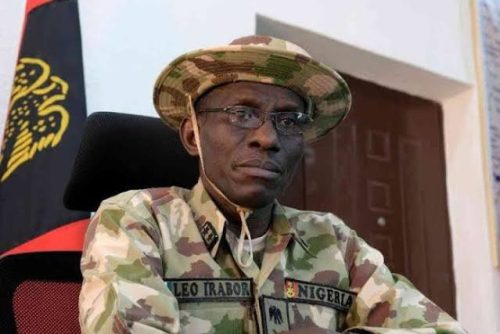
Some Politicians Funding Terrorism In Nigeria, Says Ex-CDS Lucky Irabor

Published

on

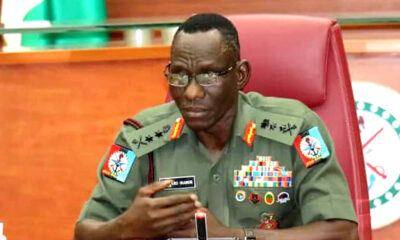
Lucky Irabor, ex-chief of defence staff (CDS), says some political actors are involved in terrorism financing in Nigeria.

On November 30, Daniel Bwala, Special Adviser to President Bola Tinubu on policy communication, said the federal government would soon reveal the identities of terrorism sponsors.

Bwala said the government is “making far-reaching decisions”, adding that the outcome would be noticeable shortly.

The presidential aide said terrorism is a global problem, adding that “the demand is now on the world governments to see how they can cooperate with Nigeria”.

Speaking on ‘Politics Today’, a Channels Television programme, on Monday, Irabor said certain politicians exploit insecurity for personal advantage.

Asked directly if politicians fund terror networks, he replied with “some politicians”.

Irabor said some party chieftains capitalize on instability to create an impression that they can offer better leadership.

“Some politicians have now taken advantage of the state of under-governance, as it were, to perhaps gain some form of leverage to give the impression that they can do better,” he said.

“Others perhaps want to give an impression they can do better, to score the point that there is poor governance… they could also instigate a certain crisis one way or the other.

“Those who believe that it’s purely political, maybe, have their argument from that angle. For me, it will be wrong.”

Irabor also addressed criticisms of the federal government’s refusal to publish names of alleged terror financiers.

Continue Reading

BIG STORY

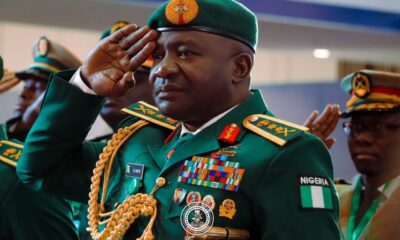
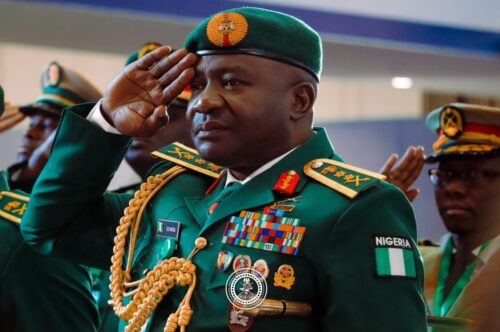
JUST IN: Tinubu Nominates Ex-CDS Christopher Musa As Defence Minister

Published

on

President Bola Tinubu has nominated a former Chief of Defence Staff, General Christopher Musa, as the new Minister of Defence.

The nomination was contained in a letter sent to Senate President Godswill Akpabio on Tuesday, announcing Musa as the replacement for Alhaji Mohammed Badaru, who resigned from the position on Monday due to health reasons.

In his letter to the Senate, the President expressed confidence in Musa’s capacity to lead the Defence Ministry and strengthen Nigeria’s security framework.

The nomination was confirmed in a statement issued by the President’s Special Adviser on Information and Strategy, Bayo Onanuga.

The statement added, “General Musa, 58, on December 25, is a distinguished soldier who served as Chief of Defence Staff from 2023 until October 2025. He won the Colin Powell Award for Soldiering in 2012.

“Born in Sokoto in 1967, General Musa received his primary and secondary education there before attending the College of Advanced Studies in Zaria. He graduated in 1986 and enrolled at the Nigerian Defence Academy the same year, earning a Bachelor of Science degree upon graduation in 1991.

“General Musa was commissioned into the Nigerian Army as a Second Lieutenant in 1991 and has since had a distinguished career. His appointments include General Staff Officer 1, Training/Operations at HQ 81 Division; Commanding Officer, 73 Battalion; Assistant Director, Operational Requirements, Department of Army Policy and Plans; and Infantry Representative/Member, Training Team, HQ Nigerian Army Armour Corps.

“In 2019, he served as Deputy Chief of Staff, Training/Operations, Headquarters Infantry Centre and Corps; Commander, Sector 3, Operation Lafiya Dole; and Commander, Sector 3 Multinational Joint Task Force in the Lake Chad Region.

“In 2021, General Musa was appointed Theatre Commander, Operation Hadin Kai. He later became Commander of the Nigerian Army Infantry Corps before being appointed Chief of Defence Staff by President Tinubu in 2023.”

Continue Reading

BIG STORY

South Africa Begins Use Of Groundbreaking HIV Prevention Drug

Published

on

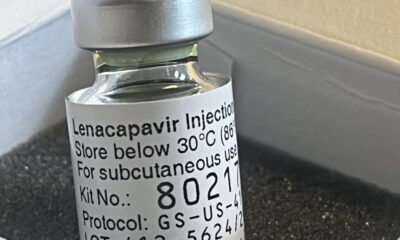
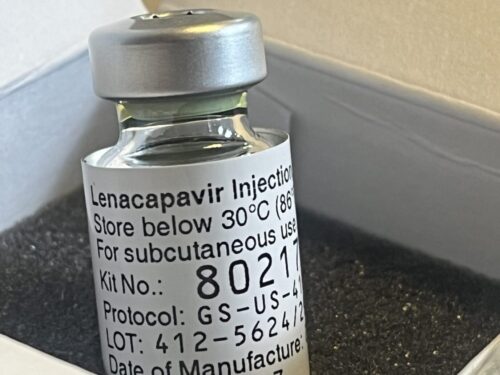
South Africa has begun administering lenacapavir, a long-acting HIV prevention drug, to selected individuals as part of a new study led by Wits RHI at the University of the Witwatersrand and funded by Unitaid.

The move comes just five months after the US Food and Drug Administration granted its first approval for the drug’s use in HIV prevention.

Lenacapavir has shown remarkable results in clinical trials, offering near-complete protection against HIV and outperforming existing pre-exposure prophylaxis (PrEP) options.

The injectable drug is taken twice a year and was initially projected to cost about $28,000 per user annually.

However, a pricing deal brokered by the Clinton Health Access Initiative (CHAI), working alongside Dr Reddy’s Laboratories, Unitaid, the Gates Foundation, and Wits RHI, has slashed the cost to about $40 — a reduction aimed at making the drug affordable in low- and middle-income countries.

In a statement on Monday, Unitaid said the study will provide the Department of Health with the evidence they need to adapt quickly and in real time as they integrate lenacapavir into existing HIV prevention programs.

“These early learnings on real-world use will also apply to other countries adopting lenacapavir,” the statement reads.

“Making new medicines widely available in low- and middle-income countries can take up to a decade or longer as regulatory approvals must be obtained, manufacturing must be secured, and prices must come down.

“Global momentum behind lenacapavir has set the drug on a rapid trajectory: South Africa registered the drug in record time in late October, followed by Zambia in November, and the first doses have already been delivered in Zambia and Eswatini through The Global Fund and PEPFAR. Broader rollout in early adopter countries is expected in early 2026.”

Aaron Motsoaledi, South Africa’s minister of health, said the country is working with relevant stakeholders to make lenacapavir available to the most vulnerable populations who are at higher risk of HIV infections.

“These early efforts from Unitaid and Wits RHI will help us fine-tune how lenacapavir is delivered through our health system so we can reach as many people as possible with this new Pre-Exposure Prophylaxis (PrEP) option, especially adolescent girls, young women, and pregnant and breastfeeding women,” he said.

In Brazil, a similar study led by Fiocruz is also underway.

Insights and tools from the Fiocruz study in Brazil will help guide rollout strategies within the country and across Latin America.

Continue Reading


M


Join Us On Facebook

Most Popular