Connect with us


Kogi State Government has approved the appointment of 54 Senior Special Assistants to the Governor into the various offices in the administration.

A statement today by the Secretary to the State Government, Dr. Mrs. AyoadeFolashadeArike, in Lokoja, said the appointments are effective from 1st of April, 2017.

The rationale for the additional appointees at the state level, the statement read, is to “plug identified gaps in service delivery, fill key positions with the right people and to broaden inclusiveness in governance by bringing people from more communities on board.”

According to the statement, in addition to the 54 Senior Special Assistants appointed, nine Special Assistants to the Governor as Federal Constituency Supervisors for the GYB Connect Programme has also been approved.

The statement said the appointment is to recognise and encourage outstanding contributions to the New Direction Agenda.

The statement added that the nine Special Assistants will also act as direct liaisons between the present administration and the Local Government Ward Coordinators of the GYB Connect Programme.

The newly appointed Senior Special Assistants (SSAs)and their Local Government Areas (LGAs) are are:

  1. Hon. Abdullahi Bello –SSA to the Governor on Political Matters, Kogi Central (Adavi LGA)
  2. HajiaLadi Mariam Ibrahim – SSA to the Governor on Land Matters (Adavi LGA)
  3. Sandra Musa – SSA to the Governor on Women and Children Development (Ajaokuta LGA)
  4. Abdulraheem Baba Aliyu – SSA to the Governor on Security and Intelligence, Kogi Central (Ajaokuta)
  5. Abdusalam Yahaya – SSA to the Governor on Political Matters, Kogi East (Ankpa LGA)
  6. Amodu Hassan – SSA to the Governor on Persons with Disabilities (Ankpa LGA)
  7. Abubakar Muhammed Muktar – SSA to the Governor on Youth Empowerment, Kogi East (Ankpa LGA)
  8. Ibrahim Tahiti – SSA to the Governor on Security and Intelligence, Kogi East (Ankpa LGA)
  9. Abdullahi Br. Musa – SSA to the Governor on Civil Service and Labour Relations (Bassa LGA)
  10. Tukura Grace – SSA to the Governor on Primary Healthcare Institutions (Bassa LGA)
  11. Omonu Joshua – SSA to the Governor on Student Affairs (Dekina LGA)
  12. IsiakaNuhu – SSA to the Governor on Local Government and Chieftaincy Affairs, Kogi East (Dekina LGA)
  13. Mariam Ibrahim – SSA to the Governor onTourism (Dekina LGA)
  14. Yakubu Ocholi – SSA to the Governor on Emergency (Dekina LGA)
  15. David Adutu – Management SSA to the Governor on Informal and Vocational Education (Ibaji LGA)
  16. Achuba Anthony – SSA to the Governor on Special Duties (Ibaji LGA)
  17. Ibrahim Odoma – SSA to the Governor on Housing and Estate (Idah LGA)
  18. Dan Achema – SSA to the Governor on Mineral Resources (Idah LGA)
  19. Benjamin Amodu – SSA to the Governor on Rural/Urban Infrastructural Development/Project Monitoring (Igalamela-Odolu LGA)
  20. Jibril Usman Courage – SSA to the Governor on Education, Primaru Schools (Igalamela-Odolu LGA)
  21. Faleke Sunday Idowu – SSA to the Governor on Administration, Strategy and Planning (Ijumu LGA)
  22. Emmanuel Obadunmi – SSA to the Governor on Internally-Generated Revenue (Ijumu LGA)
  23. SegunOlobatoke – SSA to the Governor on Sports (Kabba-Bunu LGA)
  24. OlakunleJagun – SSA to the Governor on Security and Intelligence (Kabba-Bunu LGA)
  25. ShabanOhinoyiShuaibu- SSA to the Governor on Secondary Healthcare Institutions (Kogi LGA)
  26. Shuaibu Musa – SSA to the Governor on Sanitation and Environment (Kogi LGA)
  27. Nda Aaron Alhassan – SSA to the Governor on Mobilisation (Lokoja LGA)
  28. Abdulmalik Suleiman – SSA to the Governor on Youth Empowerment (Lokoja LGA)
  29. Mahmud Alfa Mekudi – SSA to the Governor on Tertiary Healthcare Institutions (Lokoja LGA)
  30. Ali Mamud – SSA to the Governor on Cultural Integration (Lokoja LGA)
  31. Ishola David Sunday – SSA to the Governor on Political Matters, Kogi West (Mopa-Amuro)
  32. MayowaAlaiyemola – SSA to the Governor on Water Resources (Mopa-Amuro)
  33. IsmailaIdis – SSA to the Governor on Agriculture Matters (Ofu LGA)
  34. Prince OkolikoOpaluwa – SSA to the Governor on Federal Agencies Matters (Ofu LGA)
  35. ObinAimila – SSA to the Governor on Special Duties (Ogori-Magongo LGA)
  36. Raymond Ekundayo – SSA to the Governor on Youth Empowerment, Kogi Central (Ogori-Magongo LGA)
  37. Akoh Jacobs Peter – SSA to the Governor on Commerce and Investment, Small and Medium Enterprises Development (Olamaboro LGA)
  38. Dan Ogbole – SSA to the Governor on Sustainable Development Goals (Olamaboro LGA)
  39. Barr. ShadrackOmeiza Emmanuel – SSA to the Governor on Legal Matters (Okehi LGA)
  40. Mercy Johnson – SSA to the Governor on Entertainment, Arts and Culture (Okehi LGA)
  41. Ismaila Umar – SSA to the Governor on Information Communication Technology (Okene LGA)
  42. Salihu Ibrahim – SSA to the Governor on Local Government and Chieftaincy Affairs, Kogi Central (Okene LGA)
  43. AlabiShuaibuOjo – SSA to the Governor on Transport and Logistics (Okene LGA)
  44. Idis A. Rasaq – SSA to the Governor on Rural/Urban Development/Project Monitoring, Kogi Central (Okene LGA)
  45. Malik Isa Teina – SSA to the Governor on Power (Okene LGA)
  46. Atuluku Victor Levi – SSA to the Governor on Media Matters (Omala LGA)
  47. Halima G. Abuh – SSA to the Governor on Tertiary Education (Omala LGA)
  48. AiyelabowoAdebanji – SSA to the Governor on Local Government and Chieftaincy Affairs, Kogi West (Yagba-East LGA)
  49. Liadi Fisayo – SSA to the Governor on Special Duties (Yagba-East LGA)
  50. Adebayo Toba Emmanuel – SSA to the Governor on Rural/Urban Development/Project Monitoring, Kogi West (Yagba-West LGA)
  51. OrebiyiTaiwo Emmanuel – SSA to the Governor on Pension Matters (Yagba-West LGA)
  52. Kelvin Uzochukwu – SSA to the Governor on non-Indigene Affairs (Non-Indigene)
  53. Dele AdeyanjuIselewa – SSA to the Governor on Secondary Education Institutions (Special Consideration/Obajana)
  54. Maj. Idogah Solomon Rtd. – SSA to the Governor on Security and Intelligence, State (Olamaboro)

The Special Assistants on GYB Connect Programme are as follows:

  1. MutariSalihuBajeh – Adavi-Okehi Federal Constituency
  2. Samuel Bello – Ajaokuta Federal Constituency
  3. Hon Idis Musa – Ankpa Federal Constituency
  4. Sulieman Bashir Lawal – Idah Federal Constituency
  5. Alhaji AkpaJibrilOmale – Dekina Federal Constituency
  6. SuliemanBababgo – Lokoja-Koto Federal Constituency
  7. Sarki Adams – Okene-Ogori Federal Constituency
  8. Arokoyo Julius Ojo – Kabba/Bunu-Ijumu Federal Constituency
  9. Florence Adeniyi – Yagba-MopaFederal Constituency

ENTERTAINMENT

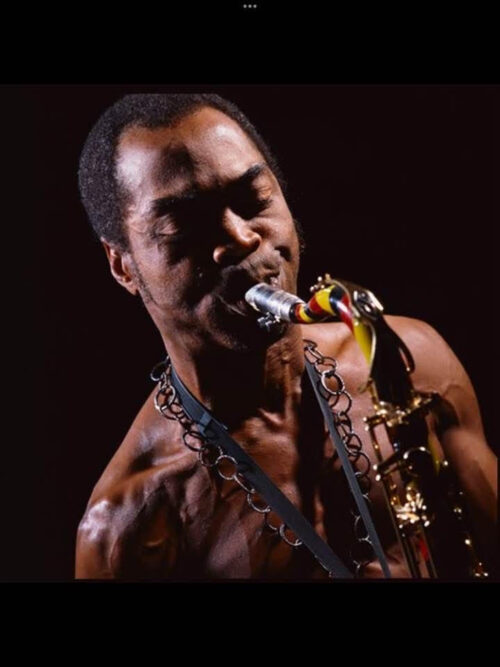
Fela Aníkúlápó Kuti and His Crowned Princes —– By Prince Adeyemi Shonibare

Published

on

Preface: The Necessity of Historical Context
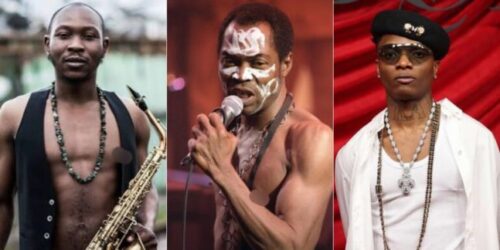
Every generation seeks its heroes. In music, this instinct often manifests through comparison—an exercise that frequently reveals more about contemporary taste than historical contribution. In recent years, public discourse, amplified by social media, has juxtaposed Fela Aníkúlápó Kuti with global Afrobeats icons, most notably Wizkid, provoking the recurring question of “greatness” in Nigerian music.
This essay does not diminish the accomplishments of Nigeria’s contemporary stars, whose global visibility is unprecedented. Rather, it offers a scholarly contextualization—one that distinguishes between musical origination and musical succession, and between cultural architecture and commercial dominance—while situating Fela Aníkúlápó Kuti firmly within the category of historical inevitability.
The Problem with Simplistic Comparison
Comparing Fela Aníkúlápó Kuti with contemporary Afrobeats performers is, by scholarly standards, inherently flawed.
Fela’s work transcended performance. He engineered an entire musical and ideological system, fused political philosophy with sound, and permanently altered the trajectory of African popular music. His output represents cultural authorship, not entertainment calibrated to market demand. Fela’s music is timeless precisely because it was never designed to be fashionable.
A Yoruba proverb captures this distinction with enduring clarity: “Ọmọ kì í ní aṣọ púpọ̀ bí àgbà, kó ní akísà bí àgbà.”
A child may own many clothes, but he cannot possess the rags of an elder.
The proverb is not dismissive. It is instructive. It speaks to accumulated depth—experience earned, systems built, and legacies forged through time rather than trend.
Musicians and Artistes: A Necessary Distinction
A rigorous analysis requires conceptual precision. Fela Aníkúlápó Kuti was a musician in the classical and intellectual sense: a composer, arranger, bandleader, employer of musicians, multi-instrumentalist, theorist, and cultural philosopher. His work demanded mastery of form, orchestration, ideology, and discipline.
Fela composed extended works, trained orchestras, performed entirely live, and embedded African political consciousness into rhythm, harmony, and structure.
By contrast, many contemporary stars—though exceptionally gifted and globally successful—operate primarily as artistes: interpreters of sound whose work prioritizes studio production, performance aesthetics, and commercial reach. This is not a hierarchy of worth, but a distinction of function. Fela’s music demanded study and confrontation; contemporary Afrobeats prioritised accessibility, pleasure, and global circulation—often without courting antagonism.
Afrobeat: An Ideological Invention
Afrobeat, as conceived by Fela, was not merely a genre. It was an ideological framework. Jazz, highlife, Yoruba rhythmic systems, call-and-response traditions, and political chant were fused into a resistant, uncompromising form.
Modern Afrobeats—by Wizkid, Burna Boy, and others—are adaptations and descendants, not replicas. They have expanded Africa’s global cultural footprint, but expansion does not erase origination. Fela’s Afrobeat remains the undiluted prototype upon which contemporary success rests.
Enduring Legacy Beyond Mortality
Fela Aníkúlápó Kuti passed in 1997, yet his influence has intensified rather than diminished. His legacy is evidenced by:
– Continuous academic study across global universities.
– International bands, many formed by people not alive at the time of his death, performing his works.
– FELABRATION, now a global annual cultural event.
– Broadway and international stage adaptations inspired by his life and music.
– Lifetime achievement and posthumous recognition by the Grammy Awards.
– Cultural centres, festivals, and scholarly conferences generate lasting intellectual and economic value.
This constitutes cultural permanence, not nostalgia.
Reconsidering Wealth and Sacrifice
Measured monetarily, Fela was not among the wealthiest musicians of his era. His radicalism came at an immense personal cost. He was beaten repeatedly. His mother, Funmilayo Ransome-Kuti, was killed. His home was burned. Original artistic archives were destroyed during state-sanctioned violence by unknown soldiers, even though history records who authorised the actions.
Yet Fela gave voice to generations—from Ojuelegba to Mushin, Ajegunle to Jos, Abuja, and even the privileged enclaves of today’s ọmọ baba olówó. He toured globally with an unusually large band long before satellite television or social media could amplify his reach.
Like Wole Soyinka and Chinua Achebe, Fela’s wealth exists beyond currency. It resides in influence, citation, adaptation, and endurance.
National and Global Recognition
Fela received a state burial in Lagos—an extraordinary acknowledgment from a military government he relentlessly criticised. Nations rarely honour dissenters so formally.
Globally, his stature aligns with figures such as James Brown, Elvis Presley, and the Rolling Stones—artists whose music reshaped identity, politics, and social consciousness.
The Crowned Princes: Wizkid and the Ethics of Reverence
Nigeria’s modern stars—Wizkid, Burna Boy, 2Face Idibia, Davido, Tiwa Savage, Tems, Olamide, among others—have achieved extraordinary global success. They are wealthier, more mobile, and more visible internationally than previous generations, and they deserve their accolades.
Wizkid, in particular, has consistently demonstrated reverence rather than rivalry toward Fela Aníkúlápó Kuti.
Femi Aníkúlápó Kuti has publicly stated: “Wizkid loves Fela like a father.”
Wizkid has repeatedly supported FELABRATION, never demanding performance fees. The only times he has not appeared were occasions when he was not in the country. He has remixed Fela’s music, bears a Fela tattoo on his arm, and openly acknowledges Fela’s primacy.
A senior associate and long-time friend of Wizkid has affirmed that Wizkid adores Fela, would never equate himself with him—“in this world or the next”—and that recent tensions were reactions to provocation rather than assertions of equivalence.
This distinction matters. Wizkid’s posture is one of inheritance, not competition.
Seun Kuti and the Burden of Legacy
Seun Kuti is a musician of conviction and lineage. Yet relevance is best secured through original contribution rather than reactive comparison. Fela’s legacy does not require defence through controversy; it is already settled by history.
As William Shakespeare observed: “The fault, dear Brutus, is not in our stars,
But in ourselves, that we are underlings.”
—Julius Caesar
The weight of inheritance can inspire greatness or provoke restlessness. History rewards those who build upon legacy, not those who contest it.
The Songs That Made Fela Legendary
Among the works that cemented Fela’s immortality are:
– Zombie
– Water No Get Enemy
– Sorrow, Tears, and Blood
– Coffin for Head of State
– Expensive Shit
– Shakara
– Gentleman
– Teacher Don’t Teach Me Nonsense
– Roforofo Fight
– Beasts of No Nation
These compositions remain sonic textbooks of resistance.
Fela in the Digital Age
Had Fela lived in the era of social media, his voice would have resonated far beyond Africa. His music would have found kinship among global movements confronting inequality, oppression, and social injustice.
“Music is the weapon.”
—Fela Aníkúlápó Kuti
Weapons, unlike trends, endure.
Placing Greatness Correctly
Fela Aníkúlápó Kuti’s greatness does not require comparison. He is the great-grandfather of Afrobeat—the musical and cultural architect who cleared the roads upon which today’s Afrobeat princes now travel.
Honouring contemporary success does not diminish historical achievement. To understand Nigerian music’s global relevance is to understand Fela. History, when read correctly, is both generous and precise.

Prince Adeyemi Shonibare writes on culture, music history, and African creative industries. He is a media and events consultant based in Nigeria.

Continue Reading

ENTERTAINMENT

Seun Kuti vs Wizkid: 6 Lessons Nigerians Must Learn Now By Prince PHELAR

Published

on

When the noise dies down and social media moves on to the next outrage, what remains are lessons, quiet, uncomfortable, but necessary. The Seun Kuti vs Wizkid conversation was never really about two men beefing. It was about culture, legacy, expectations, and how Nigerians relate to talent and influence.
1. Legacy Shapes Perspective, Not Obligation
Seun Kuti, as an artist, feels obligated to be a cultural custodian, at least based on the son of who he is. He inherited a legacy built on activism, resistance, and speaking truth to power. His worldview is shaped by a lineage that treats silence as complicity. From that lens, expecting artists, especially influential ones, to engage politically feels logical.
Wizkid, on the other hand, represents a different legacy: global pop excellence. His journey is about sound, craft, and taking Nigerian music to the world stage. That legacy is not rooted in protest but in performance.
Lesson:
Legacy explains perspective, but it should not be weaponized to impose obligation. Not every inheritance is meant to be replicated; some are meant to evolve.
2. Talent Is Not a Contract for Activism
One of the biggest takeaways from this discourse is the dangerous habit of assigning unsolicited roles to talented people. Nigerians often treat success as a public utility; once you “blow,” you are expected to speak, act, donate, and represent everyone.
But talent is not a social contract. Being gifted does not automatically mean being equipped or willing to lead social movements.
Lesson: We must separate admiration from entitlement. Respect people for what they do, not what we want them to become.
3. Cultural Preservation Takes Many Forms
The Kuti family preserves culture through confrontation by keeping uncomfortable conversations alive. Wizkid preserves culture through elevation, by exporting Nigerian sound to global stages with excellence.
Both are valid. Both are necessary.
Nigerians need to learn that culture is not preserved only through protest songs or political commentary. Sometimes, it is preserved by compelling the world to pay attention through exceptional success rates.
Lesson: Cultural preservation is multidimensional. There is room for the activist and the global ambassador at the same table.
4. Respect the Craft, Even When You Disagree
One unfortunate aspect of the debate was how quickly respect for craft disappeared. Disagreement turned into dismissal of effort, consistency, and contribution.
Fela’s cultural labor cannot be reduced to stream numbers and the sizes of arenas sold-out concerts, while Wizkid’s discipline, influence, and impact cannot be shrunk to activism.
Lesson: Critique ideas without erasing effort. Disagreement should never invalidate a contribution.
5. Influence Is Power, but Power Is Personal
Yes, influence comes with power. But how that power is used should remain a personal choice. Forcing responsibility often leads to performative activism, noise without substance.
True impact happens when people operate within their convictions, not under public pressure.
Lesson: Forced responsibility weakens authenticity. Real change requires willing voices, not coerced ones.
6. Nigerians Must Learn Nuance
Perhaps the biggest lesson is this: we struggle with nuance. We prefer sides over substance, outrage over understanding. The Seun Kuti vs Wizkid discourse became polarized because we framed it as right vs wrong instead of different philosophies coexisting.
Lesson: Maturity is learning that two people can be right differently, yet work towards the same goal.
Finally
The dust has settled, but the conversation shouldn’t end in bitterness. It should end in growth. Seun Kuti reminds us that culture must be defended. Wizkid reminds us that culture must be refined and projected.
Nigeria needs both.
The real failure would be insisting that only one path is valid.
Prince PHELAR is a Nigerian Stand-up Comedian and a seasoned master of ceremony with an undeniable passion for the entertainment space.

Continue Reading

ENTERTAINMENT

BREAKING: Portable Arraigned, Remanded For ‘Assaulting Police Officer, Car Theft’

Published

on

Controversial singer, Habeed Okikiola aka Portable, facing a nine-count criminal charge, was arraigned on Monday at the federal high court in Ota, Ogun state.

The charges, as confirmed by Ogun police spokesperson Oluseyi Babaseyi, include assault, theft, causing harm, and resisting arrest.

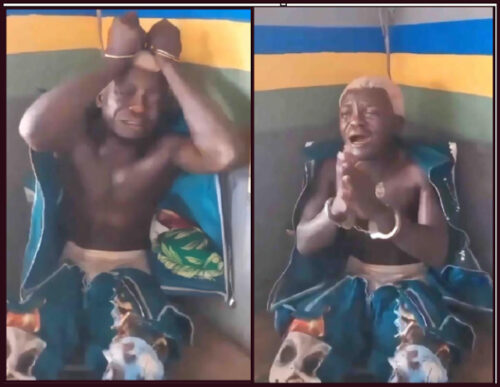
His arraignment follows a viral video on Sunday showing the singer in police custody, reportedly linked to a complaint filed by his estranged partner Ashabi Simple.

The prosecution alleged that Portable attacked Ashabi alongside several police officers and other individuals at his bar in the Iyana Ilogbo area on New Year’s Day.

Other named victims in the case are Ileyemi Damilola, Akinyanju Oluwabusayomi, Olowu Olumide, Demilade Ogunniyi, and Ebuka Odah.

He was also accused of stealing a Mercedes-Benz E300, with dealer number Wally Dex Auto, valued at N12 million and belonging to Ileyemi.

In court, two siblings of Ashabi Simple testified as witnesses to the alleged assault, though she was not present.

The police further accused Portable of obstructing and assaulting Ogungbe Olayemi, a female police inspector, while she was performing her official duties.

The presiding judge denied Portable bail, citing the absence of the allegedly assaulted police officer in court.

The judge insisted on seeing the officer before ruling on the bail application. Consequently, Portable was remanded in custody until a fresh bail consideration on January 19.

The Ogun command recently ordered an investigation into a now-viral video depicting the singer being assaulted in custody.

Continue Reading

Most Popular


Warning: Undefined array key "slug" in /home/porsch10/public_html/wp-includes/class-wp-theme-json.php on line 2117

Warning: Undefined array key "slug" in /home/porsch10/public_html/wp-includes/class-wp-theme-json.php on line 2117

Warning: Undefined array key "slug" in /home/porsch10/public_html/wp-includes/class-wp-theme-json.php on line 2117