Connect with us


BIG STORY

IOCs Manipulating Crude Oil Prices, Frustrating Refinery’s Success — Dangote

Published

on

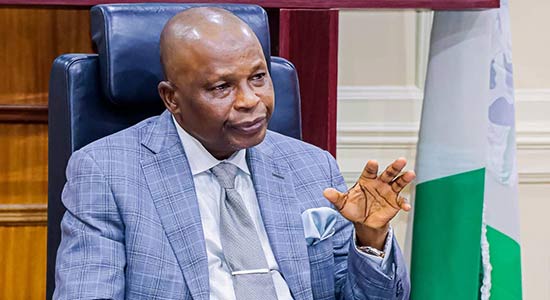
Devakumar Edwin, vice-president, oil and gas at Dangote Industries Limited (DIL), has accused international oil companies (IOCs) in Nigeria of doing everything to frustrate the survival of Dangote Oil Refinery and Petrochemicals.

According to Edwin, the IOCs are purposefully undermining the refinery’s attempts to purchase local crude by inflating the price of crude oil over the going rate.

This forces the refinery to import crude from other nations, including the US, at exorbitant costs. Edwin addressed reporters during a recent Dangote Group one-day training event.

He also lamented the activity of the Nigerian Midstream and Downstream Petroleum Regulatory Authority (NMDPRA) in granting licences indiscriminately to marketers to “import dirty refined products into the country”.

“The Federal Government issued 25 licences to build refinery and we are the only one that delivered on promise. In effect, we deserve every support from the Government,” the vice-president said.

“It is good to note that from the start of production, more than 3.5 billion litres, which represents 90 per cent of our production, have been exported. We are calling on the Federal Government and regulators to give us the necessary support in order to create jobs and prosperity for the nation.

“While the Nigerian Upstream Petroleum Regulatory Commission (NUPRC) are trying their best to allocate the crude for us, the IOCs are deliberately and willfully frustrating our efforts to buy the local crude.

“It would be recalled that the NUPRC, recently met with crude oil producers as well as refinery owners in Nigeria, in a bid to ensure full adherence to Domestic Crude Oil Supply Obligations (DCSO), as enunciated under section 109(2) of the Petroleum Industry Act (PIA).

“It seems that the IOCs’ objective is to ensure that our Petroleum Refinery fails. It is either they are deliberately asking for ridiculous/humongous premium or, they simply state that crude is not available. At some point, we paid $6 over and above the market price.

“This has forced us to reduce our output as well as import crude from countries as far as the US, increasing our cost of production.

“It appears that the objective of the IOCs is to ensure that Nigeria remains a country which exports crude oil and imports refined petroleum products.

“They (IOCs) are keen on exporting the raw materials to their home countries, creating employment and wealth for their countries, adding to their GDP, and dumping the expensive refined products into Nigeria – thus making us dependent on imported products.”

Edwin further said the strategy of the multinationals has been adopted in every commodity, making Nigeria and sub-Saharan Africa face unemployment and poverty, adding that “they create wealth for themselves at our expense”.

“This is exploitation — pure and simple. Unfortunately, the country is also playing into their hands by continuing to issue import licences, at the expense of our economy and at the cost of the health of the Nigerians who are exposed to carcinogenic products,” he added.

“In spite of the fact that we are producing and bringing out diesel into the market, complying with ECOWAS regulations and standards, licences are being issued, in large quantities, to traders who are buying the extremely high sulphur diesel from Russia and dumping it in the Nigerian Market.

“Since the US, EU and UK imposed a Price Cap Scheme from 5th February 2023 on Russian Petroleum Products, a large number of vessels are waiting near Togo with Russian ultra-high sulphur diesel and, they are being purchased and dumped into the Nigerian Market.

“In fact, some of the European countries were so alarmed about the carcinogenic effect of the extra high sulphur diesel being dumped into the Nigerian Market that countries like Belgium and the Netherlands imposed a ban on such fuel being exported from its country, into West Africa, recently.”

Edwin said it is sad that the country is giving import licences for “such dirty diesel to be imported into Nigeria when we have “more than adequate petroleum refining capacity locally.”

According to the vice-president, the decision of the NMDPRA to grant licences indiscriminately for the importation of dirty diesel and aviation fuel has made the Dangote refinery to expand into foreign markets.

He said the refinery has recently exported diesel and aviation fuel to Europe and other parts of the world because the refinery meets international standards as well as complies with stringent guidelines and regulations to protect the local environment.

“The same industry players fought us for crashing the price of diesel and aviation fuel, but our aim, as I have said earlier, is to grow our economy,” Edwin said.

“Recently, the government of Ghana, through legislation has banned the importation of highly contaminated diesel and PMS into their county. It is regrettable that, in Nigeria, import licences are granted despite knowing that we have the capacity to produce nearly double the amount of products needed in Nigeria and even export the surplus. Since January 2021, ECOWAS regulations have prohibited the import of highly contaminated diesel into the region.”

Edwin appealed to the federal government and the national assembly to urgently intervene for speedy implementation of the PIA and to ensure the interests of Nigeria and Nigerians are protected.

BIG STORY

2025: The Year the Environment Fought Back —– Babajide Fadoju

Published

on

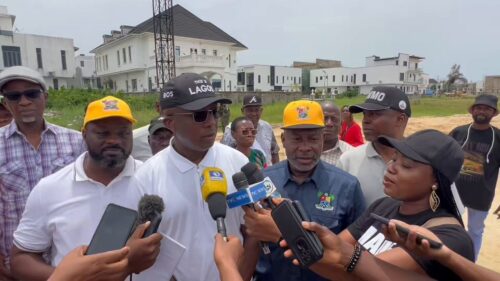
Lagos does not forgive complacency. Its floods do not negotiate, its aquifers do not replenish themselves, and its waste, left unattended, grows into black mountains that burn for weeks. For most of the past three decades, the Lagos State Ministry of Environment and Water Resources responded to these realities with the tools and tempo it inherited: slow, under-funded, and too often deferential to powerful interests. Then came 2025, and with it a commissioner, Tokunbo Wahab, who treated the portfolio like an emergency that had already lasted thirty years. The result was the most consequential single year any Lagos environment ministry has ever recorded. This is an unsparing account of what was achieved, agency by agency, what remains stubbornly unfinished, and what it cost, in political capital, in bruised relationships, and in sheer human exertion, to move a megacity even a few metres closer to liveability.

The Man Who Refused to Manage the Crisis

Tokunbo Philip Wahab is a lawyer who speaks like a prosecutor and inspects sites like a detective who already knows where the body is buried. By the end of 2025, he had personally led several field operations, he is on  X at odd hours, answering queries about why a pump station promised in March was still a hole in the ground in October, or why a drainage channel cleared in July was already blocked again in September. Ministry staff learned quickly that “I will get back to you” was no longer an acceptable answer. Decisions that once crawled through ten committees were taken in the site offices on short notice. You can call it “governance by adrenaline.” It has continued to produce results, but it has also produced friction that will echo into 2026 and beyond.

Lagos Water Corporation (LWC): The First Real Progress in a Generation

Water is the most intimate of Lagos’s daily humiliations. Successive governments have announced grand master plans, only to deliver a few additional million gallons while demand raced ahead by tens of millions. In 2025, the Lagos Water Corporation finally broke that cycle.

The flagship project was Adiyan Phase II. On 24 October, the final length of 1,200 mm ductile iron pipe – pipe number 944 was lowered into place along the 8 km transmission corridor from the new intake on the Ogun River to the treatment plant at Adiyan. When fully commissioned in the first quarter of 2026, the plant will add 70 million gallons per day (MGD) of treated water, raising total state production from roughly 210 MGD at the start of the year to approximately 280 MGD. It is the first major waterworks in Lagos to be completed within the original timeline in fifteen years.

But 2025 was about more than one plant. In April, the state signed a $180 million financing package with the Belstar Capital–ENKA consortium, insured by the U.S. Development Finance Corporation, to rehabilitate the decaying Iju (45 MGD) and Ishashi (4 MGD) plants and to construct two new 35 MGD green-field mini-works at Akute and Otta-Iyana. Work began immediately. By December, the Iju rehabilitation was 68% complete, and the first new mini-plant had reached foundation level.

Older, forgotten assets were resurrected. The Mosan-Okunola Waterworks in Alimosho, abandoned since 1999, was recommissioned in May after a nine-month overhaul. It now supplies 2.5 MGD to a local government that had never known public piped water. Across the state LWC replaced 127 km of tertiary distribution pipes and established 42 district meter areas. In the pilot zones non-revenue water fell from 64 % to 41 % still scandalously high by global standards, but a measurable improvement.

By November 2025, total production stood at 252 MGD, the highest figure Lagos has ever recorded in a single year. It is still less than a third of the estimated demand, and millions continue to buy expensive, sometimes contaminated water from tankers and sachets. Yet for the first time since 1999, the gap narrowed rather than widened.

Office of Drainage Services & Emergency Flood Abatement Gangs: Turning the Tide, Literally

Lagos floods for two reasons: it rains hard, and people have spent decades blocking the paths the water once took. In 2025, the Office of Drainage Services (ODS) and its rapid-response unit, the Emergency Flood Abatement Gangs (EFAG), attacked both problems simultaneously.

Between January and October, the gangs cleaned 666 linear kilometres of tertiary and secondary drains, more than in the previous four years combined. They removed 412,000 cubic metres of solid waste and silt. Forty-two new high-capacity pumps were installed in systemic flood spots: Idimu, Iyana-Ipaja, Ajegunle phases I and II, Okota, and parts of Lekki Phase I. In September, the state took the unprecedented step of suspending all ongoing reclamation and sand-filling activities across the state. Forty-seven sites were sealed, eleven were partially demolished, and the message was unambiguous: wetlands and flood plains are no longer negotiable real estate.

The results showed during the October rains. Areas that routinely went underwater for days, Osborne Foreshore Phase II, parts of Ikate-Elegushi, System 1E drainage basin on the Lekki-Epe axis, experienced flooding measured in hours rather than days. It was not perfect; Agiliti, Ketu, and parts of Ikorodu still suffered badly, but the reduction in duration and extent was the clearest evidence yet that preventive cleaning and reclamation control actually work.

Lagos Waste Management Authority (LAWMA): From Crisis Management to Circular Ambition

For years, LAWMA’s public image oscillated between heroic and helpless. In 2025, it was allowed, for the first time, to behave like a modern solid-waste utility.

The fleet renewal was massive: 1,050 new compactor trucks, most running on compressed natural gas, replaced vehicles that should have been scrapped a decade earlier. Domestic collection coverage in residential areas rose from 61 % to 78 %. Forty thousand jobs, sweepers, loaders, sorters, were formalised through audited Private Sector Participants (PSPs). The Styrofoam and single-use plastics ban finally acquired enforcement muscle: 123 metric tonnes of banned items were confiscated, 1,800 traders fined, and 41 supermarkets sealed until they complied.

But the real leap forward came at the 11th Lagos International Climate Change Summit in November, where LAWMA and the ministry signed four transformative MoUs:

  1. HAK Waste Nigeria Ltd – State-wide deposit-refund system for PET bottles and cans, targeting 60 % recovery by 2028, modelled on successful schemes in Rwanda and South Africa.
  2. Haggai Logistics Ltd – Construction of a 100-tonne-per-day tyre recycling plant in Epe that will produce crumb rubber and pyrolysis oil.
  3. Mondo 4 Africa – A plastic-to-diesel pyrolysis facility in Ikorodu capable of processing 50 tonnes daily, with fuel off-take agreements already signed with two transport unions.
  4. Harvest Waste Consortium (Dutch/Nigerian) – Definitive agreement for a 60–80 MW waste-to-energy plant at the Epe landfill, with financial close expected in March 2026 and construction starting immediately thereafter.

These are not letters of intent; they are binding contracts with performance bonds. For the first time, Lagos has a realistic pathway to close its three ageing landfills: Olusosun, Solous 2 & 3 within the next decade.

Lagos State Environmental Protection Agency (LASEPA): From Noise Nuisance to Full-Spectrum Regulator

LASEPA used to be known primarily for midnight raids on loud churches. It has since grown up.

Twelve new continuous ambient air-quality monitoring stations were commissioned, bringing the network to eighteen and allowing the agency to launch Lagos’s first public air-quality index dashboard. Real-time PM2.5, NO₂, SO₂, and ozone readings are now available on the LASEPA website and the Partner, AirQo mobile app. On days when Dangote Refinery flares heavily or when harmattan dust mixes with generator exhaust, Lagosians can see exactly why their throats hurt.

Industrial enforcement was systematic: 312 contravention notices, 89 seals, and the first-ever requirement that large emitters install continuous emission monitoring systems linked directly to LASEPA servers. Noise regulation remained muscular; several religious houses and over 87 nightclubs served abatement notices, but it was no longer the agency’s only story.

The criticism that enforcement is selective has not disappeared. A handful of five-star hotels on Victoria Island appear to receive gentler treatment than Pentecostal churches in Ajegunle. LASEPA insists the difference is procedural compliance, not status, but perception matters, and the perception has not been fully dispelled. However, a lot of wins have been recorded.

Lagos State Waterways Authority (LASWA): Making the Lagoon Work for Commuters

Eighteen per cent of Lagos is water, yet until 2025, the state treated it mostly as scenery. LASWA changed that with the Omi Eko initiative launched on 17 October.

Fifteen new commercial ferry routes were activated, thirty-eight jetties upgraded or newly built, and 140 km of navigable channels dredged and marked with solar-powered buoys. A firm order was placed for seventy-five fully electric ferries; the first twenty-five will arrive in 2026. Boat licensing and compulsory third-party insurance became non-negotiable; accidents fell 31 % year-on-year.

Commuters from Ikorodu to Victoria Island can now make the journey in forty-five minutes for less than the cost of fuel on the expressway, when the boats run on schedule, which they increasingly do. Tariff increases were introduced during the year, but the direction is unmistakable: Lagos is finally building a water-borne mass transit system worthy of a coastal megacity.

Lagos State Wastewater Management Office (LSWMO): The Quiet Crisis That Refused to Stay Quiet

Only 8 % of Lagos households are connected to centralised sewerage. The rest rely on septic tanks whose soakaways leach into the shallow aquifer that millions still use for drinking water. In 2025, LSWMO began the long war against this invisible poisoning.

One hundred and eighty properties, mostly hotels, factories, and large estates, were sealed for discharging raw sewage directly into storm drains. The first phase of the Lagos Wastewater Management Master Plan 2025–2035 was adopted in September, identifying eleven new treatment plants and 1,200 km of interceptor sewers needed over the next decade. Two hundred modular public toilets were added to the network, bringing the total to 1,910.

Progress is glacial compared to the scale of the problem, but for the first time, the state has a funded plan and an agency willing to use its enforcement powers.

Lagos is not yet the city its residents deserve, but it is demonstrably further along the path than it was in January. More people have piped water than at any time in the past twenty years. The streets are cleaner. The drains flow faster. The lagoon carries commuters instead of only effluent. The air is monitored, the waste is beginning to be converted into energy, and the state finally has a climate plan that international investors treat as bankable.

Much of this happened because one man decided that managing decline was no longer an acceptable job description. Whether the institutions he has shaken awake can maintain the pace after he eventually leaves is the question that will define the next decade. For now, the evidence is visible from the Third Mainland Bridge at dawn: new water pipes glinting in the sun, ferries cutting white wakes across the lagoon, and, in the distance, the smoke from Olusosun landfill burning a little less thickly than it did last year.

It is not enough. It is, however, a beginning.

 

Continue Reading

BIG STORY

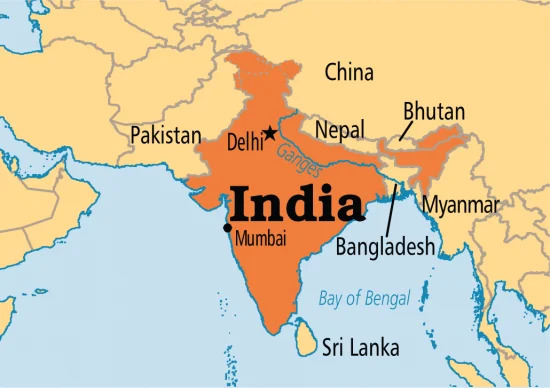
India Deports 32 Nigerians Linked To Transnational Drug Network

Published

on

Indian authorities have deported 32 Nigerians linked to a transnational drug network barely two weeks after security operatives arrested about 50 suspects in a multi-state narcotics raid.

It was earlier reported that the arrests were part of one of India’s largest coordinated crackdowns on a foreign-run drug and hawala syndicate operating across major cities.

Fresh reports from the Times of India on Wednesday revealed that investigators traced the network to a Nigeria-based kingpin identified simply as “Nick,” who is reportedly wanted in several drug-trafficking cases.

According to senior officials of the Elite Anti-Narcotics Group for Law Enforcement police unit, all the Nigerians arrested in Delhi were allegedly working for the fugitive kingpin.

“Less than 10 days after the EAGLE team, in coordination with the Delhi police, nabbed 50 Nigerians linked to drug peddling, 32 of them have been deported.

“During the probe, the officials found that the foreign drug peddlers were working for one Nick, who is wanted in multiple cases registered by EAGLE,” the report stated.

Officials also disclosed in the report that the fugitive kingpin, believed to be operating from Nigeria, maintained about 100 associates in Delhi alone, expanding what police now describe as a multi-layered supply chain that feeds clients nationwide.

“Investigators told the TOI that a forensic review of digital devices recovered from the suspects showed the network had over 3,000 clientele across India, with customer lists pieced together from payment trails, encrypted chats, and delivery contacts.”

“In some instances, the payments were routed through businesses that appeared legitimate on paper but existed primarily to launder drug money,” the report added.

The report further stated that “EAGLE’s probe also uncovered a chain of companies allegedly used to clean illicit proceeds.”

“Furthermore, in another instance, a publisher laundered Rs 20 lakh to Nigeria after partnering with the peddlers.

Similarly, peddlers tied up with businessmen dealing in footwear and apparel,” the report quoted investigators as having disclosed.

The report added that the Delhi Police moved swiftly to deport 32 of the Nigerian nationals “on priority,” while seven others are facing prosecution after drugs were recovered from them during the raid.

The remaining suspects, officials said, “may also be deported” pending clearance and documentation reviews.


Continue Reading

BIG STORY

FG Seeks Speedy Trial of Terrorists, Kidnappers, Other Violent Crimes

Published

on

The Attorney General of the Federation and Minister of Justice, Lateef Fagbemi (SAN), has urged the judiciary to expedite hearings in cases involving terrorism, human trafficking, kidnapping, and other violent crimes, stressing that the judiciary must support national efforts to combat insecurity.

The AGF made the appeal on Monday in Abuja during the ceremony marking the commencement of the Court of Appeal 2025/2026 Legal Year.

The event was also attended by the Minister of the Federal Capital Territory, Nyesom Wike, who promised improved accommodation for judges to allow them to discharge their duties without distractions associated with poor living conditions.

In his remarks, the AGF said all hands must be on deck to tackle the country’s insecurity challenges, calling on judges to support the government by fast-tracking the trial of terrorists.

Fagbemi said, “At this solemn juncture in our national life, it is also impossible to ignore the grave challenge of insecurity that confronts our country. From insurgency and terrorism to banditry, kidnapping and violent crimes, these threats imperil not only the safety of our citizens but also the very fabric of our constitutional democracy.

“The judiciary, as the guardian of justice and the custodian of the rule of law, must lend its weight to national efforts to combat insecurity through firm, consistent and courageous adjudication, the courts can ensure that those who threaten peace and stability are held accountable, that impunity is dismantled, and that the sanctity of human life and property is protected.”

He stressed that the judiciary is more effective when terrorism cases are swiftly heard.

“The judicial system’s effectiveness strengthens when terrorism cases receive swift hearings and resolutions, which demonstrates that terrorism faces immediate and decisive legal action.

“The Federal Government remains deeply committed to combating terrorism through a combination of kinetic and non-kinetic strategies. It recognises that the swift administration of justice is a vital complement to military and intelligence operations.

“Accordingly, rather than resorting to indiscriminate detention or relying solely on battlefield engagements, the government is focused on the timely prosecution of suspects implicated in mass-casualty attacks, kidnap-for-ransom networks, extremist recruitment, and terror-financing activities,” Fagbemi said.

While acknowledging that the courts needed more personnel, he said the present administration was committed to strengthening the judiciary.

“The government is equally mindful that this can only be achieved by enhancing the capacity of the judges who would handle these cases and other cases in the docket of our courts.

“The government of President Bola Tinubu is therefore committed to the immediate appointment of additional judges of the Federal High Court to reinforce and boost our national counter-terrorism efforts and ensure that terrorism-related cases and other cases are handled promptly and effectively.

“Let me also seize this opportunity to call on all citizens to unite in confronting the scourge of terrorism. This is a time for collective resolve – not distraction – as we work together to secure our nation.”

In his speech, the FCT Minister, Wke, assured judges of the FCT High Court that budgetary provisions had been made for the construction of additional residential houses to address accommodation challenges facing judicial officers.

He said the housing project formed part of the Federal Government’s broader efforts to strengthen the judiciary by improving the welfare, security, and working conditions of judicial officers.

A statement issued by his Senior Special Assistant on Public Communication and Social Media, Lere Olayinka, quoted Wike as saying, “The reasoning of President Bola Ahmed Tinubu’s administration is that providing comfortable and secure accommodation allows judges to focus entirely on the timely and efficient administration of justice, free from the distractions of inadequate living conditions.”

He disclosed that, under the President’s directive, the FCT Administration had formally handed over the Certificate of Occupancy for the Supreme Court’s land and commenced full perimeter fencing of the complex to safeguard the nation’s apex court against encroachment and security threats.

According to him, the intervention was long overdue and would serve as a confidence-building measure for the entire judiciary.

“This swift intervention gives the apex court the much-needed confidence that had been lacking in past administrations. This confidence-building action trickles down to every arm of the judiciary,” Wike added.

The FCTA had previously flagged off several judicial infrastructure projects, including the construction of residences for Heads of Courts, a new Magistrate Court complex in the Jabi District, and staff quarters at the Nigerian Law School.

Others include the design and construction of the Court of Appeal complex in Abuja, as well as residential quarters for judges of the National Industrial Court and the Federal High Court.

In his address, Wike reaffirmed the commitment of the FCTA to supporting comprehensive justice sector reforms, stressing that his administration would consolidate existing gains and expand support where necessary.

“The FCT Administration remains resolute in its determination to further support the implementation of justice reforms. Our priorities for the 2025/2026 Legal Year are focused on consolidating the gains made and expanding support where it is needed.

“Justice must never be compromised under any circumstances, for it is the bedrock of our democracy and the safeguard of public trust,” the minister said.

Wike expressed optimism that the new legal year would usher in greater efficiency and improved justice delivery for the Court of Appeal.

Continue Reading


Join Us On Facebook

Most Popular


Warning: Undefined array key "slug" in /home/porsch10/public_html/wp-includes/class-wp-theme-json.php on line 2117

Warning: Undefined array key "slug" in /home/porsch10/public_html/wp-includes/class-wp-theme-json.php on line 2117

Warning: Undefined array key "slug" in /home/porsch10/public_html/wp-includes/class-wp-theme-json.php on line 2117