Connect with us


BIG STORY

Food Price Crash: Farmers Fault FG’s Order As Agro-Imports Hit N2.2tn

Published

on

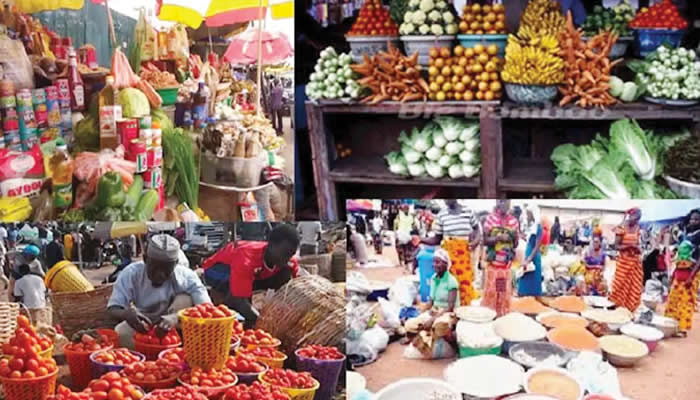
Nigeria’s agricultural import bill climbed to N2.22 trillion in the first half of 2025, prompting sharp criticism from farmers, millers and other stakeholders who say presidential directives to “crash” food prices ignore market realities and are worsening the country’s food insecurity.

The concerns follow a directive reportedly issued by President Bola Tinubu asking a Federal Executive Council committee to take steps to lower food prices nationwide. At a capacity-building workshop for journalists in Abuja, the Minister of State for Agriculture and Food Security, Sabi Abdullahi, told participants the presidency had mandated action to ensure the safe passage of agricultural commodities along the country’s transport routes.

“I can say it on good authority to you that the President has given a matching order to a Federal Executive Council committee already handling it,” Abdullahi said, adding that government efforts would focus on reducing the logistics costs that push up prices at the point of delivery.

But farmers and rice millers said a presidential order alone will not fix structural problems in the sector. Kabir Ibrahim, national president of the All Farmers Association of Nigeria (AFAN), said transport cost reductions would help but are insufficient by themselves. “The cost of food will go down if transport costs go down, but that alone is not enough,” he said, adding that many farmers are now selling at prices that prevent them from buying fertiliser.

Peter Dama, chairman of the Competitive African Rice Forum, criticised the top-down approach. “You don’t just come out and give an order to crash prices. It doesn’t work that way,” he told The PUNCH, urging the government to engage private operators and provide targeted subsidies rather than issue unilateral price directives. “At best, the government should have called stakeholders in the transport and agric sectors, discussed with them, and provided subsidies. Pronouncements without engagement will not work.”

Stakeholders also pointed to stalled mechanisation plans. The government announced the launch of 2,000 tractors in July 2024 to support farmers, but more than a year later the machines have not been distributed. An anonymous official in the agriculture ministry told The Punch that distribution modalities are still awaiting presidential approval and described the rollout as a process involving several ministries and technical committees.

Weak consumer purchasing power was flagged as an equally urgent problem. Even where prices have fallen, many Nigerians lack the income to buy food, a point AFAN’s Ibrahim stressed: “What we are telling the government is that it is the purchasing power of the Naira that is causing problems. Even if food prices fall, people don’t have the money to buy.”

Data from the National Bureau of Statistics (NBS) shows agricultural imports rose from N1.04tn in Q1 2025 to N1.18tn in Q2 — a 14.35 per cent increase quarter-on-quarter — and representing a 32.6 per cent year-on-year rise from N893.25bn in Q2 2024. The first half of 2024 posted N1.81tn, meaning imports rose 22.65 per cent year-on-year.

Much of the surge followed a 180-day duty-free window introduced in July 2024 that allowed licensed millers and firms with backward-integration programmes to import staples — including maize, husked brown rice, wheat, beans and millet — without paying duties or related taxes. The policy, intended as a temporary measure to ease food inflation, ended in December 2024. Stakeholders say it instead encouraged mass importation that undermined local producers.

Farmers say the import surge has depressed local prices. AFAN’s Ibrahim pointed to maize as an example: where a tonne once fetched about N60,000, it now goes for roughly N30,000, leaving growers unable to cover input costs. Small-scale producers, he said, are abandoning the farm or reducing output because they cannot afford fertilisers, herbicides or other essentials.

Women smallholder farmers raised related complaints. Chinasa Asonye, national secretary of the Small-Scale Women Farmers Organisation in Nigeria, said input costs and poor-quality subsidised products have crippled production. “Fertilisers and herbicides have become unaffordable. Some of the subsidised inputs distributed were expired and caused more harm than good. Government must subsidise inputs so farmers can produce at a reasonable cost,” she said, warning that hoarding by traders and agencies had worsened the crisis.

Asonye also described a glut of poor-quality imports, noting with alarm that some rice batches sold at N48,000 were infested with weevils and “not even edible.” She added that grains purchased at N140 per kg have in some cases been forced down to N70 per kg, pushing many traders and farmers into loss.

Stakeholders argued that piecemeal fixes — duty waivers, price-crash orders or delayed machinery distributions — cannot deliver long-term food security. Dama urged a coordinated strategy that engages millers, farmers and private investors, and warned that continued reliance on import licences will not substitute for real investment in domestic production. “If we continue like this, we will never be food-secure,” he said.

Calling for concrete policy measures, farmers and advocates want quick distribution of mechanisation equipment, subsidies or financing for inputs, investment in storage and transport infrastructure, and a genuine stakeholder consultation process before further price interventions are announced. They also urged transparency over state and private stockpiles to prevent hoarding and speculative pricing.

The government insists its measures — including the transport-route interventions, mechanisation push and plans to encourage import substitution — will eventually ease pressure on consumers. But with imports rising to N2.22tn in six months and local producers struggling with input costs, storage losses and weak domestic demand, experts warn the outlook for Nigeria’s food sector remains fragile unless decisive, coordinated action is taken.


Credit: The Punch

BIG STORY

Police Arrest Six For ‘Hacking Telecoms Firm To Divert N7.7bn Airtime’, Recover 400 Laptops, 1000 Mobile Phones

Published

on

Operatives of the Nigeria Police Force (NPF) have arrested six suspects for allegedly hacking into a telecommunication company in Nigeria to divert airtime and mobile data worth N7.7 billion.

A statement on Wednesday by Benjamin Hundeyin, the force spokesperson, said the suspects allegedly gained unlawful access to the telecommunications company’s core systems.

The suspects are Ahmad Bala, Karibu Mohammed Shehu, Umar Habib, Obinna Ananaba, Ibrahim Shehu, and Masa’ud Sa’ad.

Hundeyin said operatives recovered two mini plazas, retail outlets containing over 400 laptops, 1,000 mobile phones, and a Toyota vehicle.

The force spokesperson said a “substantial” amount of money was traced to the suspects’ bank accounts.

“The syndicate was responsible for the illegal diversion of a telecommunications company’s airtime and data resources, resulting in an estimated financial loss of over ₦7.7 billion,” the statement reads.

“The breakthrough followed a petition by a Nigerian telecommunications company, which reported suspicious and unauthorized activities within its billing and payments infrastructure.

“Investigations revealed that internal staff login credentials had been compromised, granting threat actors unlawful access to core systems.

“Following weeks of planning, coordinated enforcement operations were executed in October 2025 in Kano and Katsina States, with a follow-up arrest in the Federal Capital Territory.

“The suspects would be charged to court on the completion of the investigation.

“Meanwhile, the Inspector-General of Police, IGP Kayode Adeolu Egbetokun, Ph.D., NPM, has commended the officers involved in the investigation for their professionalism.”


Continue Reading

BIG STORY

NLC Directs Unions To Continue FCTA Strike Despite Court Order

Published

on

The Nigeria Labour Congress (NLC) has directed its affiliate unions in the Federal Capital Territory (FCT) to continue the ongoing strike by workers of the FCT Administration, despite a court order directing that the industrial action be suspended.

The directive was contained in a circular dated January 27, 2026, and signed by Benson Upah, the acting general secretary of the NLC.

In the circular addressed to presidents and general secretaries of all Abuja-based unions, the NLC said it was “reaffirming and reinforcing” its earlier instructions for workers to sustain the strike action until their demands are fully met.

“We hereby reaffirm and reinforce the directive to all affiliate unions in the FCT to not only proceed with the ongoing action but to intensify and sustain it until all workers’ demands are fully addressed,” the circular reads.

The NLC noted that issues such as unpaid wage awards and promotion arrears, non-remittance of pension and National Housing Fund deductions, as well as alleged intimidation of workers, are yet to be resolved.

“These violations are grave, unacceptable, and incompatible with the principles of fairness, justice, and decent work,” the NLC said.

“Affiliate unions are therefore directed to fully maintain participation in the industrial action; reinforce mobilisation of members for all congress-approved activities; and mobilise members to continuously participate in daily prayer and solidarity sessions from 8:00 am to 5:00 pm at designated venues across the FCT.”

The NLC warned against any withdrawal from the strike at this stage, saying such action would embolden further violations against workers.

“This struggle demands unity, discipline, and unwavering commitment. All affiliates are expected to comply strictly with this directive in the collective interest of the Nigerian working class. An injury to one is an injury to all,” the circular reads.

On Tuesday, a national industrial court in Abuja ordered workers on the payroll of the FCTA to suspend the strike.

Delivering a ruling, Emmanuel Subilim, presiding judge, held that although the matter before the court amounted to a trade dispute, the defendants’ right to embark on industrial action was not absolute.

He held that once a dispute has been referred to the national industrial court, any ongoing strike must cease pending the determination of the case.


Continue Reading

BIG STORY

Return To Work Immediately Or Face Legal Action, Wike Tells FCTA Workers As Court Orders Strike Suspension

Published

on

The Minister of the Federal Capital Territory, Nyesom Wike, on Tuesday warned striking staff of the Federal Capital Territory Administration to return to work immediately or face legal action, following a National Industrial Court ruling ordering an end to the strike that has disrupted public services in Abuja for over a week.

Briefing journalists shortly after the court’s decision, Wike insisted that the rule of law must prevail and accused political actors of exploiting the industrial action for motives unrelated to workers’ welfare.

“The administration was already in the process of mediation when some politicians hijacked the strike,” he said, adding that several of the workers’ demands were “frivolous” and either unreasonable or already addressed.

Wike said the FCTA approached the court after determining that the strike had been “hijacked by politicians,” despite ongoing dialogue and attention to a substantial number of workers’ concerns.

He highlighted the administration’s efforts to support staff welfare, including salary payments and reforms within the civil service.

The minister disclosed that more than N12bn had just been approved for the payment of January salaries to FCTA workers, describing the move as evidence of the government’s commitment to its workforce.

Pointing to improved revenue performance under his leadership, Wike noted that the FCT had generated over N30bn in internally generated revenue, a significant increase compared with previous years.

He urged workers to recognise reforms implemented by the administration, including the establishment of the Civil Service Commission and infrastructure investments across the territory.

“Workers are largely responsible for the lack of development in states, including the FCT,” he said.

Wike dismissed circulating reports suggesting he had been forced out of his office during protests linked to the strike.

“I was never chased out of the office,” he said, explaining that he had merely stepped out to see President Bola Tinubu off at the airport.

Adopting a firm stance, the minister warned against further disruptions of government operations.

“Anyone who dares to lock the gates again will be made a scapegoat, because the law must be obeyed.”

He alleged that some senior civil service officials had played a role in sustaining the strike, claiming that certain directors were instigating the action, but said this would not prevent the administration from pursuing the right course.

Wike emphasised that engagement between workers and the government did not require direct access to him personally.

“Seeing me in person is not a right,” he said, noting that workers’ representatives had been in discussions with management throughout the dispute.

He concluded by warning that staff who failed to comply with the court order and resume duties immediately would face legal action, signalling a tougher enforcement phase as the FCTA seeks to restore full public services.

Workers of the FCTA, operating under the Joint Union Action Committee, had embarked on an indefinite strike on January 19 over unresolved welfare concerns.

The National Industrial Court issued an interlocutory injunction stopping the strike after an application by Wike.

Justice E.D. Subilim granted the order on January 21 and adjourned the suit to March 23, 2026, for hearing of the substantive case.

Delivering his ruling on Tuesday, Justice Subilim said the defendants’ right to strike was not absolute.

“The defendant’s right to an industrial action is not absolute, but as circumscribed by law,” he said. He prohibited workers from participating in the strike once a dispute had been referred to the court and ordered that any ongoing strike must cease pending determination.

“An order of interlocutory injunction is hereby granted, restraining the defendants and respondents, their agents, representatives… together with all other members of the Joint Unions Action Committee … from further embarking on any industrial action, strike, picketing, lockout, or any other form of obstruction against the claimant, parastatals, and political appointees,” the judge added.

Counsel for the claimants, James Onoja (SAN), hailed the court’s decision, urging the unions to obey the order and return to work while allowing room for mediation.

“We commend the court for making an order for the stopping of the strike… I think this is commendable because it will allow the parties to discuss. Our plea to the Union is to allow industrial harmony. They should go back to work and allow for mediation,” Onoja said.

Counsel for the respondents, Maxwell Opara, described the workers as law-abiding citizens and said he would advise the unions to respect the court order.

“The workers are law-abiding citizens. We are going to advise them to respect the court. The one good thing is that the court has also mandated that we commence mediation, not as a matter of advice, in line with the law… we must comply with it,” Opara said.

JUAC President, Rifkatu Iortyer, confirmed that workers would comply, call off the strike and immediately return to work while continuing to “push for other things.”

“We are law-abiding citizens, and because they have said we should return to work, we are returning to work, pending our next appearance,” she said.

Continue Reading


Join Us On Facebook

Most Popular


Warning: Undefined array key "slug" in /home/porsch10/public_html/wp-includes/class-wp-theme-json.php on line 2117

Warning: Undefined array key "slug" in /home/porsch10/public_html/wp-includes/class-wp-theme-json.php on line 2117

Warning: Undefined array key "slug" in /home/porsch10/public_html/wp-includes/class-wp-theme-json.php on line 2117