Connect with us


BIG STORY

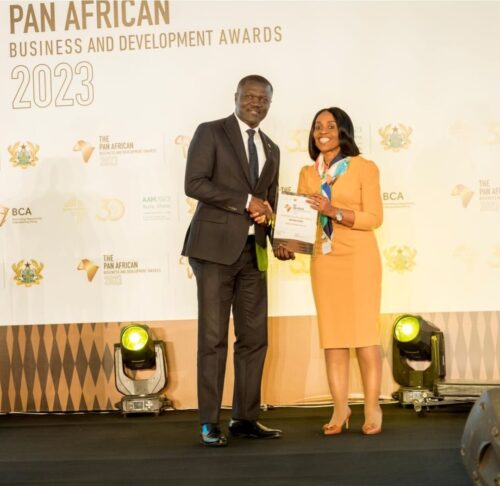
Firstbank Wins Financial Institution Of The Year At The Afrexim Bank Pan-African Business And Development Awards

Published

on

  • The award was bestowed on FirstBank in recognition of the Bank’s role in promoting trade and investment endeavours across the continent.
  • With its subsidiaries across the FirstBank Group, FirstBank has continued to play a leading role in boosting cross-border businesses, including trade and investment opportunities, essential to enhancing trade relations amongst countries.
  • In 2021, the Bank launched its First Global Transfer (FGT) initiative, specifically designed to ensure safe, timely and improved efficiency in the transfer of funds across the network of FirstBank subsidiaries in Africa.

First Bank of Nigeria Limited, Nigeria’s premier banking institution and leading financial inclusion services provider, has won the Financial Institution of the Year Award at the African Export-Import Bank (Afreximbank) Pan African Business and Development Awards. The ceremony marked the 30th anniversary of Afreximbank as it hosted the inaugural Pan-African Business and Development Awards in association with the Business Council for Africa (BCA), in Accra, Ghana.

The award bestowed on FirstBank is in recognition of the Bank as an epitome of the Pan-African spirit through its leading role in promoting trade and investment across the continent which have been instrumental to strengthening the economic and multilateral business relationship across nations.

Amongst its role in facilitating transactions across borders, in 2021, the Bank launched its First Global Transfer (FGT) initiative, specifically designed to ensure safe, timely and improved efficiency in the transfer of funds across the network of FirstBank subsidiaries in Africa. The FGT is not restricted to FirstBank Group’s Customers alone but it is also open to every individual resident in the country the funds transfer is originating from.

Speaking on the awards, Dr. Adesola Adeduntan, CEO, FirstBank said: “We thank the organisers of the event (Afreximbank, BCA) for the recognition as it reinforces our commitment to promoting trade, finance and investment opportunities across borders which have been instrumental to the continued growth and development of the continent and the world. On behalf of the Board and Management, this award is dedicated to all employees at the FirstBank Group for their diligence and hardwork as well as to our esteemed customers for their loyalty and patronage in over 129 years of existence’’ he concluded.

Also commenting on the awards, Prof. Benedict Oramah, President and Chairman of the Board, who has been at the Bank for over 29 years said: “Tonight we are recognising outstanding leaders and institutions. Having joined the Bank in 1994, I have been fortunate to have worked with many of them… At Afreximbank, contributing to Africa’s development is a lifetime vocation, as I know it is for all those that we have recognised tonight.”

In recognising these leaders and institutions, Arnold Ekpe, chair of the BCA and former Group CEO of Ecobank, said: “Too often our business leaders do not get the praise they deserve. Succeeding in business on the continent is not always easy, but it is rewarding and more importantly it is possible to build strong, profitable businesses that are globally competitive. Our winners tonight have demonstrated this.”

FirstBank has consistently been recognised by reputable global organisations for its steady outstanding performance and amongst the streak of recent wins is the award for Best Financial
Inclusion Service Provider Nigeria 2023 by Digital Banker Africa as well as Best Private Bank for
Sustainable Investing in Africa by Global Finance.

About FirstBank

First Bank of Nigeria Limited (FirstBank) is the premier Bank in West Africa and the leading financial inclusion services provider in Nigeria for 129 years.

With over 800 business locations and over 200,000 Banking Agents spread across 99% of the 774 Local Government Areas in Nigeria, FirstBank provides a comprehensive range of retail and corporate financial services to serve its over 41 million customer accounts (including digital wallets) in Nigeria and over 700,000 customer accounts outside the country. The Bank has an international presence with subsidiaries operating in 9 other countries. These subsidiaries are FirstBank (UK) Limited in London and Paris, FirstBank in The Gambia, FirstBank Sierra-Leone, FirstBank in the Republic of Congo, FBNBank in Ghana, FBNBank in Guinea, FBNBank in Senegal as well as a Representative Office in Beijing, China. The Bank is at the forefront of promoting digital banking in the country and has issued over 12 million cards, the first bank to achieve such a milestone. FirstBank’s cashless transaction drive extends to having more than 12 million people on its USSD Quick Banking service through the nationally renowned *894# Banking code and over 4.5 million people on the FirstMobile platform. It is, by far, the leader in the number of digital transactions per minute across multiple channels.

FirstBank’s commitment to Diversity is shown in its policies, partnerships and initiatives, such as its employees’ ratio of female to male (about 39%:61%; and 32% women in management) as well as the FirstBank Women Network, an initiative that seeks to address the gender gap and increase the participation of women at all levels within the organization. In addition, the Bank’s membership of the UN Women is an affirmation of a deliberate policy that is consistent with UN Women’s Women Empowerment’s Principles – Equal Opportunity, Inclusion, and Nondiscrimination.

Since its establishment in 1894, FirstBank has consistently built relationships with customers focusing on the fundamentals of good corporate governance, strong liquidity, optimised risk management and leadership. Over the years, the Bank has led the financing of private investment in infrastructure development in the Nigerian economy by playing key roles in the Federal Government’s privatisation and commercialisation schemes. With its global reach, FirstBank provides prospective investors wishing to explore the vast business opportunities available in Nigeria an internationally competitive world-class brand and a credible financial partner.

For six consecutive years (2011 – 2016), FirstBank was named “Most Valuable Bank Brand in Nigeria” by the globally renowned The Banker Magazine of the Financial Times Group and “Best Retail Bank in Nigeria” eight times in a row, 2011 – 2018, by the Asian Banker International Excellence in Retail Financial Services Awards.

Notably, in 2022, the Bank took a long stride on its growth trajectory with the Bank’s Viability and Long-Term Issuer Default Ratings upgraded to ‘B’ from ‘B-‘ (with Outlooks Stable) by Fitch, a leading global rating agency. This is an indication of the Bank’s strong internal capital generation and the corresponding recession of its risks to capitalisation. Fitch also upgraded the Bank’s National Long-Term Ratings to ‘A (nga)’ from ‘BBB (nga)’, to reflect its improved creditworthiness relative to that of other issuers in Nigeria. Furthermore, the Top 100 African Bank rankings 2022 released by The Banker Magazine revealed FirstBank’s ranking as number one in Nigeria in terms of Overall Performance, Profitability, Efficiency and Return on Risk.

Other laudable feats in 2022 include FirstBank’s international recognitions on major indices by Euromoney Market Leaders, an independent global assessment of the leading financial service providers where FirstBank was crowned:

Market Leader: (tier-1 recognition) in Corporate and Social Responsibility (CSR),

Market Leader: (tier -1 recognition) Environmental, Social and Governance (ESG),

Highly Regarded: in Corporate Banking and Digital Solutions,

Notable: in SME Banking.

Also, in 2022 International Finance Magazine named the Bank “Most Innovative Banking Product in Nigeria” and “Best Retail Bank in Nigeria”. FirstBank was also awarded “Best Corporate Banking Western Africa, 2022” and “Best CSR Bank Western Africa, 2022’’ by Global Banking and Finance Magazine. Other notable awards in FirstBank coffers include: “Best Bank in Nigeria” by Global Finance magazine – fifteen times in a row; “Best Private Bank in Nigeria-2021” awarded by Global Finance magazine; “Best Internet Banking Nigeria” and ‘’Best CSR Bank Africa’’ by International Business Magazine.

In 2023, FirstBank has received notable awards including “Best Private Bank for Sustainable Investing in Africa 2023” by Global Finance Awards; “Best Sustainable Bank in Nigeria 2023” by International Investors Awards; “Best Bespoke Banking Services in Nigeria 2023” by International Investors Awards; “Best Financial Inclusion Service Provider in Nigeria 2023” by Digital Banker Africa; and “African Bank of the Year” by African Leadership Magazine.

Our vision is ‘To be Africa’s Bank of first choice’ and our mission is ‘To remain true to our name by providing the best financial services possible. This commitment is anchored on our core values of EPIC – Entrepreneurship, Professionalism, Innovation and Customer-Centricity. Our strategic ambition is ‘To deliver accelerated growth in profitability through customer-led innovation and disciplined execution and our brand promise is always to deliver the ultimate “gold standard” of value and excellence to position You First in every respect.


Folake Ani-Mumuney

Group Head, Marketing & Corporate Communications

First Bank of Nigeria Limited

BIG STORY

We Will Get It Right With Security —- Obasa

Published

on

Speaker of the Lagos State House of Assembly, Rt. Hon Mudashiru Obasa has affirmed that with the support of all Nigerians, President Bola Ahmed Tinubu would get it right with his concerted reengineering of the nation’s security architecture.

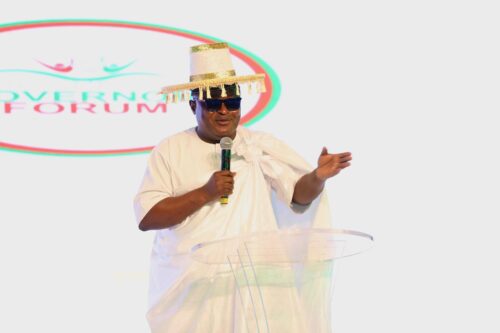
Speaking at the APC Stakeholders and Progressives Governors Forum meeting held Saturday, December 6, at the Eko Hotel and Suites, Victoria Island, Lagos, Obasa said he did not doubt that President Tinubu and the All Progressives Congress, APC-led federal government, would do all that they can to ensure that they secure the life and property of every Nigerian.

According to Obasa, “We have seen the president in action and how he is innovating and working hard to resolve our many challenges, especially insecurity, and we believe he will get it done. He’s still the man who can do it. That is why we must do everything within our powers to ensure that he is returned in 2027.”

Speaker Obasa teed off with robust commendations for the governors for their shared dedication and commitment to helping President Tinubu resolve Nigeria’s insecurity problem.

He urged them to galvanise their people when they return to their various states to be a part of the solution to Nigeria’s security challenge, and not stay aloof.

Speaker Obasa added that security is not just about the governors, “It is about everybody. We must all be involved in fighting this problem. We must give the President all the support that we can so that he will succeed in his attempts to redirect the trajectory of Nigeria.”

The PGF had converged on Lagos between December 5 and 6 for a meeting convened by the Chairman of the Forum, Senator Hope Uzodimma, Governor of Imo State, and hosted by Governor Babajide Sanwo-Olu of Lagos State.

In a communique read by Governor Uzodinma, the governors passed a vote of confidence on President Tinubu’s administration, and pledged support for his Renewed Hope Agenda and re-election in 2027.

The Forum, according to Governor Uzodinma, reviewed the security situation across the country and expressed appreciation for the improved coordination between federal, state, and local security structures, as well as the courage and sacrifices of security agencies and community volunteers. They also resolved to strengthen local security architecture in all the states.

Governor Uzodinma said that their two-day engagement provided an opportunity to review the nation’s current trajectory, deepen coordination among the governors, and reaffirm their firm support for the Renewed Hope Agenda of President Tinubu. “The PGF commended President Bola Ahmed Tinubu for his steadfast commitment to stabilizing the economy, strengthening national security, and laying the foundations of sustainable growth through the Renewed Hope Agenda,” he said.

Continue Reading

BIG STORY

Nigerian Army Suspends Officer Retirements Amid National Security Emergency

Published

on

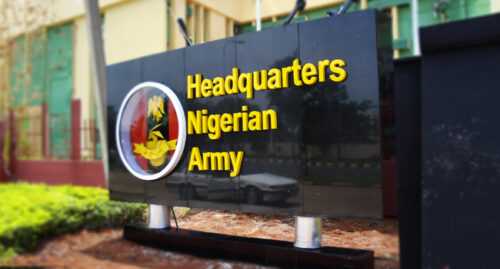
The Nigerian Army has suspended all statutory and voluntary retirements for certain categories of officers following the nationwide security emergency declared by President Bola Tinubu.

An internal memo dated December 3, signed by Maj. Gen. E. I. Okoro on behalf of the Chief of Army Staff, and sighted by our correspondent, stated that the suspension of retirements is aimed at retaining manpower, experience, and operational capacity as the Armed Forces expand in response to rising insecurity.

The document, referencing the Harmonized Terms and Conditions of Service Officers (HTACOS) 2024, noted that although officers are ordinarily expected to retire upon reaching their age limit, completing 35 years of service, or after repeated promotion or conversion failures, service extension is permissible under Paragraph 3.10(e) in the interest of the military.

The memo partly read: “Military service of a commissioned officer entails a period of unbroken service in the AFN from the date of enlistment or commissioning to the date of retirement. The period of service is determined by conditions enshrined in the HTACOS Officers 2024. These include attainment of age ceilings on various ranks, a maximum length of service of 35 years, and other criteria provided in Paragraphs 11.02(d) and 17.15, among extant regulations.

“Notwithstanding these provisions, Chapter 3.10(e) of HTACOS Officers 2024 allows for the extension of service to officers in the interest of the service.

“The President and Commander-in-Chief declared a nationwide security emergency on November 26, mandating the expansion of the AFN and other security agencies. In line with this, and to rapidly expand manpower, it has become expedient to temporarily suspend all statutory and voluntary retirements from the Nigerian Army with immediate effect.”

According to the circular, the temporary suspension applies to officers who fall into the following categories: officers who failed promotion examinations three times; officers passed over three times at promotion boards; officers who have reached the age ceiling for their ranks; officers who failed conversion boards three times; and officers who have attained 35 years of service.

“Officers in these categories who are not interested in an extension of service are to continue with the normal retirement procedure. Officers desirous of extension should note that upon extension, they are not eligible for career progression, including promotion, career courses, NA sponsorship, self-sponsored courses, secondment, or extra-regimental appointments,” the memo stated.

It directed all commanders to disseminate the directive and manage morale, adding that the policy would be reviewed as the security situation improves.

President Bola Tinubu, on November 26, 2025, declared a nationwide security emergency and directed the military, police, and intelligence agencies to expand recruitment and deploy thousands of additional personnel.

Continue Reading

BIG STORY

Senate Orders Nationwide Crackdown As Lead Poisoning Hits Ogijo Lagos

Published

on

The Senate on Thursday expressed grave alarm over a fast-spreading lead-poisoning crisis in Ogijo, a densely populated community straddling the boundary between Ikorodu (Lagos) and Ogun East Senatorial District.

It described it as a full-blown environmental and public-health emergency that threatened thousands of lives.

The motion, jointly sponsored by Mukhail Adetokunbo Abiru (Lagos East) and Gbenga Daniel (Ogun East), was brought under Matters of Urgent Public Importance pursuant to Orders 41 and 51 of the Senate Standing Orders, 2023 (as amended).

Lawmakers cited scientifically verified reports of extreme lead contamination linked to a cluster of used lead-acid battery recycling factories operating in the area for years.

According to the Senate, the crisis had left residents battling persistent headaches, abdominal pain, memory loss, seizures, and developmental delays in children, symptoms strongly associated with chronic lead exposure.

The chamber noted with concern that the Federal Government had already begun clampdowns, with the Minister of State for Labour and Employment, Nkeiruka Onyejeocha, shutting down seven battery-recycling factories and ordering a temporary halt to lead-ingot exportation pending safety investigations.

Senators said they were “alarmed that residents have for several years complained of persistent headaches, abdominal pains, loss of memory, seizures, cognitive decline, and developmental delays in children, symptoms strongly associated with chronic lead exposure.”

Despite years of community protests, the smelters allegedly continued operating openly, releasing toxic fumes and particulate dust into surrounding homes, markets and playgrounds.

“It is regrettable that despite years of community outcry, smelter furnaces continued operating, discharging toxic fumes from melted batteries directly into surrounding neighbourhoods. We are concerned that while some factory operators deny wrongdoing, community exposure remains extreme.

“The Senate acknowledges and commends the proactive efforts of the Lagos and Ogun State Governments and their relevant ministries and agencies for conducting early inspections, raising community awareness and working with federal authorities to contain the exposure,” lawmakers said.

The chamber further cited disturbing findings by independent testing commissioned by The Examination and The New York Times, which revealed severe contamination in both residents’ blood samples and soil within the industrial cluster.

Some environmental samples, senators noted, showed lead levels “up to 186 times the global maximum safety threshold.”

A major dimension of the scandal, lawmakers said, was that lead processed in Ogijo had already been traced into international supply chains, reaching global battery and automobile manufacturers who either did not address the findings or relied solely on assurances from Nigerian suppliers.

The Senate lamented that while some factory operators deny wrongdoing, community exposure remains dangerously high amid weak accountability and gaps in Nigeria’s regulatory frameworks.

Senators nonetheless praised emergency actions taken by the Lagos and Ogun state governments, commending their early inspections, public-awareness campaigns and support for affected families.

Citing Sections 14(2)(b) and 20 of the 1999 Constitution, the Senate emphasised the government’s responsibility to safeguard citizens’ welfare and ensure a safe environment.

Following extensive deliberations, the Senate resolved to commend both the Federal Government and the Lagos and Ogun State Governments for their swift intervention in shutting down non-compliant lead-recycling factories.

Lawmakers urged continued enforcement, including factory closures, export suspensions, prosecution of violators, and strengthened industrial safety monitoring.

The chamber mandated the Federal Ministry of Health and the Nigeria Centre for Disease Control (NCDC) to deploy emergency medical teams to Ogijo to provide free toxicology screenings, blood-lead management, chelation therapy, and ongoing treatment for affected children and adults.

Simultaneously, the Federal Ministry of Environment and NESREA were directed to carry out comprehensive environmental remediation, mapping soil, groundwater, air, and household dust contamination.

The Senate also called on the Federal Ministry of Solid Minerals and relevant regulatory agencies to enforce strict compliance standards for battery-recycling and lead-processing operations nationwide.

Additionally, it recommended establishing a National Lead Poisoning Response and Remediation Task Force within NEMA and directed the Committee on Legislative Compliance to monitor progress and report back within six weeks.

The Senate described the Ogijo crisis as a preventable tragedy that must serve as a national wake-up call on industrial pollution, regulatory failure and the urgent need to protect vulnerable communities from hazardous waste.


Continue Reading


Join Us On Facebook

Most Popular


Warning: Undefined array key "slug" in /home/porsch10/public_html/wp-includes/class-wp-theme-json.php on line 2117

Warning: Undefined array key "slug" in /home/porsch10/public_html/wp-includes/class-wp-theme-json.php on line 2117

Warning: Undefined array key "slug" in /home/porsch10/public_html/wp-includes/class-wp-theme-json.php on line 2117