



BIG STORY
EFCC Raises Team To Probe El-Rufai, Others Over Alleged N423b Fraud


- /home/porsch10/public_html/wp-content/plugins/mvp-social-buttons/mvp-social-buttons.php on line 27
https://porscheclassy.com/wp-content/uploads/2024/06/resize1718095235300.jpg&description=EFCC Raises Team To Probe El-Rufai, Others Over Alleged N423b Fraud', 'pinterestShare', 'width=750,height=350'); return false;" title="Pin This Post">
- Share
- Tweet /home/porsch10/public_html/wp-content/plugins/mvp-social-buttons/mvp-social-buttons.php on line 69
https://porscheclassy.com/wp-content/uploads/2024/06/resize1718095235300.jpg&description=EFCC Raises Team To Probe El-Rufai, Others Over Alleged N423b Fraud', 'pinterestShare', 'width=750,height=350'); return false;" title="Pin This Post">
A team of investigators has been assembled by the Economic and Financial Crimes Commission (EFCC) to look into claims that former Kaduna State Governor Nasir El-Rufai and a few significant officials of his administration mismanaged N423 billion.
There are rumours that the previous governor will be questioned shortly.
The following people are also scheduled to be questioned: all of the accountants general throughout his eight years in office, the heads of the Kaduna State Internal Revenue Service (KADIRS) from 2018 to 2023, and the finance commissioners who held office from May 29, 2015, to May 29, 2023.
Others are all the managing directors of the Kaduna Market Development and Management Company Ltd from May 29, 2015, to May 29, 2023; and all the Managing Directors of Kaduna Roads Agency (KADRA) from October 11, 2017, to November 2021 except Amina Ja’afar Ladan, an engineer who spent only one month in office.
More revelations have been made on the alleged corruption during El-Rufai’s tenure.
The Ad-Hoc Committee of the Kaduna House of Assembly uncovered that about N423,115,028,072.88 was siphoned from the coffers of the state government from 2015 to 2023.
It also spotted a cumulative withdrawal of $1.4 million from the Kaduna State Economic Transformation Account.
The House panel has asked eight people and companies to refund N19, 239,511,099.76
It has also recommended that 15 contractors should refund N36, 351,126,811.65 as “being monies paid for work either not done, overpayment or diversion”.
The committee said that although the value of contracts awarded from 1999 to 2023 by el-Rufai’s administration was N510,407,166,975.39, it only paid N198,921,880,169.04 to contractors.
Investigations by our correspondent showed that a Special Task Force was assigned to look into a petition by a Non-Governmental Organisation mainly on the findings of the Kaduna State House of Assembly.
It was gathered that the team immediately swung into action yesterday for a review and isolation of the allegations against the ex-governor, some past commissioners and aides.
A top source, according to The Nation, said: “We are in receipt of a petition from an NGO. So, we have started investigation in the matters raised in the petition.
“The report of the Ad-Hoc Committee of the Kaduna State House of Assembly is also handy. We will soon invite el-Rufai and some members of his team for interrogation.
“The Special Task Force on Monday (yesterday) held a long session on the contents of the petition and the report of the Ad-Hoc Committee.”
The source added: “The report of the House of Assembly has actually laid a solid foundation for the probe by our team.”
EFCC Head of Media and Publicity, Mr. Dele Oyewale, was unavailable to respond to our correspondent’s enquiries last night.
But there were revelations in the report of the Ad-Hoc Committee that were not in the public domain.
The committee has asked eight people and companies to refund N19, 239,511,099.76.
It has also directed 15 contractors to refund N36, 351,126,811.65 “being monies paid for work either not done, overpayment or diversion”.
The report also clarified that at the time el-Rufai took over on May 29, 2015, all domestic loans had been re-paid by the previous administration.
It also established that between 1965 and 31st December 2014, the total foreign loans as contained in the handover note of the state to el-Rufai stood at $234 million.
But within eight years of el-Rufai’s tenure, Kaduna State’s liability on domestic and foreign loans amounted to N98,912,000,000.00 and $758,141,699 respectively.
The committee findings indicated that most of the loans were obtained without due process and not utilised for the purpose they were meant for.
The report said in part: “The Committee has established the following: That between 1965 and 31st December 2014, the total foreign loans as contained in the handover note of the state were $234 million before the inception of the last administration which is May 29, 2015.
“That on 29th May, 2015, when His Excellency Mallam Nasir El-Rufai took over the governance of the state, all domestic loans had been paid by the previous administration and therefore no liability on domestic loans was handed over to him as shown in the signed handing over notes dully signed by both outgoing and the incoming governors.
“That when His Excellency, Mallam Nasir el-Rufai took over governance of Kaduna State, the mopped-up cash in the state paid into the TSA amounted to N34,000,000,000.00 only.
“That between May 2015 and May 2023, the Government of Kaduna State incurred liability on domestic and foreign loans to the tune of N98,912,000,000.00 and $758,141,699 respectively and a majority of them were obtained without due process and not utilised for the purpose they were obtained.
“That, the total Revenue (Loans, FAAC, IGR, Grants, Refunds and Intervention) received by the Kaduna State Government from 29th May, 2015 to 29th May, 2023 amounted to N1,497,682,993.375 and $758,141,699.
“That through the use of unauthorised debit cards, the Ministry of Finance in collaboration with officers of KADIRS, withdrew through 3rd parties the sum of N721,672,854.88 from the IGR account of the state.
“That, the Ministry of Finance in collaboration with KADIRS siphoned the sum of N30,000,000,000.00 from the Internally Generated Revenue account of the State.
“That the total value of the contracts awarded by the Kaduna State Government from 29th May, 2015 to 29th May, 2023 amounted to N510,407,166,975.39 only, out of this alleged amount, only the sum of N198,921,880,169.04 was paid to Contractors.
“That the total contractual liabilities found by the committee as of 29th May, 2023 stand at the sum of N311,485,286,806.35 and $26,284,595.53 (USD) respectively.
“That the public liability (Gratuity and Pension) as of 29th May, 2023 stood at N23,993,700,494.91.
“That, the liability of the Kaduna State Government to the Consultants engaged between 29th May 2015 and 29th May 2023 is N602,026,388.55.
“That the total amount of moneys withdrawn by the Commissioner of Finance and Accountant-General stood at N4,936,916,333.00 and $1.4 million
“That, the total amount of money siphoned by the Government of Kaduna State from 29th May, 2015 to 29th May, 2023 is N423,115,028,072.88.”
The Ad-Hoc Committee also made some recommendations to Governor Uba Sani, including the repudiation of some questionable loans.
The report said: “The Committee has come to the conclusion that evidence has shown several cases of corruption in the running of the affairs of the government, ministries, departments and agencies in Kaduna State from 29th May 2015 to 29th May 2023 and hereby recommends as follows:
•To direct the Kaduna Internal Revenue Service to withdraw the Internally Generated Revenue (IGR) Account domiciled at a commercial bank as Security for N20,000,000,000.00 guaranteed in 2023 forthwith and to request the bank to refund all monies deducted on account of the purported illegal guarantee together with the accrued interest thereof.
• That all loans (Domestic and Foreign) obtained by the Kaduna State Government from 29th May, 2015 to 29th May, 2023 and found by the Committee to have been obtained without due process are not binding on the State and the State Government should henceforth stop honouring all obligations arising from them.
• That the contractors (15) listed hereunder should refund to the Kaduna State Government a total sum of N36,351,126,811.65 being monies paid for work either not done, overpayment or diversion.
• That the total amount to be refunded to the state government by the under-listed persons (8) is N19,239,511,099.76.
• That the Governor of Kaduna State between 29th May, 2015 to 29th May, 2023 as the Chief Executive Officer of the state breached his Oath of Office contained in the 7th Schedule to the Constitution of the Federal Republic of Nigeria (as amended) and failed to exercise due diligence in the administration of the state, thereby indulged in plunging the state into unwarranted, unjustified and fraudulent Domestic and Foreign Debts over and above the total Loans obtained by Kaduna State from 1965 to 1999 and majority of which were obtained without due process.
• Reckless awards of contracts without due process and due execution, leading to several abandoned projects despite payments.
• Authorised the humongous withdrawals of cash both in naira and dollars with no records of utilisation and denied the state of the needed resources for development.
• Complicit activities with commissioners and heads of parastatals to defraud the state by issuing directives to KADPPA to circumvent due process in the payment of Contractors vide letter dated 21st June 2021.









There is a curious disease in our public conversation.
We begin by asking a legitimate question about public office and, before the question has finished breathing, we have dragged the office holder’s private life into the courtroom of Twitter, Facebook and other microblogging platforms.
Accountability then loses its object. What began as a question about the government becomes an argument about a man’s wristwatch, his income, his wardrobe and, eventually, his worth as a human being.
That is where the recent exchange involving the Lagos Commissioner for the Environment and Water Resources, Tokunbo Wahab, deserves a little intellectual housekeeping. The commissioner is a public officer. His stewardship is therefore open to scrutiny.
Lagosians have every right to ask what the ministry is doing about waste, flooding, drainage, wetlands, pollution and the general quality of the city’s environment. They can challenge policies, demand figures, question enforcement methods and ask whether public expenditure is producing the promised results. That is citizenship, exercised exactly as it should be.
The problem begins when interrogation of the office quietly mutates into an indictment of the personality. The distinction matters because a commissioner does not become a man without a past simply because he became a commissioner. He does not enter public office naked, without a wardrobe, a career, investments, property, relationships or possessions acquired before his appointment. Public service creates obligations concerning public resources. It does not, by itself, create a doctrine under which every possession of a public servant must have been purchased from his government salary. If there is credible evidence that a public officer acquired an asset with public funds, that is a serious matter, and the appropriate response is evidence, documentation and investigation.
The question then becomes forensic: what money was used, when was the asset acquired, through whom and from what source? That is accountability. Insinuating that a public officer is suspect because his lifestyle exceeds his publicly quoted salary is something considerably weaker than that. There is another problem. We have developed the unfortunate habit of using poverty as an investigative instrument.
Once a public servant is seen wearing something expensive, some people instinctively calculate his salary and announce a contradiction. But wealth can precede office. It can also arise from legitimate sources unrelated to government remuneration.
A serious society carries the burden of establishing facts rather than constructing guilt from appearances. A person’s pre-existing wealth does not exonerate corruption, just as a person’s modest appearance does not prove integrity. It would be too generous, however, to treat this instinct as mere mob impatience.
Nigerians have learned, across decades of asset declarations filed and never published, of panels convened and never concluded, that the forensic route rarely arrives anywhere. When the formal mechanisms of accountability function so inconsistently, the wristwatch becomes a kind of improvised evidence, the only exhibit an ordinary citizen feels he can examine for himself. That instinct is understandable. It is also, for all its understandable origins, not accountability. It is a substitute for accountability, adopted precisely because the real thing has so often failed to show up.
The answer to that failure cannot be to lower the standard of proof until suspicion counts as verdict. It has to be to make the actual mechanisms, asset declaration, procurement audit, legislative oversight, work well enough that citizens no longer need to read a jacket as a confession.
Chinua Achebe understood this terrain better than most.
In A Man of the People, the narrator Odili watches his former teacher, Chief Nanga, arrive in a convoy, dressed in a manner that instantly signals the gulf between a minister’s income and a minister’s visible life, and Odili’s suspicion curdles almost immediately into certainty, long before he has anything resembling proof.
Achebe’s genius is that he does not simply indict Nanga. He indicts the whole arrangement that makes Nanga’s wealth both obviously excessive and almost impossible to challenge through any route except gossip and grievance, because the institutions that should have examined it have already failed to.
The novel’s quiet tragedy is that Odili’s outrage, however justified in spirit, never converts into anything the state recognises as evidence. It converts instead into personal vendetta. Sixty years later, Lagos Twitter performs a compressed, accelerated version of the same failure: real suspicion, real grievance, nowhere forensic to put it, so it lands instead on a watch.
The environmental question, however, remains and should not be evaded. Lagos is not a spotless city. Anyone who lives here knows this without needing a laboratory. There are places where refuse remains a public nuisance, where drainage channels are abused, where indiscriminate dumping persists and where the city’s environmental ambitions collide daily with the habits of its residents.
The government should therefore be interrogated, relentlessly and intelligently, about what it controls and what it has achieved. The ministry has pointed to measurable work in this period, continued dredging of major drainage channels, the removal of large volumes of plastic waste from circulation, and improvements to landfill turnaround.
Those are the kinds of claims that should be checked against independent data, not simply accepted because they were announced, and not simply dismissed because they were announced by the government being scrutinised.
But the Lagos environment is not produced by the commissioner alone. A city is also the physical expression of the habits of its inhabitants. Metropolitan cities across the world carry their own share of environmental strain, much of it driven by population pressure they did not choose and cannot easily reverse.
New York still contends with its rat-infested subway corridors. London has not solved the wristwatch and phone snatching that plagues several of its busiest streets. A city that succeeds at drawing people in pays a price for that success, in the form of strain that tips over into crime or filth or both.
Managing that strain is a shared project between the government that must build the systems and the citizens who must not defeat them. This is not an excuse for government failure. A city that cannot keep its drainage clear has a government that has not done its job, regardless of how its citizens behave.
But a government that keeps its drainage clear can still watch a city go dirty within a week, if its citizens treat every open space as a private bin. The man who would never urinate by the roadside in London may find a corner in Lagos sufficiently anonymous for the same act. The person who would not throw a plastic bottle into a Canadian street may toss one through the window of a moving vehicle here.
Someone who would not fly-tip in a city where enforcement is predictable may dump waste where he assumes nobody is watching. The geography changes. The moral principle should not. Canary Wharf does not become cleaner because a mayor tweets more vigorously. Lagos does not become dirty because a commissioner wakes up one morning and decides to manufacture filth.
The city’s environmental condition is the cumulative product of government policy, infrastructure, enforcement, commercial practice and millions of individual decisions made every day. The government has a duty to provide systems that work and enforce the rules fairly.
Citizens, businesses and visitors carry the corresponding duty not to turn every street, drainage channel and open space into an extension of their personal waste bins. This is why the commissioner should be questioned about his ministry’s record, and why Lagosians should also question themselves. The most convenient politics is to locate every social problem inside the personality of one public official. It spares us the discomfort of examining how we participate in the very problem we condemn.
We complain about a dirty Lagos while some of us litter Lagos. We demand enforcement while some of us search for ways around the rules. We criticise the government for failing to maintain public spaces while treating those spaces as though they belong to nobody. The temptation to personalise public accountability is particularly strong on social media, because outrage travels faster than evidence.
A question about environmental policy is less entertaining than a quarrel about a wristwatch or lifestyle. A request for audited expenditure is less viral than an insult. Unfortunately, governance cannot be reduced to viral drama, however satisfying the drama feels at the moment.
Social media can, in fact, be a legitimate instrument of environmental accountability, a tool through which citizens document violations and press government institutions for answers. That is the useful side of the platform. The line is crossed when the institution disappears from view and the personality becomes the entire target.
Tokunbo Wahab should not be above scrutiny because he is a commissioner, and he should not be reduced to a salary figure because he is one. If his ministry has failed, show us where. If it has succeeded, show us the evidence independent of the ministry’s own press briefings. If public money has been abused, produce the trail. If enforcement has been selective, document it.
Those are questions worthy of a city as consequential as Lagos, and they are considerably harder to answer, and considerably more useful once answered, than anything a wristwatch can tell us. What does not help is turning a question about public accountability into a referendum on whether a public servant is entitled to own an expensive possession.
Unless there is evidence connecting that possession to public funds, the argument has not established anything. It has established, at most, that somebody owns something another person considers too expensive for his position, which, as Achebe’s Odili eventually discovers, is a grievance, not a case.
Lagos is too important to be governed by sentiment and too troubled to be debated through personal abuse. The city needs citizens capable of distinguishing an uncomfortable question from an ignorant accusation, just as it needs public officers capable of distinguishing legitimate criticism from personal persecution.
The real interrogation should remain where it belongs: on the office, its powers, its responsibilities, its decisions and its results.
Once we lose that distinction, we are no longer holding power accountable. We are simply quarrelling with people.
The conversation does not end here.
You can continue it with me on X via @folorunso_adisa, LinkedIn: Folorunso Fatai Adisa, or on Facebook at Folorunso Fatai Adisa.

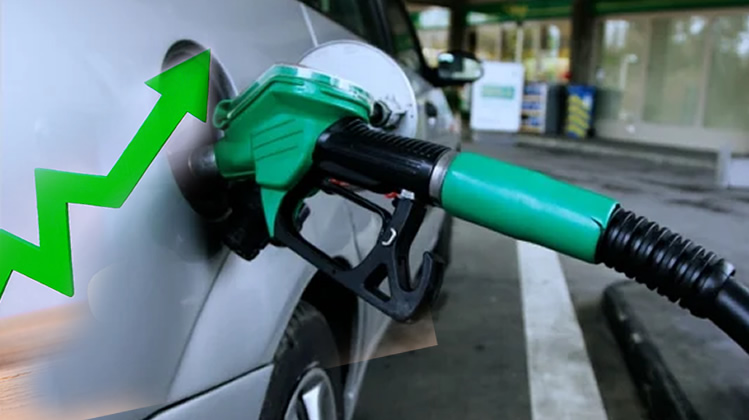
The Federal Government has announced a 30-day discount on petrol sold by the Nigerian National Petroleum Company Limited (NNPCL), with public transport operators to receive priority under the arrangement.
The Minister of Finance and Coordinating Minister of the Economy, Taiwo Oyedele, disclosed this on Thursday during a press briefing on petrol prices and subsidy-related issues in Abuja.
Oyedele said the arrangement was not a return to petrol subsidy, explaining that the government would instead allow petrol to be sold at cost through NNPC.
“We are offering a discount on petrol dispensed by NNPC Limited for the next 30 days in the first instance with priority for public transporters nationwide. So, it’s not a subsidy; the government is just saying we sell to you at cost,” he said.
The announcement comes as petrol prices at NNPC stations vary across the country. NNPC’s latest reported price list puts the pump price at N1,355 per litre in Lagos and Rivers, while Abuja is listed at N1,370 per litre.
More details later…

The recently kidnapped 20 prospective National Youth Service Corps (NYSC) members and one civilian have been rescued by security agencies, including the military, Department of State Services (DSS) and police, in Imo State.
The victims were rescued during an intelligence-led operation involving the security agencies.
The rescued prospective corps members and the civilian are currently receiving medical attention at a DSS facility in the state.
More details later…



-

 ENTERTAINMENT5 days ago
Late Gospel Singer Toluwanisings For Burial Today
-

 POLITICS5 days ago
Lagos 2027: Hamzat Cites People-Centred Leadership, Outlines Blueprint For State’s Future At Lagos Governorship Debate
-

 POLITICS4 days ago
2027: Tinubu Lists Achievements, Seeks Re-election Supports From Ebonyi Voters
-

 POLITICS3 days ago
Dele Alake: No Civilian Government Has Embarked On Reforms As Comprehensive As Tinubu’s Since 1960
-

 NEWS3 days ago
Sanwo-Olu Sacks Gbedegesin, Appoints Akinyemi As Acting LAWMA MD
-

 SPORT5 days ago
DAKAR 2026: Nigeria Win Historic Youth Olympics 100m Golds
-

 BUSINESS5 days ago
Naira Gains 6.3% Against Dollar As Reserves Remain Above $55bn
-

 POLITICS2 days ago
Hamzat’s PROMISE: Putting The Lagosian At The Centre of Governance