



NEWS
Rescue Mission 2.0: Why Governor Dauda Lawal Should Continue Rebuilding The Future Of Zamfara Through Investment in Education


- /home/porsch10/public_html/wp-content/plugins/mvp-social-buttons/mvp-social-buttons.php on line 27
https://porscheclassy.com/wp-content/uploads/2026/04/Dauda-Grad-1000x600.png&description=Rescue Mission 2.0: Why Governor Dauda Lawal Should Continue Rebuilding The Future Of Zamfara Through Investment in Education', 'pinterestShare', 'width=750,height=350'); return false;" title="Pin This Post">
- Share
- Tweet /home/porsch10/public_html/wp-content/plugins/mvp-social-buttons/mvp-social-buttons.php on line 69
https://porscheclassy.com/wp-content/uploads/2026/04/Dauda-Grad-1000x600.png&description=Rescue Mission 2.0: Why Governor Dauda Lawal Should Continue Rebuilding The Future Of Zamfara Through Investment in Education', 'pinterestShare', 'width=750,height=350'); return false;" title="Pin This Post">
By: Bashorun Oladapo Sofowora
Those who know Zamfara State before Governor Dauda Lawal became Governor will appreciate the current situation in the state. The state, which used to be in the rubble, has been reconstructed into a powerhouse within its geographical location and has become an envy of others. All thanks to the visionary rescue mission 1.0 spearheaded by Governor Dauda Lawal, PhD, in 2023, when he was elected Governor of the agrarian and mineral-rich state.
Just three years ago, education in Zamfara State was in a Comatose state. It was nonexistent. No functional primary and secondary schools conducive to learning. The narrative was one of despair: schools as ghost towns, examination halls locked by creditors, and a generation of children seemingly abandoned by systemic neglect. But for Governor Dauda Lawal, a leader who views governance not as a relay race but as a rescue mission, the story has changed with just three years in charge of the affairs of the state.
When he assumed office, the education sector wasn’t just ailing; clinically, it was on life support. Massive debts had piled up, teachers had vanished into thin air, and the number of out-of-school children was skyrocketing on a daily basis. However, two years into the “Lawal era,” the sound of silence in Zamfara’s classrooms has been replaced by the sound of flipping of new textbooks and the scratching of pens on examination answer sheets.
One of the cruellest legacies Governor Lawal inherited was the hostage crisis of student futures. Students could not write exams, classes were dilapidated and qualified teachers. Past administrations had failed to remit examination fees to the West African Examinations Council (WAEC) and the National Examinations Council (NECO). Consequently, thousands of bright Zamfaran students saw their results withheld not because they failed, but because the state failed them. Some had to travel to neighbouring towns like Sokoto, Katsina and Kano to enrol for exams, risking their lives.
In a dramatic move that sent shockwaves through the opposition, Governor Lawal reached into the state’s coffers and cleared the backlog of a staggering ₦1.4 billion to WAEC, covering debts from 2018 to 2022, and a combined payment of over ₦1.34 billion to NECO covering debts from 2014 to 2021. The immediate effect was the release of all previously withheld results, allowing students to finally apply for higher education. Furthermore, the state fully funded the 2024 WAEC examinations, ensuring that no child was barred from sitting for their finals due to a lack of funds.
Governor Lawal, after his swearing in, declared a State of Emergency on Education in November 2023. This meant that governance moved from the air-conditioned offices in Gusau to the muddy fields of rural schools across the state. He rolled his sleeves and got to work almost immediately, fixing the rot he met. Available data from the Zamfara State Government reveals that the state has embarked on the construction and renovation of over 500 schools across all 14 Local Government Areas. This is not a cosmetic paint job; the administration is investing in modern, safe, and dignified learning environments:
Classroom Revolution: Through the UBEC-ZSUBEB Matching Grant and AGILE projects, contracts worth over ₦5.9 billion have been awarded to build schools meeting global standards.
Furniture Supply: The administration has distributed over 12,000 two-seater desks for students and over 1,000 chairs for teachers, ending the era where pupils sat on bare floors to learn.
Recruitment of more teachers and supply of more textbooks: Infrastructure without manpower is a shell. When Governor Lawal looked at the teacher-to-pupil ratio in the state, he saw a crisis. In a decisive move to reverse the brain drain, he approved the massive recruitment of 2,000 qualified teachers.
The recruitment is strategic, the first batch of 500 focuses on critical science subjects (English, Mathematics, Chemistry, Physics), preparing Zamfaran youth for the 21st-century economy. The government is also finalising a 120-day Rapid Intervention Action Plan to audit payrolls, map schools, and secure school environments from illegal encroachment.
For the 2025 fiscal year, Governor Lawal presented a “Rescue Budget 2.0” of N545 billion. The largest single allocation, N79.6 billion, representing 14% of the entire budget, went to Education. For 2026, the proposed budget allocates an additional N65 billion to sustain this momentum. However, a journey to the Renaissance is not complete. It is at this critical inflexion point that the people of Zamfara face a defining choice. Before Governor Lawal, Zamfara was a state where students were barred from exams due to unpaid debts. Today, those chains are broken completely. But the enemy of progress is not just failure; it is interruption. The gains made in education are still fragile and need continuous consolidation. The newly recruited teachers need continuous training and the 500 renovated schools need constant security and maintenance. The unified Education Sector Bill, designed to create a seamless system from early childhood to tertiary level, is still awaiting full legislative maturity.
To stop the “Rescue Mission 2.0” now would be to hand the baton back to those who drove the system into educational bankruptcy. The same political forces that allowed the debt to accumulate to over N2 billion are already regrouping, eyeing 2027. They promise something different, but their records speak of withheld results and abandoned classrooms. Governor Dauda Lawal is not merely constructing classrooms; he is dismantling the architecture of ignorance that held Zamfara backwards for decades. He has proven that with political will, the “Education Governor” can turn around a sector that was declared dead.
To secure this legacy, to ensure that children never again sit on bare floors and to guarantee that WAEC and NECO never again hold Zamfaran results hostage, the mission must continue for a secured future. The vote for continuity is a vote for the future. By re-electing Governor Dauda Lawal, Zamfara will not just be learning to read and write, but also to win in all ramifications and also put the state on a winning streak.


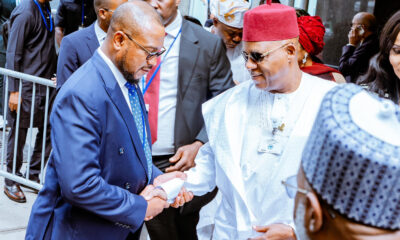




Technology company, Meta revealed that it has removed more than 3.7 million accounts, pages and groups from Facebook and Instagram, in a joint operation targeting scam networks operating in West Africa.
In a web post on Tuesday, Meta said the operation involved 14 other technology companies and law enforcement agencies from 10 countries.
The operation, coordinated by the UK’s National Crime Agency (NCA) in partnership with the US Department of Justice, the Federal Bureau of Investigation (FBI) and other agencies, also led to the identification of more than 30 suspected scam centres.
According to Meta, law enforcement confirmed the arrest of 28 individuals and the rescue of 117 people who had been trafficked and forced to work in scam compounds in Ghana.
The rescued victims were reportedly held against their will in a residential compound, where they suffered malnutrition and physical and psychological abuse.
Meta said most of the accounts, pages and groups it removed appeared to target people in the United States and United Kingdom through profiles impersonating American and British users.
Microsoft also suspended accounts suspected of being linked to the fraudulent activities.
Coinbase, a cryptocurrency exchange, identified more than 65 active scam victims and prevented potential losses exceeding $415,000, according to the statement.
The operation brought together technology companies, including Google, Microsoft, OpenAI, Coinbase, Starlink and Adobe, alongside law enforcement agencies from Nigeria, Ghana, Australia, Canada, New Zealand and India.
Meta said the collaboration enabled participants to share intelligence across digital platforms, jurisdictions and financial systems to identify criminal networks and disrupt their operations.
The fraud schemes targeted by the operation included cryptocurrency investment scams, fake job offers, romance scams, impersonation of law enforcement officers and military personnel, and fraudulent online sales.
The operation also targeted so-called scam recovery schemes, in which fraudsters exploit previous victims by promising to recover stolen money in exchange for upfront payments.
Chris Sonderby, Meta’s vice-president and deputy general counsel, said the operation demonstrated the importance of cooperation between technology companies and law enforcement agencies.
He said the company would continue working with partners to pursue scammers and disrupt their operations wherever they operate.
Nick Sharp, NCA deputy director of fraud, said the collaboration helped authorities target criminals responsible for fraud affecting thousands of victims.
He added that the agency will continue working with international and private-sector partners to tackle fraud networks operating across borders.
The operation comes amid growing concerns over organised online fraud, with criminal networks using scam centres to recruit workers, train them in deception techniques and coordinate fraudulent campaigns against victims around the world.
“Tech companies play a pivotal role in disrupting scam operations. But meaningful progress ultimately depends on real consequences for the criminal organizations behind these schemes,” the statement said.
“This model of industry and law enforcement working side by side delivers those consequences, and Meta and our partners are committed to ensuring its ongoing strength and repeatability.”

Despite opposition from Senate President Godswill Akpabio, who insists that suicide attempt should remain punishable by imprisonment, the Senate has passed for second reading, a bill seeking to establish a national framework for suicide prevention, decriminalise attempted suicide and provide rehabilitation for survivors.
Sponsored by Senator Asuquo Ekpenyong, representing Cross River South, the bill seeks to address what he described as a contradiction in Nigeria’s laws.
Ekpenyong argued that while the National Mental Health Act recognises attempted suicide as a psychiatric emergency requiring treatment, Section 327 of the Criminal Code and Section 231 of the Penal Code still criminalise the act.
He said decriminalisation without accessible care would be incomplete, stressing that suicide has complex causes and requires a humane, health-focused response.
“At the heart of this bill is a simple question: when a Nigerian survives a suicide attempt, should the first response of the state be prosecution or protection?” he asked.
The senator said criminalisation discourages people from seeking help, forces families to conceal suicide attempts and contributes to poor data on the problem.
He warned that continued punishment could create a situation in which people experiencing distress feel compelled to ensure their attempts are fatal to avoid prosecution.
The bill proposes replacing imprisonment with mandatory assessment, referral, treatment and follow-up support. It also provides for crisis helplines, training for police officers, teachers and health workers, public education and a national data system for suicide prevention.
However, Akpabio maintained that attempted suicide should remain a criminal offence, arguing that removing the penalties could encourage the act.
“If you attempt suicide, make sure you die. Anyone who attempts and fails will go to jail,” the Senate President said.
Akpabio added that the issue involves both the Criminal Code and the Penal Code, requiring input from State Houses of Assembly during a public hearing to avoid legal conflicts.
The bill has been referred to the Senate Committees on Judiciary and Health for further legislative action and a public hearing.
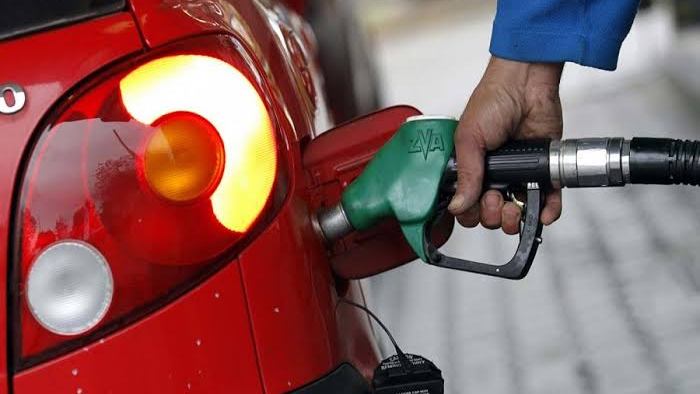
The International Monetary Fund (IMF) has advised the federal government of Nigeria against the return of petrol subsidy.
The Fund recommended targeted support for vulnerable households to cushion the impact of rising energy costs.
They said blanket petrol subsidies are expensive, often benefit higher-income consumers disproportionately, and worsen fiscal pressures amid rising borrowing costs.
The Director of the IMF’s Fiscal Affairs Department, Rodrigo Valdes, stated this during a press briefing on the Fiscal Monitor at the 2026 Annual Meetings of the IMF and World Bank in Bangkok.
His comments followed a question about how the Fund could recommend allowing energy prices to reflect scarcity when higher fuel prices in Nigeria could raise transport costs, worsen inflation, and deepen poverty, particularly as the government faces calls to restore the petrol subsidy ahead of an election year.
“Protecting people is not the same as protecting the price of fuels,” Valdés said.
He said fuel subsidies or measures that prevented prices from fully adjusting to an energy shock had cost countries between 1 per cent and 1.5 per cent of gross domestic product (GDP) in 2026.
He said the government should instead use social safety nets and household data to identify people who need assistance.
The Federal Government recently announced a 30-day petrol discount at Nigerian National Petroleum Company (NNPC) Limited retail stations, with priority for public transport operators, to cushion the impact of rising fuel prices.



-

 NEWS4 days ago
INEC To Drop Last List Of Governorship, State Assembly Candidates October 10
-

 POLITICS1 day ago
Wike Admits Working With APC To Defeat PDP In Edo
-

 NEWS2 days ago
Another Appointee Quits Makinde’s Cabinet Hours After Ex-COS Ogunwuyi’s Resignation
-

 POLITICS3 days ago
2027 Election: Tompolo Urges North To Support Tinubu
-

 NEWS4 days ago
Gov Dauda Lawal Announces Nationwide Nutrition Emergency, National Intervention Fund At Addis Ababa Summit
-

 ENTERTAINMENT4 days ago
Actor Yinka Quadri Reveals Wife Cared for Actresses He Dated
-

 ENTERTAINMENT3 days ago
18th Headies Award Ceremony Postponed To April 2027
-

 POLITICS4 days ago
“Atiku Is Pained And Bitter” – Keyamo Tackles Atiku Over Tinubu’s Criticism