Connect with us


BIG STORY

Nigeria @65: The Worst Is Over, Hope Rising For Nigeria — President Tinubu

Published

on

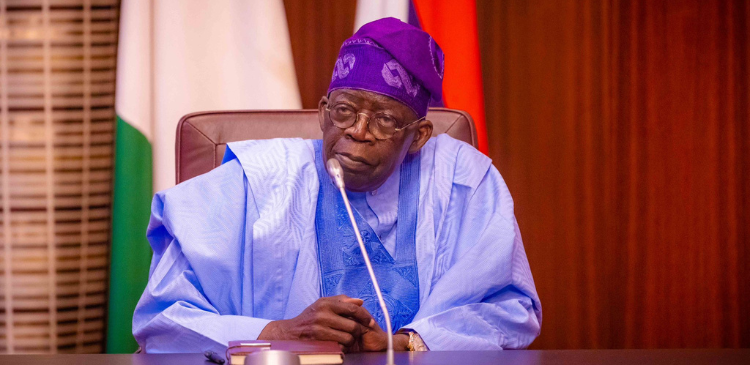
President Bola Tinubu on Wednesday declared that Nigeria’s most difficult period is now behind it, assuring citizens that the country is on a path toward economic recovery and growth.

In a national broadcast to mark Nigeria’s 65th Independence anniversary, Tinubu stated that the government’s reforms, initiated after he assumed office in May 2023, are now beginning to yield visible results. He said the administration had opted for “the path of tomorrow over the comfort of today,” and is now seeing “yesterday’s pains” give way to “relief.”

The President acknowledged the endurance of Nigerians through recent economic hardships and pledged continued dedication to national development, saying he would “justify the confidence” citizens had placed in him.

Reflecting on Nigeria’s history, Tinubu praised the resilience of the country, which, he said, had survived a civil war, years of military rule, and political instability. He described the 65th anniversary as a moment to honour the sacrifices of the nation’s founding fathers and to recognise the progress made since Independence in 1960.

Highlighting achievements in human capital development, Tinubu noted the expansion of educational institutions from only two tertiary institutions at independence to a combined total of 693 institutions by 2024, including universities, polytechnics, and colleges of education.

The President defended key economic policies undertaken by his administration, including the removal of fuel subsidies and the unification of foreign exchange rates. He said these moves were essential to correct distortions in the economy and stop rent-seeking practices that had favoured only a minority.

According to Tinubu, the reforms have redirected national resources towards more inclusive development, allowing for increased investment in infrastructure, education, healthcare, agriculture, and national security.

He outlined a list of 12 economic milestones achieved within his two years and four months in office. Among them, he reported a 4.23% GDP growth in Q2 2025—the fastest in four years—and a decline in inflation to 20.12%, the lowest in three years.

Further economic indicators shared by the President included a surge in non-oil revenue, a sharp drop in debt service-to-revenue ratio, and a rise in foreign reserves to $42.03 billion. Tinubu also noted that the country’s tax-to-GDP ratio had grown to 13.5%, with further gains expected when a new tax law takes effect in January.

Nigeria, he said, has recorded trade surpluses for five consecutive quarters, with manufactured exports growing by 173%. He added that non-oil exports now account for 48% of total trade, indicating progress in economic diversification.

On the oil and gas front, Tinubu stated that crude oil production had rebounded to 1.68 million barrels per day, supported by improved security and stakeholder management. He also announced the resumption of domestic refining of petroleum products and Nigeria’s emergence as a leading exporter of aviation fuel on the continent.

The President said the naira had stabilised following reforms in the foreign exchange market. He pointed to reduced volatility and narrowing of the gap between official and parallel market rates as signs of improved currency stability. He also mentioned a boost in investor confidence, citing a booming stock market, improved sovereign credit ratings, and the Central Bank’s first interest rate cut in five years.

On security, Tinubu stated that the military and other security agencies were “winning the war” against terrorism, banditry, and violent crime. He said “peace has returned” to many communities, particularly in the North-East and North-West, enabling the safe return of thousands of displaced persons.

He pledged to prioritise food security and invest in agriculture to reduce food prices. He also emphasised the need for critical infrastructure such as roads, schools, hospitals, ports, and airports to support future generations.

Turning to the youth, Tinubu described them as the “greatest assets of this blessed country” and highlighted initiatives aimed at empowering young Nigerians. These include the Nigeria Education Loan Fund, which has provided financial assistance to over 500,000 students, and credit programmes such as Credicorp and YouthCred, which offer loans for housing, digital devices, and post-NYSC resettlement.

He also cited the Investment in Digital and Creative Enterprises (iDICE) programme, valued at $600 million, which is supported by international development partners and aims to boost innovation and enterprise in the digital and creative sectors.

The President reported that under the national social investment programme, N330 billion had been disbursed to eight million vulnerable households, and significant work is ongoing to expand the country’s transport network, including road, rail, air, and seaport infrastructure. Major projects such as the Lagos-Calabar Coastal Highway and the Eastern Rail Project are currently underway.

Acknowledging the challenges that have accompanied reforms, Tinubu reiterated his earlier position that these were “temporary pains” necessary to prevent economic collapse. He said inflation and the high cost of living remain concerns, but insisted that “the alternative of allowing our country to descend into economic chaos or bankruptcy was not an option.”

Concluding his third Independence Day broadcast as President, Tinubu issued a rallying call for national productivity and unity. He encouraged Nigerians to support local industries, stating, “Let us be a nation of producers, not just consumers. Let us farm our land and build factories to process our produce.”

He also called for tax compliance and greater civic responsibility, adding, “Let us patronise ‘Made-in-Nigeria’ goods. I say Nigeria first. Let us pay our taxes. Finally, let all hands be on deck.”

With a message of optimism, Tinubu assured Nigerians that “the dawn of a new, prosperous, self-reliant Nigeria is here,” asserting that with divine support, the country would continue on its path to renewal.

BIG STORY

We Will Get It Right With Security —- Obasa

Published

on

Speaker of the Lagos State House of Assembly, Rt. Hon Mudashiru Obasa has affirmed that with the support of all Nigerians, President Bola Ahmed Tinubu would get it right with his concerted reengineering of the nation’s security architecture.

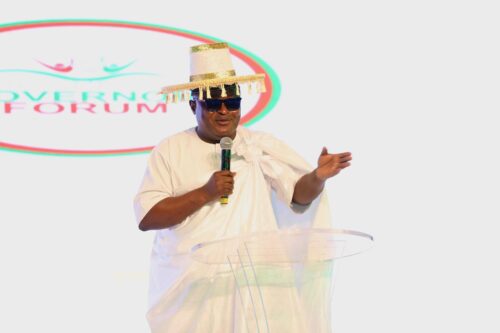
Speaking at the APC Stakeholders and Progressives Governors Forum meeting held Saturday, December 6, at the Eko Hotel and Suites, Victoria Island, Lagos, Obasa said he did not doubt that President Tinubu and the All Progressives Congress, APC-led federal government, would do all that they can to ensure that they secure the life and property of every Nigerian.

According to Obasa, “We have seen the president in action and how he is innovating and working hard to resolve our many challenges, especially insecurity, and we believe he will get it done. He’s still the man who can do it. That is why we must do everything within our powers to ensure that he is returned in 2027.”

Speaker Obasa teed off with robust commendations for the governors for their shared dedication and commitment to helping President Tinubu resolve Nigeria’s insecurity problem.

He urged them to galvanise their people when they return to their various states to be a part of the solution to Nigeria’s security challenge, and not stay aloof.

Speaker Obasa added that security is not just about the governors, “It is about everybody. We must all be involved in fighting this problem. We must give the President all the support that we can so that he will succeed in his attempts to redirect the trajectory of Nigeria.”

The PGF had converged on Lagos between December 5 and 6 for a meeting convened by the Chairman of the Forum, Senator Hope Uzodimma, Governor of Imo State, and hosted by Governor Babajide Sanwo-Olu of Lagos State.

In a communique read by Governor Uzodinma, the governors passed a vote of confidence on President Tinubu’s administration, and pledged support for his Renewed Hope Agenda and re-election in 2027.

The Forum, according to Governor Uzodinma, reviewed the security situation across the country and expressed appreciation for the improved coordination between federal, state, and local security structures, as well as the courage and sacrifices of security agencies and community volunteers. They also resolved to strengthen local security architecture in all the states.

Governor Uzodinma said that their two-day engagement provided an opportunity to review the nation’s current trajectory, deepen coordination among the governors, and reaffirm their firm support for the Renewed Hope Agenda of President Tinubu. “The PGF commended President Bola Ahmed Tinubu for his steadfast commitment to stabilizing the economy, strengthening national security, and laying the foundations of sustainable growth through the Renewed Hope Agenda,” he said.

Continue Reading

BIG STORY

Nigerian Army Suspends Officer Retirements Amid National Security Emergency

Published

on

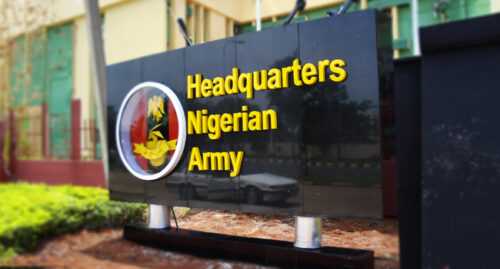
The Nigerian Army has suspended all statutory and voluntary retirements for certain categories of officers following the nationwide security emergency declared by President Bola Tinubu.

An internal memo dated December 3, signed by Maj. Gen. E. I. Okoro on behalf of the Chief of Army Staff, and sighted by our correspondent, stated that the suspension of retirements is aimed at retaining manpower, experience, and operational capacity as the Armed Forces expand in response to rising insecurity.

The document, referencing the Harmonized Terms and Conditions of Service Officers (HTACOS) 2024, noted that although officers are ordinarily expected to retire upon reaching their age limit, completing 35 years of service, or after repeated promotion or conversion failures, service extension is permissible under Paragraph 3.10(e) in the interest of the military.

The memo partly read: “Military service of a commissioned officer entails a period of unbroken service in the AFN from the date of enlistment or commissioning to the date of retirement. The period of service is determined by conditions enshrined in the HTACOS Officers 2024. These include attainment of age ceilings on various ranks, a maximum length of service of 35 years, and other criteria provided in Paragraphs 11.02(d) and 17.15, among extant regulations.

“Notwithstanding these provisions, Chapter 3.10(e) of HTACOS Officers 2024 allows for the extension of service to officers in the interest of the service.

“The President and Commander-in-Chief declared a nationwide security emergency on November 26, mandating the expansion of the AFN and other security agencies. In line with this, and to rapidly expand manpower, it has become expedient to temporarily suspend all statutory and voluntary retirements from the Nigerian Army with immediate effect.”

According to the circular, the temporary suspension applies to officers who fall into the following categories: officers who failed promotion examinations three times; officers passed over three times at promotion boards; officers who have reached the age ceiling for their ranks; officers who failed conversion boards three times; and officers who have attained 35 years of service.

“Officers in these categories who are not interested in an extension of service are to continue with the normal retirement procedure. Officers desirous of extension should note that upon extension, they are not eligible for career progression, including promotion, career courses, NA sponsorship, self-sponsored courses, secondment, or extra-regimental appointments,” the memo stated.

It directed all commanders to disseminate the directive and manage morale, adding that the policy would be reviewed as the security situation improves.

President Bola Tinubu, on November 26, 2025, declared a nationwide security emergency and directed the military, police, and intelligence agencies to expand recruitment and deploy thousands of additional personnel.

Continue Reading

BIG STORY

Senate Orders Nationwide Crackdown As Lead Poisoning Hits Ogijo Lagos

Published

on

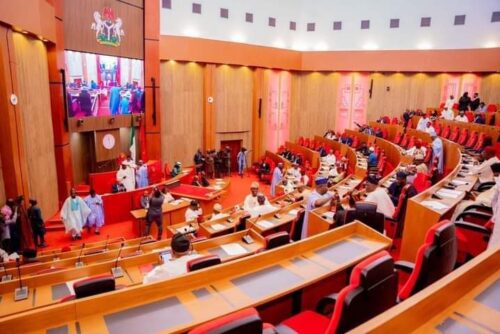
The Senate on Thursday expressed grave alarm over a fast-spreading lead-poisoning crisis in Ogijo, a densely populated community straddling the boundary between Ikorodu (Lagos) and Ogun East Senatorial District.

It described it as a full-blown environmental and public-health emergency that threatened thousands of lives.

The motion, jointly sponsored by Mukhail Adetokunbo Abiru (Lagos East) and Gbenga Daniel (Ogun East), was brought under Matters of Urgent Public Importance pursuant to Orders 41 and 51 of the Senate Standing Orders, 2023 (as amended).

Lawmakers cited scientifically verified reports of extreme lead contamination linked to a cluster of used lead-acid battery recycling factories operating in the area for years.

According to the Senate, the crisis had left residents battling persistent headaches, abdominal pain, memory loss, seizures, and developmental delays in children, symptoms strongly associated with chronic lead exposure.

The chamber noted with concern that the Federal Government had already begun clampdowns, with the Minister of State for Labour and Employment, Nkeiruka Onyejeocha, shutting down seven battery-recycling factories and ordering a temporary halt to lead-ingot exportation pending safety investigations.

Senators said they were “alarmed that residents have for several years complained of persistent headaches, abdominal pains, loss of memory, seizures, cognitive decline, and developmental delays in children, symptoms strongly associated with chronic lead exposure.”

Despite years of community protests, the smelters allegedly continued operating openly, releasing toxic fumes and particulate dust into surrounding homes, markets and playgrounds.

“It is regrettable that despite years of community outcry, smelter furnaces continued operating, discharging toxic fumes from melted batteries directly into surrounding neighbourhoods. We are concerned that while some factory operators deny wrongdoing, community exposure remains extreme.

“The Senate acknowledges and commends the proactive efforts of the Lagos and Ogun State Governments and their relevant ministries and agencies for conducting early inspections, raising community awareness and working with federal authorities to contain the exposure,” lawmakers said.

The chamber further cited disturbing findings by independent testing commissioned by The Examination and The New York Times, which revealed severe contamination in both residents’ blood samples and soil within the industrial cluster.

Some environmental samples, senators noted, showed lead levels “up to 186 times the global maximum safety threshold.”

A major dimension of the scandal, lawmakers said, was that lead processed in Ogijo had already been traced into international supply chains, reaching global battery and automobile manufacturers who either did not address the findings or relied solely on assurances from Nigerian suppliers.

The Senate lamented that while some factory operators deny wrongdoing, community exposure remains dangerously high amid weak accountability and gaps in Nigeria’s regulatory frameworks.

Senators nonetheless praised emergency actions taken by the Lagos and Ogun state governments, commending their early inspections, public-awareness campaigns and support for affected families.

Citing Sections 14(2)(b) and 20 of the 1999 Constitution, the Senate emphasised the government’s responsibility to safeguard citizens’ welfare and ensure a safe environment.

Following extensive deliberations, the Senate resolved to commend both the Federal Government and the Lagos and Ogun State Governments for their swift intervention in shutting down non-compliant lead-recycling factories.

Lawmakers urged continued enforcement, including factory closures, export suspensions, prosecution of violators, and strengthened industrial safety monitoring.

The chamber mandated the Federal Ministry of Health and the Nigeria Centre for Disease Control (NCDC) to deploy emergency medical teams to Ogijo to provide free toxicology screenings, blood-lead management, chelation therapy, and ongoing treatment for affected children and adults.

Simultaneously, the Federal Ministry of Environment and NESREA were directed to carry out comprehensive environmental remediation, mapping soil, groundwater, air, and household dust contamination.

The Senate also called on the Federal Ministry of Solid Minerals and relevant regulatory agencies to enforce strict compliance standards for battery-recycling and lead-processing operations nationwide.

Additionally, it recommended establishing a National Lead Poisoning Response and Remediation Task Force within NEMA and directed the Committee on Legislative Compliance to monitor progress and report back within six weeks.

The Senate described the Ogijo crisis as a preventable tragedy that must serve as a national wake-up call on industrial pollution, regulatory failure and the urgent need to protect vulnerable communities from hazardous waste.


Continue Reading


Join Us On Facebook

Most Popular


Warning: Undefined array key "slug" in /home/porsch10/public_html/wp-includes/class-wp-theme-json.php on line 2117

Warning: Undefined array key "slug" in /home/porsch10/public_html/wp-includes/class-wp-theme-json.php on line 2117

Warning: Undefined array key "slug" in /home/porsch10/public_html/wp-includes/class-wp-theme-json.php on line 2117