Warning: Undefined array key "slug" in /home/porsch10/public_html/wp-includes/class-wp-theme-json.php on line 2102

Warning: Undefined array key "slug" in /home/porsch10/public_html/wp-includes/class-wp-theme-json.php on line 2102

Warning: Undefined array key "slug" in /home/porsch10/public_html/wp-includes/class-wp-theme-json.php on line 2102
Federal Government Plans Petrol Alternative, To Crash Fuel Price To N97
Connect with us


BIG STORY

Federal Government Plans Petrol Alternative, To Crash Fuel Price To N97

Published

on

The Federal Government on Thursday said it would crash the price of petrol by providing Compressed Natural Gas as an alternative source of fuel for vehicles nationwide.

The CNG is a fuel that can be used in the place of Premium Motor Spirit, popularly known as petrol. It can also be used in the place of diesel and Liquefied Petroleum Gas.

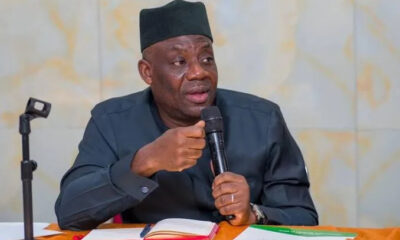
Speaking on what the Federal Ministry of Petroleum Resources would work on this year during a press conference in Abuja, the Minister of State for Petroleum Resources, Timipre Sylva, stated that the Federal Government was working for the passage of the Petroleum Industry Bill before May.

He further stated that moves by the Federal Government to recover $62bn from international oil companies were seemingly impossible, as no such money was sitting anywhere to be harvested by the country.

Sylva further declared that the Nigerian oil and gas sector was retrogressing, particularly when compared to the oil sector of other nations.

He stated that the use of petrol had caused a serious drain on the finances of the Federal Government as a result of the continued subsidy on the commodity.

Explaining how the government intends to crash petrol prices, Sylva said, “When you say we are thinking about reducing the pump price of petrol, I could easily say yes. Why I could say yes is because we are looking at giving the masses an alternative.

“Today, we are using the PMS but what we want to do, going forward is to see that we are able to move the masses to the CNG. If we take all transport vehicles to the use of the CNG, you would have impacted the poor positively.”

Sylva said findings by the government showed that the CNG cost less than the subsidized PMS and that once the CNG was fully deployed, the price of fuel would crash.

“The subsidized rate of the PMS per litre is N145 but the CNG cost between N95 to N97 per litre and that is why I said that we want to reduce the cost of fuel,” he stated.

He said Nigeria had abundant gas and that deploying the CNG would not be tough for the country.

“Nigeria’s gas reserve is significant. Nigeria currently has estimated 202TCF (trillion standard cubic feet) of gas, with a projection of 600TCF,” Sylva said.

On the PIB, the minister said, “We are optimistic that both the Petroleum Industry Governance Administration and Host Communities Bill, on the one hand, and the Petroleum Industry Fiscal Bill, on the other hand, will be passed within the first anniversary of the second tenure of this administration.”

Commenting on moves by the Federal Government to recover $62bn from international oil companies based on an October 17 judgment of the Supreme Court, Sylva stated that it was practically impossible to recoup such funds from the IOCs.

He declared that no $62bn was anywhere for release by the IOCs and explained that it was best for the government to sit and discuss with the oil firms on how to go about the issue.

The Federal Government had through the Office of the Attorney-General of the Federation written to the IOCs, demanding various sums of money on the basis of the Supreme Court judgment.

The court had ordered the Federal Government to recoup all revenues lost to oil-exploring and exploiting companies due to the wrong profit-sharing formula since August 2003.

Sylva said, “Yes there was a provision in the amended Deep Offshore Act, but when we had crude oil prices above $20 per barrel, the Federal Government should have asked for some form of an increase in its take.

“Unfortunately we didn’t activate that aspect. You will not blame the Federal Government or the oil companies for not activating that aspect of the Act. You will agree that $62bn could not have been sitting somewhere for us to harvest; it is not possible.”

The minister stated that Nigeria was retrogressing in the oil sector, particularly when compared to other nations that started at similar times with Nigeria in the oil and gas business.

BIG STORY

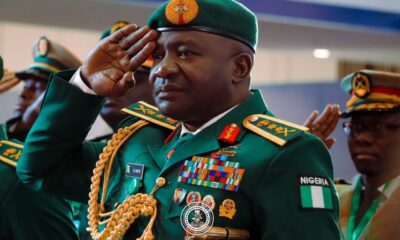
Some Politicians Funding Terrorism In Nigeria, Says Ex-CDS Lucky Irabor

Published

on

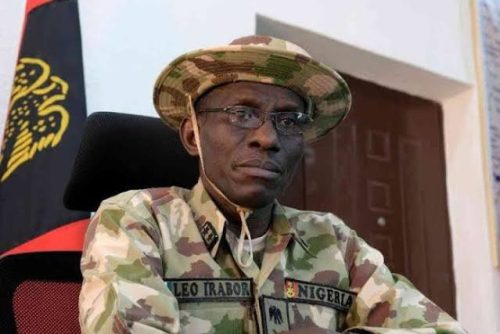
Lucky Irabor, ex-chief of defence staff (CDS), says some political actors are involved in terrorism financing in Nigeria.

On November 30, Daniel Bwala, Special Adviser to President Bola Tinubu on policy communication, said the federal government would soon reveal the identities of terrorism sponsors.

Bwala said the government is “making far-reaching decisions”, adding that the outcome would be noticeable shortly.

The presidential aide said terrorism is a global problem, adding that “the demand is now on the world governments to see how they can cooperate with Nigeria”.

Speaking on ‘Politics Today’, a Channels Television programme, on Monday, Irabor said certain politicians exploit insecurity for personal advantage.

Asked directly if politicians fund terror networks, he replied with “some politicians”.

Irabor said some party chieftains capitalize on instability to create an impression that they can offer better leadership.

“Some politicians have now taken advantage of the state of under-governance, as it were, to perhaps gain some form of leverage to give the impression that they can do better,” he said.

“Others perhaps want to give an impression they can do better, to score the point that there is poor governance… they could also instigate a certain crisis one way or the other.

“Those who believe that it’s purely political, maybe, have their argument from that angle. For me, it will be wrong.”

Irabor also addressed criticisms of the federal government’s refusal to publish names of alleged terror financiers.

Continue Reading

BIG STORY

JUST IN: Tinubu Nominates Ex-CDS Christopher Musa As Defence Minister

Published

on

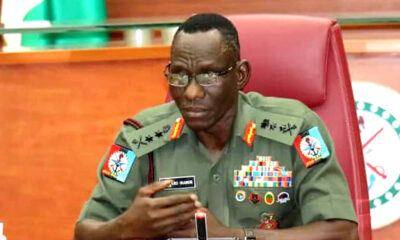
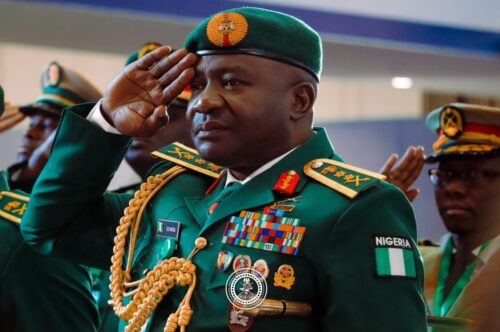
President Bola Tinubu has nominated a former Chief of Defence Staff, General Christopher Musa, as the new Minister of Defence.

The nomination was contained in a letter sent to Senate President Godswill Akpabio on Tuesday, announcing Musa as the replacement for Alhaji Mohammed Badaru, who resigned from the position on Monday due to health reasons.

In his letter to the Senate, the President expressed confidence in Musa’s capacity to lead the Defence Ministry and strengthen Nigeria’s security framework.

The nomination was confirmed in a statement issued by the President’s Special Adviser on Information and Strategy, Bayo Onanuga.

The statement added, “General Musa, 58, on December 25, is a distinguished soldier who served as Chief of Defence Staff from 2023 until October 2025. He won the Colin Powell Award for Soldiering in 2012.

“Born in Sokoto in 1967, General Musa received his primary and secondary education there before attending the College of Advanced Studies in Zaria. He graduated in 1986 and enrolled at the Nigerian Defence Academy the same year, earning a Bachelor of Science degree upon graduation in 1991.

“General Musa was commissioned into the Nigerian Army as a Second Lieutenant in 1991 and has since had a distinguished career. His appointments include General Staff Officer 1, Training/Operations at HQ 81 Division; Commanding Officer, 73 Battalion; Assistant Director, Operational Requirements, Department of Army Policy and Plans; and Infantry Representative/Member, Training Team, HQ Nigerian Army Armour Corps.

“In 2019, he served as Deputy Chief of Staff, Training/Operations, Headquarters Infantry Centre and Corps; Commander, Sector 3, Operation Lafiya Dole; and Commander, Sector 3 Multinational Joint Task Force in the Lake Chad Region.

“In 2021, General Musa was appointed Theatre Commander, Operation Hadin Kai. He later became Commander of the Nigerian Army Infantry Corps before being appointed Chief of Defence Staff by President Tinubu in 2023.”

Continue Reading

BIG STORY

South Africa Begins Use Of Groundbreaking HIV Prevention Drug

Published

on

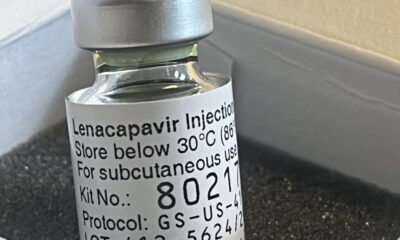
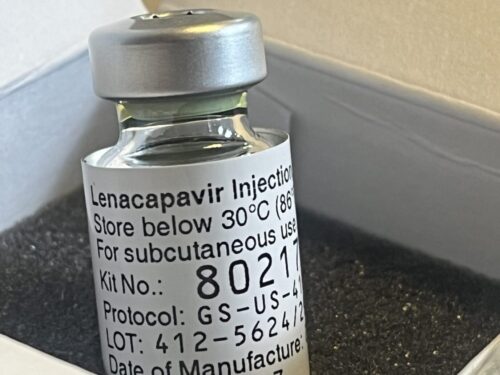
South Africa has begun administering lenacapavir, a long-acting HIV prevention drug, to selected individuals as part of a new study led by Wits RHI at the University of the Witwatersrand and funded by Unitaid.

The move comes just five months after the US Food and Drug Administration granted its first approval for the drug’s use in HIV prevention.

Lenacapavir has shown remarkable results in clinical trials, offering near-complete protection against HIV and outperforming existing pre-exposure prophylaxis (PrEP) options.

The injectable drug is taken twice a year and was initially projected to cost about $28,000 per user annually.

However, a pricing deal brokered by the Clinton Health Access Initiative (CHAI), working alongside Dr Reddy’s Laboratories, Unitaid, the Gates Foundation, and Wits RHI, has slashed the cost to about $40 — a reduction aimed at making the drug affordable in low- and middle-income countries.

In a statement on Monday, Unitaid said the study will provide the Department of Health with the evidence they need to adapt quickly and in real time as they integrate lenacapavir into existing HIV prevention programs.

“These early learnings on real-world use will also apply to other countries adopting lenacapavir,” the statement reads.

“Making new medicines widely available in low- and middle-income countries can take up to a decade or longer as regulatory approvals must be obtained, manufacturing must be secured, and prices must come down.

“Global momentum behind lenacapavir has set the drug on a rapid trajectory: South Africa registered the drug in record time in late October, followed by Zambia in November, and the first doses have already been delivered in Zambia and Eswatini through The Global Fund and PEPFAR. Broader rollout in early adopter countries is expected in early 2026.”

Aaron Motsoaledi, South Africa’s minister of health, said the country is working with relevant stakeholders to make lenacapavir available to the most vulnerable populations who are at higher risk of HIV infections.

“These early efforts from Unitaid and Wits RHI will help us fine-tune how lenacapavir is delivered through our health system so we can reach as many people as possible with this new Pre-Exposure Prophylaxis (PrEP) option, especially adolescent girls, young women, and pregnant and breastfeeding women,” he said.

In Brazil, a similar study led by Fiocruz is also underway.

Insights and tools from the Fiocruz study in Brazil will help guide rollout strategies within the country and across Latin America.

Continue Reading


M


Join Us On Facebook

Most Popular