Warning: Undefined array key "slug" in /home/porsch10/public_html/wp-includes/class-wp-theme-json.php on line 2102

Warning: Undefined array key "slug" in /home/porsch10/public_html/wp-includes/class-wp-theme-json.php on line 2102

Warning: Undefined array key "slug" in /home/porsch10/public_html/wp-includes/class-wp-theme-json.php on line 2102
Corrupt Politicians Should Not Get Any Serious Punishment, They "Still And Share With The People" --- Ndume
Connect with us


BIG STORY

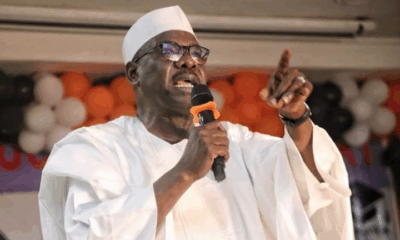
Corrupt Politicians Should Not Get Any Serious Punishment, They “Steal And Share With The People” — Ndume

Published

on

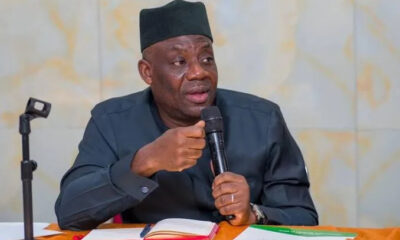
Ali Ndume, the Chief Whip of the Senate, has explained the difference between corruption by politicians and other people.

Ndume said corruption by Nigerian politicians should not warrant any serious punishment, noting that it is People-Driven.

The senator admitted that politicians “steal and share with the people”.

He stated this on Tuesday when he featured on Channels TV Politics Today while speaking on the death penalty as the deterrent for those caught with drugs.

He said when politicians’ corruption is compared to others, it is a “small one’

He stated, “If you compare us, politicians, to all the corruption, it is very small. Our corruption is people-driven. If you steal it, you will go and share it with the people. If you don’t, you are not coming back for four years. There is no reason for stealing.

“I have been to the National Assembly, I can’t say because we are on TV now and not tell the truth. If the death penalty is supposed to be included in corruption, I will support it but you don’t go and kill someone that stole one million or one billion, no. But someone who steals one trillion of government money should be killed.

The senator said he supports death punishment for drug dealers.

“The death penalty is the best deterrent for those being caught for drugs. If you do drugs, you are killing people.

“In fact, that means you have destroyed the lives of so many people and killed so many people,” he said.

Recently, the Senate passed a bill, the National Drug Law Enforcement Agency Act (Amendment Bill) 2024 passed by the Senate.

The bill prescribed death penalty for persons found guilty of trading in hard drugs and narcotics.

This has, however, been debated and faulted by many stakeholders on whether or not President Bola Tinubu should accent the bill.

On Saturday, some legal practitioners expressed different opinions on the debate over the bill. Some of them urged President Bola Tinubu not to assent to the bill passed by the Senate while others pressed for it to be signed into law.

Some of the lawyers stressed that the death penalty was not a solution to drug trafficking and other drug-related offences in the country.

BIG STORY

South Africa Begins Use Of Groundbreaking HIV Prevention Drug

Published

on

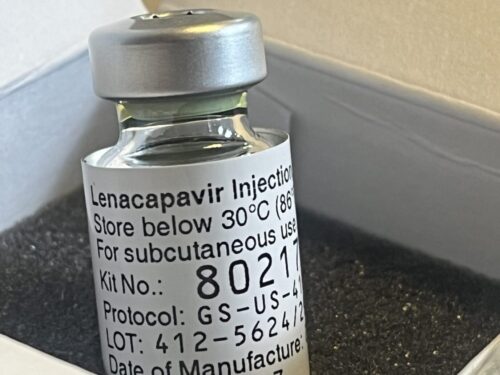
South Africa has begun administering lenacapavir, a long-acting HIV prevention drug, to selected individuals as part of a new study led by Wits RHI at the University of the Witwatersrand and funded by Unitaid.

The move comes just five months after the US Food and Drug Administration granted its first approval for the drug’s use in HIV prevention.

Lenacapavir has shown remarkable results in clinical trials, offering near-complete protection against HIV and outperforming existing pre-exposure prophylaxis (PrEP) options.

The injectable drug is taken twice a year and was initially projected to cost about $28,000 per user annually.

However, a pricing deal brokered by the Clinton Health Access Initiative (CHAI), working alongside Dr Reddy’s Laboratories, Unitaid, the Gates Foundation, and Wits RHI, has slashed the cost to about $40 — a reduction aimed at making the drug affordable in low- and middle-income countries.

In a statement on Monday, Unitaid said the study will provide the Department of Health with the evidence they need to adapt quickly and in real time as they integrate lenacapavir into existing HIV prevention programs.

“These early learnings on real-world use will also apply to other countries adopting lenacapavir,” the statement reads.

“Making new medicines widely available in low- and middle-income countries can take up to a decade or longer as regulatory approvals must be obtained, manufacturing must be secured, and prices must come down.

“Global momentum behind lenacapavir has set the drug on a rapid trajectory: South Africa registered the drug in record time in late October, followed by Zambia in November, and the first doses have already been delivered in Zambia and Eswatini through The Global Fund and PEPFAR. Broader rollout in early adopter countries is expected in early 2026.”

Aaron Motsoaledi, South Africa’s minister of health, said the country is working with relevant stakeholders to make lenacapavir available to the most vulnerable populations who are at higher risk of HIV infections.

“These early efforts from Unitaid and Wits RHI will help us fine-tune how lenacapavir is delivered through our health system so we can reach as many people as possible with this new Pre-Exposure Prophylaxis (PrEP) option, especially adolescent girls, young women, and pregnant and breastfeeding women,” he said.

In Brazil, a similar study led by Fiocruz is also underway.

Insights and tools from the Fiocruz study in Brazil will help guide rollout strategies within the country and across Latin America.

Continue Reading

BIG STORY

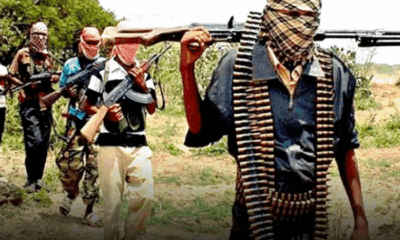
It’s Impossible For Repentant Boko Haram Members To Join Military – Ex-CDS Irabor

Published

on

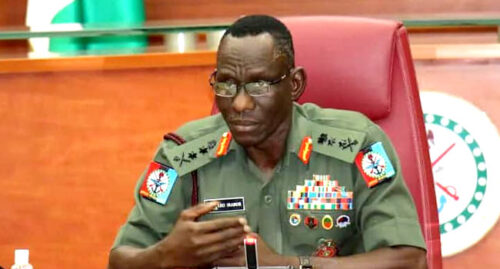
Former Chief of Defence Staff, Retired General Lucky Irabor, has dismissed the common perception that repentant Boko Haram terrorists are being recruited into the Nigerian military.

Speaking as a guest on Channels Television’s Politics Today on Monday, General Irabor, who wondered where people got that impression from, insisted that recruitment of repentant terrorists into the military “does not exist.”

“It has always been a burden for me, where we got this impression from. How can they be recruited? This does not exist,” General Irabor said.

He further explained that, having served at the top echelon of the Nigerian military for many years, it is practically impossible for repentant terrorists to find their way into the system.

“Before I became CDS, I was Theatre Commander, Operation Lafiya Dole. From there, I crossed over to become Force Commander, Multinational Aid on Taskforce. When I left, I became Chief of Defence Training and Operations, overseeing all that.

“And then I became Theatre Commander and later got appointed as CDS, a position I spent two and a half years in. How could it be? Where people got that impression, I cannot tell.”

“It is impossible. Besides, you can’t come into the military if those in your local government have not actually sanctioned you,” he added.

He noted that Operation Safe Corridor handles the deradicalisation of low-risk arrested terrorists and facilitates their reintegration into society.

While acknowledging inconsistencies in handling insecurity in the country, General Irabor rejected the notion that these challenges result from a failure on the part of security operatives.

He noted that there are gaps that need to be addressed to improve the fight against insecurity, chief among them being manpower and equipment.

The former military chief said that addressing insecurity is not solely about spending money, arguing that the volume of funds expended does not necessarily translate to efficiency.

He emphasized the importance of taking time to listen and understand the problems in order to address them effectively.


Continue Reading

BIG STORY

FG Offers 50 Oil Blocks, Targets $10bn Investments In 2025 Licensing Round

Published

on

The Nigerian Upstream Petroleum Regulatory Commission (NUPRC) has officially launched the 50-oil-block 2025 licensing round portal, with a view to attracting fresh investments worth $10 billion.

The round is also expected to add approximately two billion barrels to the national oil reserves over the next decade.

The Commission Chief Executive, Engineer Gbenga Komolafe, said at a press conference on Monday, that 50 oil and gas blocks are on offer across onshore, swamp/shallow water, frontier basins, and deepwater terrain.

The breakdown of the blocks includes 15 onshore blocks, 19 shallow-water blocks, 15 frontier assets, and 1 deepwater block.

Engineer Komolafe noted that when fully developed, these blocks can deliver an estimated 400,000 barrels per day.

The NUPRC outlined the key objectives of the 2025 Licensing Round, which include boosting Nigeria’s reserves, increasing production capacity, expanding gas utilisation, and creating thousands of jobs across the value chain.

Other key objectives of the Round were listed as enhancing indigenous participation and reinforcing Nigeria’s commitment to transparency in line with the Extractive Industries Transparency Initiative (EITI) principles.


Continue Reading


M


Join Us On Facebook

Most Popular