



BUSINESS
ACAMB Advises Bank Customers Against Phishing Scams, Urges Protection of Sensitive Information


- /home/porsch10/public_html/wp-content/plugins/mvp-social-buttons/mvp-social-buttons.php on line 27
https://porscheclassy.com/wp-content/uploads/2026/10/ACAMB.jpg&description=ACAMB Advises Bank Customers Against Phishing Scams, Urges Protection of Sensitive Information', 'pinterestShare', 'width=750,height=350'); return false;" title="Pin This Post">
- Share
- Tweet /home/porsch10/public_html/wp-content/plugins/mvp-social-buttons/mvp-social-buttons.php on line 69
https://porscheclassy.com/wp-content/uploads/2026/10/ACAMB.jpg&description=ACAMB Advises Bank Customers Against Phishing Scams, Urges Protection of Sensitive Information', 'pinterestShare', 'width=750,height=350'); return false;" title="Pin This Post">
The Association of Corporate Communication and Marketing Professionals in Banks (ACAMB) has urged bank customers to remain vigilant against phishing scams and other forms of cyber fraud, warning that criminals are increasingly using fake bank alerts, cloned websites and impersonation accounts to steal sensitive financial information.
The warning follows a fraudulent text message impersonating various banks. FactCheckAfrica debunked the message, finding that the link it contained led to a cloned internet banking website designed to steal customers’ login credentials, BVNs, card details and transaction PINs.
The incident highlights the risks associated with digital banking fraud in Nigeria. In June, Wema Bank suspended its engagements on X, (formerly known as Twitter) amid reports of more than 70 fake accounts impersonating the bank and its ALAT platform. In August, Zenith Bank Plc disclosed that it was investigating unauthorised access to customer data linked to a global cyberattack.
ACAMB President, Jide Sipe, warned that fraudsters were increasingly adopting sophisticated methods to impersonate trusted banking brands and steal customers’ personal information, making their schemes difficult to distinguish from legitimate communications.
“When a scam message carries your name, your phone number or your bank’s logo, it looks real. That is exactly why customers must slow down. No bank in Nigeria will ask you to confirm your PIN, password, OTP or BVN through a link,” Sipe said.
Sipe acknowledged the efforts of banks to strengthen fraud detection and customer protection, alongside regulatory measures introduced by the Central Bank of Nigeria’s mandatory cybersecurity self assessment guide. He stressed, however, that these efforts must be complemented by customer awareness and vigilance, particularly when handling requests for sensitive banking information.
“Banks can strengthen their security systems, but fraudsters continue to find ways to exploit unsuspecting customers. We must all remain vigilant. Always pause, verify requests through official channels and report anything suspicious before taking action,” he added.
Sipe urged customers to avoid clicking links in unsolicited messages asking them to verify, reactivate or secure their bank accounts. He also warned against sharing personal identification numbers (PINs), passwords, one-time passwords (OTPs), card verification values (CVVs) or BVNs in response to suspicious requests.
Customers should verify such requests directly with their banks through official mobile applications, verified social media accounts or published customer service numbers. Anyone who has entered banking details on a suspicious website should contact their bank immediately to secure their account and block affected cards where necessary.
ACAMB reaffirmed its commitment to working with member banks, regulators and the media to raise awareness of cyber fraud and promote safer digital banking practices as the use of online financial services continues to expand across Nigeria.





Nigeria paid significantly higher interest rates on new external loans from private creditors than from official lenders in 2025, with borrowing costs averaging 9.6 per cent compared with 1.9 per cent, according to the World Bank Group.
This means that interest rates charged by private creditors were five times higher than those offered by official lenders, spotlighting the cost disparity in Nigeria’s access to international financing as its total external debt stock rose to $145.02bn.
The World Bank’s latest International Debt Statistics showed that Nigeria’s external debt increased by 6.6 per cent in 2025 from the previous year, extending a decade-long rise from $83.21bn in 2015. The latest figure represents an increase of about $61.8bn over the 10-year period.
“The new loans from official creditors had an average maturity of 25 years, a grace period of five years and an interest rate of 1.9 per cent. In comparison, private creditors offered an average maturity of 12 years, a grace period of eight years and an interest rate of 9.6 per cent,” the data showed.
The higher interest rates on private borrowing indicate a substantially greater financing cost for borrowers accessing commercial international capital, although the actual repayment burden depends on the size, currency, maturity and terms of individual loans.
According to the report, Nigeria’s external debt profile comprised $62.40bn in public and publicly guaranteed debt, $54.48bn in private nonguaranteed debt and $28.14bn in short-term debt.
Within public and publicly guaranteed obligations, multilateral creditors accounted for $31.37bn, while bilateral lenders held $6.68bn. Private creditors accounted for the remaining $24.35bn.
The World Bank data showed that the International Development Association, the World Bank’s concessional lending arm, was Nigeria’s largest multilateral creditor, with $18.53bn. IMF special drawing rights allocations accounted for $5.52bn, while other multilateral institutions held $7.32bn.
China was Nigeria’s largest bilateral creditor, with $5.67bn, followed by France with $774m and other bilateral lenders with $237m.
The figures also showed that Nigeria’s external debt service burden remained significant relative to its foreign exchange earnings. Its debt service-to-export ratio stood at 19 per cent, representing a 9.6 per cent increase, while debt service as a proportion of gross national income rose by 6.9 per cent to five per cent.
However, the country’s external debt-to-export ratio declined by 4.3 per cent to 212 per cent, while external debt as a proportion of gross national income fell by 6.6 per cent to 51 per cent.
The contrasting movements in the indicators show that improvements in debt stock ratios relative to exports and national income did not translate into lower debt service ratios over the period measured.
Nigeria’s total external debt stock stood at $145.02bn in 2025, against a gross national income of $281.70bn and a population of 237.5 million, according to the World Bank classification.
The Chief Statistician of the World Bank Group, Haishan Fu, said that for more than five decades, the World Bank Group has worked with borrowing countries to build the most comprehensive source of comparable external debt data for developing economies. But transparency cannot rest on debtor reporting alone.
“A major advance in recent years has been the systematic reconciliation of loan-by-loan information reported by borrowers through the World Bank Group’s Debtor Reporting System with corresponding records provided by bilateral creditors. The results show what cooperation between borrowers and creditors can achieve.
“Since the creditor data-sharing exercise began in 2022, successive rounds have helped reconcile loan-level records, identify discrepancies, validate information, and close critical data gaps, strengthening the quality and consistency of external debt statistics. This is debt transparency in practice. It is not simply about publishing more data. It is about comparing borrowers’ and creditors’ records, identifying inconsistencies, resolving differences, and progressively improving the common information base on which debt decisions are made,” he added.
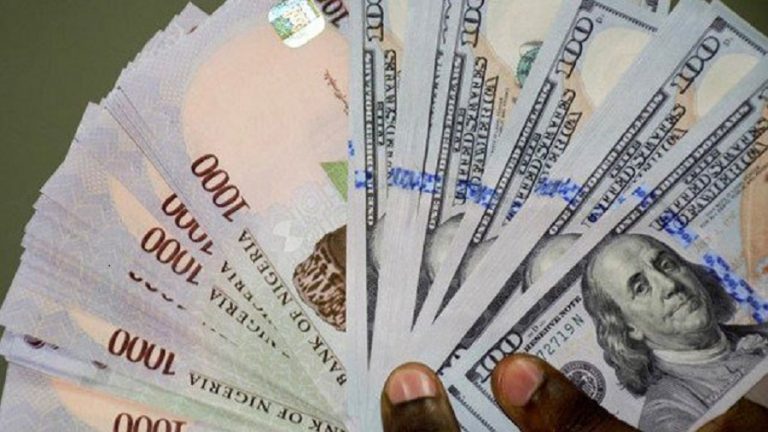
The naira strengthened by 6.26 per cent against the United States dollar over the past year, reflecting an improvement in its exchange rate between November 2025 and November 2026.
The currency appreciated to N1,346.79 per dollar on 6 November, 2026, from N1,436.74 recorded on the corresponding date in 2025, representing a gain of N89.95 against the greenback.
The latest exchange rate indicates that the naira has recovered some ground against the dollar over the 12-month period, potentially easing foreign exchange costs for businesses and consumers dependent on imported goods and services.
The appreciation comes amid efforts by the Central Bank of Nigeria to stabilise the FX market, improve dollar availability and strengthen confidence in the domestic currency.
A stronger naira could reduce the cost of importing raw materials, machinery, pharmaceuticals and other products priced in foreign currencies, potentially easing pressure on businesses and consumers.
However, the extent to which the exchange rate improvement translates into lower prices will depend on how quickly importers adjust their prices and whether the currency maintains its gains.
For manufacturers and other businesses with significant foreign currency obligations, the appreciation could reduce the naira cost of servicing dollar-denominated liabilities.
The Governor, CBN, Olayemi Cardoso, said in July 2026 that the naira must remain market-driven and competitive rather than being artificially supported.
Cardoso said in Abuja that the apex bank remained committed to a transparent, liquid FX market driven by willing buyers and willing sellers.
He said, “Our view is one of continuing on the path that we have embarked on, and that is to ensure that we have a market that is transparent, that is liquid, and one that has willing buyer, willing seller.
“At the present level, the country does need a competitive currency. The naira’s value has to be determined by economic fundamentals, including stronger oil and non-oil exports, increased foreign direct investment, improved domestic productivity and lower import dependence.”
“We are very comfortable at the central bank that we have a fully functional market, a market that is open, that is transparent, a market that sometimes you find that on a daily basis, the amount of turnover is in excess of $1 billion and a market that is responding to the positive things that we are doing as a central bank”, Cardoso explained.
Meanwhile, Nigeria’s FX reserves stood at $55.133bn on 5 November, 2026, providing a buffer for the country’s external obligations and efforts to stabilise the naira.
The reserves position reflects the stock of foreign assets available to support FX interventions and meet external payment commitments.
The level of reserves will remain important to investors as they assess Nigeria’s external liquidity position, currency stability and capacity to withstand foreign exchange pressures.

Banking has evolved beyond the traditional branch experience, and FirstBank continues to make financial services more accessible through its seamless digital account opening platform.
Whether you are a student opening your first account, a professional seeking a convenient banking solution, or an entrepreneur looking to manage business finances efficiently, you can now open a FirstBank account from the comfort of your home or office.
With just a smartphone, tablet, or computer and an internet connection, prospective customers can begin the account opening process in minutes through the FirstBank website.
The platform is designed to be simple, secure, and user-friendly, ensuring a smooth onboarding experience for both individual and business customers. No paperwork, no need to physical visit a banking hall.
As Nigeria’s premier bank with 132 years of service excellence, FirstBank continues to leverage technology to enhance customer convenience and financial inclusion.
The digital account opening solution reflects the bank’s commitment to delivering innovative banking services that meet customers where they are, enabling them to access banking services quickly and efficiently.
To open a FirstBank account, simply visit www.firstbanknigeria.com, complete the account opening process, and begin enjoying a wide range of banking products and services designed to help you achieve your financial goals.
With FirstBank, banking is no longer limited by location. Open your account digitally today and experience convenient, secure, and accessible banking at your fingertips.



-

 NEWS3 days ago
Court Dissolves Marriage As Woman Drags Husband To Court For Impregnating Stepmom
-

 NEWS4 days ago
Governor Dauda Lawal Appoints 282 Aides To Strengthen Inclusive Governance In Zamfara State
-
 NEWS5 days ago
2027: Pre-Election Uncertainty Threatens Atiku’s Eligibility As Court Calls Chairman’s Resignation Letter Fake
-

 POLITICS5 days ago
2027: Shettima Arrives Edo For APC Rally, Visits Oba Of Benin [PHOTOS]
-

 NEWS5 days ago
BREAKING: Tragedy Hits Nsukka As 7 Fresh Graduates Reportedly Found Dead
-

 NEWS4 days ago
Police Officer, Eight Others Arrested Over Cultism, Kidnapping In Oyo
-

 GIST5 days ago
Gospel Singer Alewilese Apologises To Toluwanisings’ Widow Over Controversial ₦6m Fundraiser
-

 NEWS4 days ago
JUST IN: Court Orders INEC To Return Adebutu As Ogun PDP Governorship Candidate